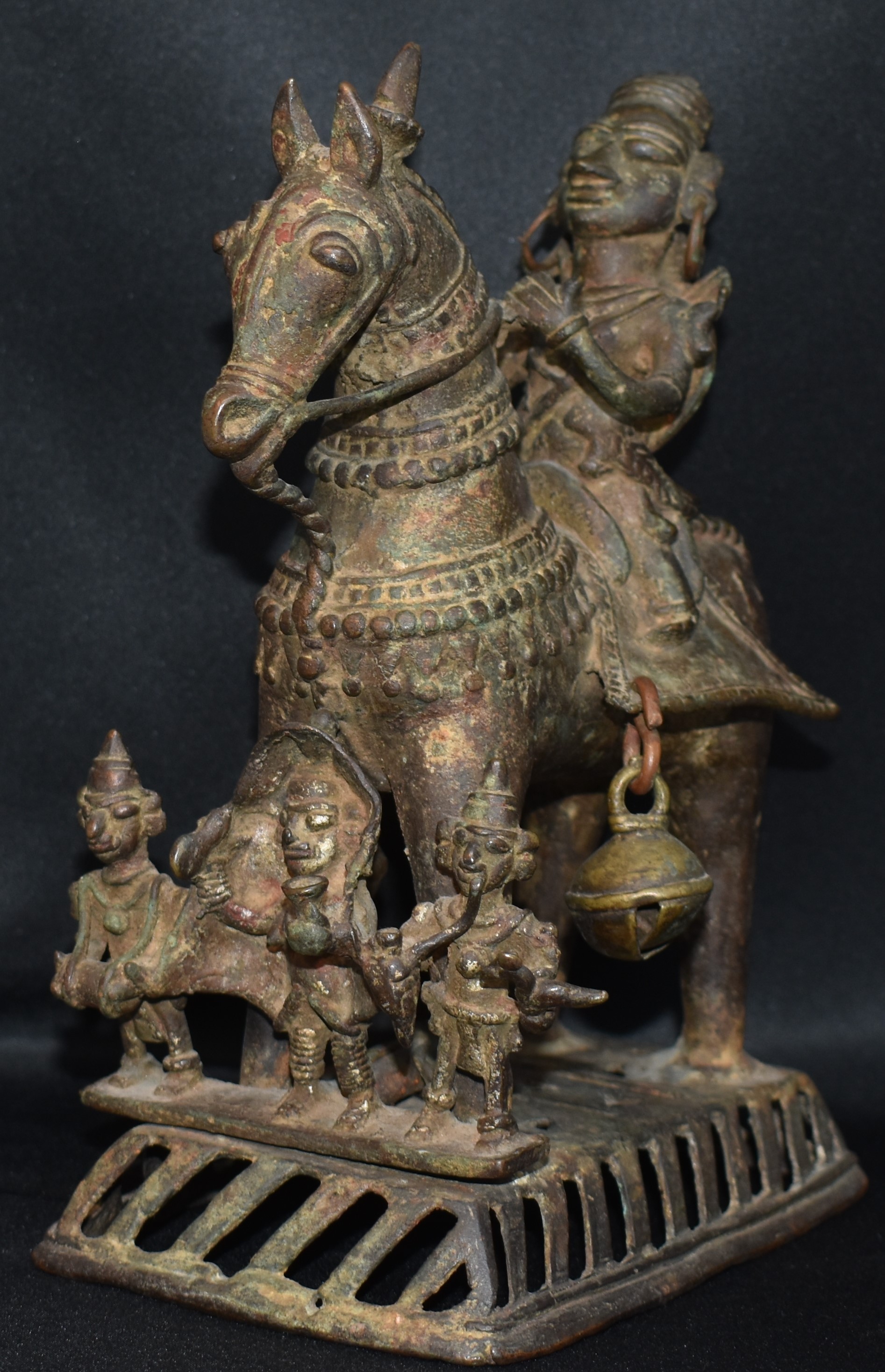
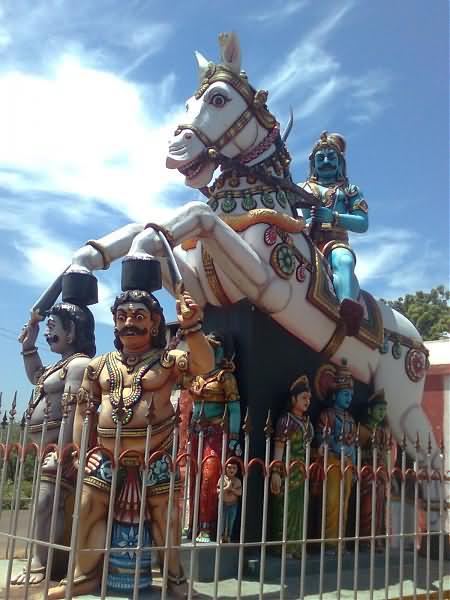
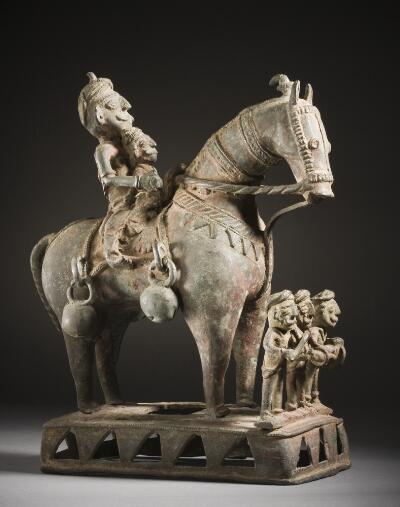
This is, probably, Ayyanar, a village guardian deity (Grama Devata) from Tamil Nadu, India. A folk bronze at its best. An example is included. Thanks to: http://www.findmessages.com/ayyannar-temple-horse-of-shri-kaliyugavaradha-ayyanar-temple

Sitting astride on a horse, Ayyanar is carrying a long sword (can see the hilt over his right shoulder), a shield (at the back), a quiver (over the left shoulder) and a short sword (left hip). His right hand might have held the bow. On his right front side (chest/abdomen), you can see two long swords. A one-man army. He is turbaned and fully decorated with ornaments. Comparing his armaments and the physique of the horse, his body and limbs are weak.
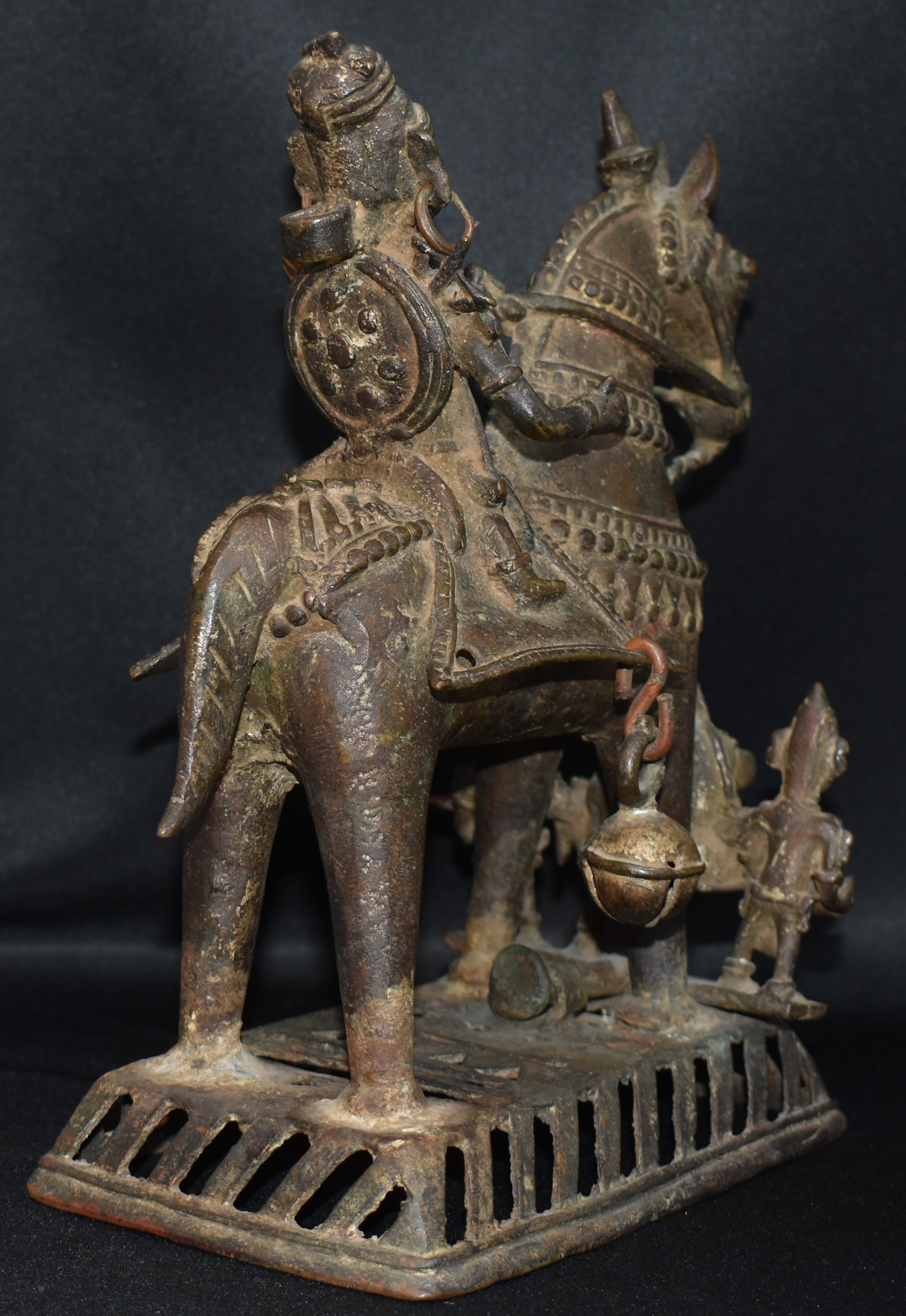
The horse is fully caparisoned, with four layers of chain on its neck and torso. Note how the decorated saddle is fixed, projecting outward. Two of the bells are missing. The horse is solid cast and is standing on a rectangular platform with openings. With the decoration and the robust size, the horse takes the central stage in this composition.
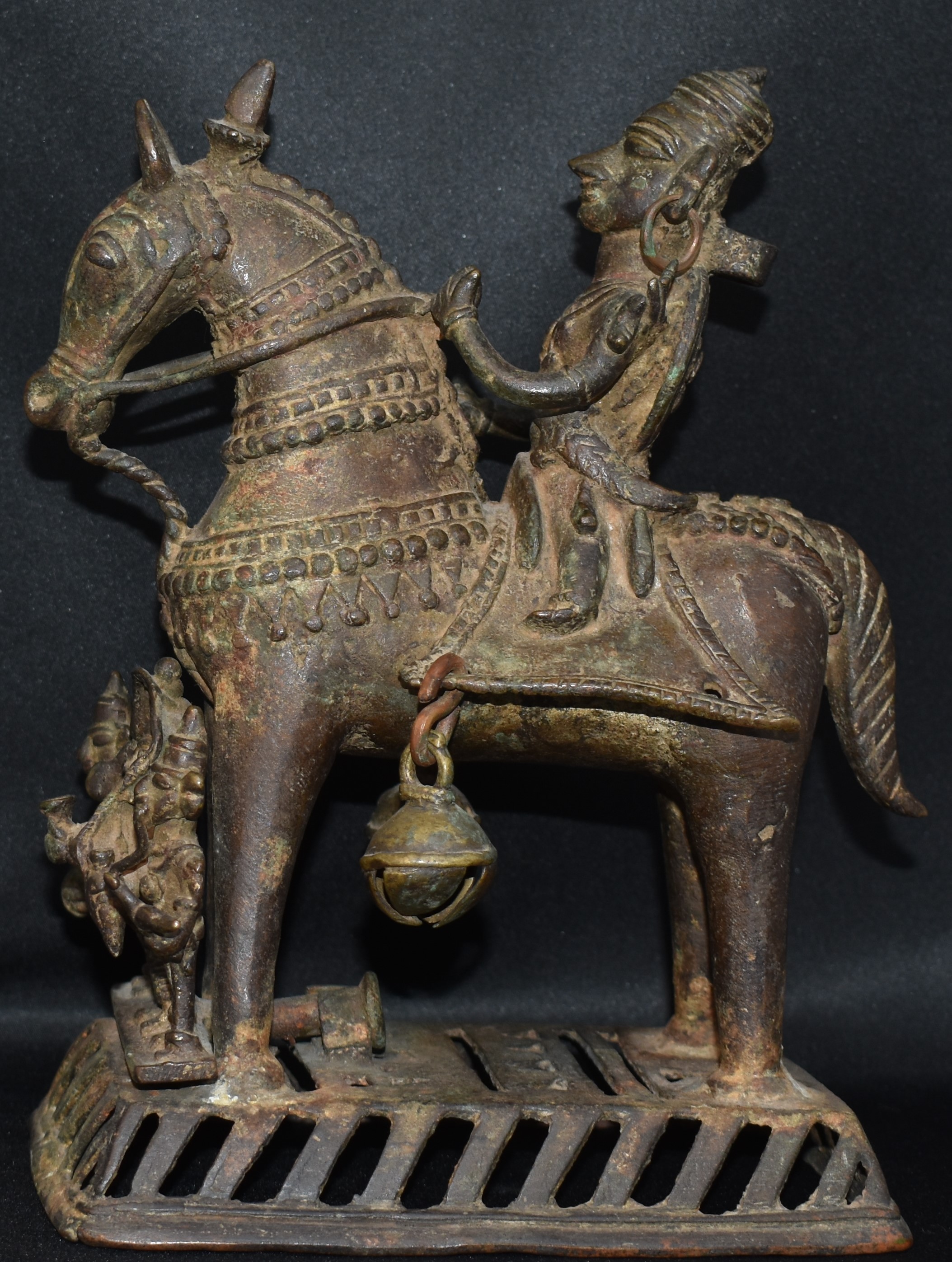
In front of the horse, there is a procession of three. The musician with the drum and the musician with a wind instrument flank the lady dancer. The procession is mounted on a separate platform. It adds movement and levity to the bronze.
This idol is about 24 cm in height. Going by a similar example in the Norton Simon Museum (see below), this may be dated to the eighteenth century. It is from Tamil Nadu.
Some have identified such bronzes as from Western India.
 Bronzes of India - A personal collection