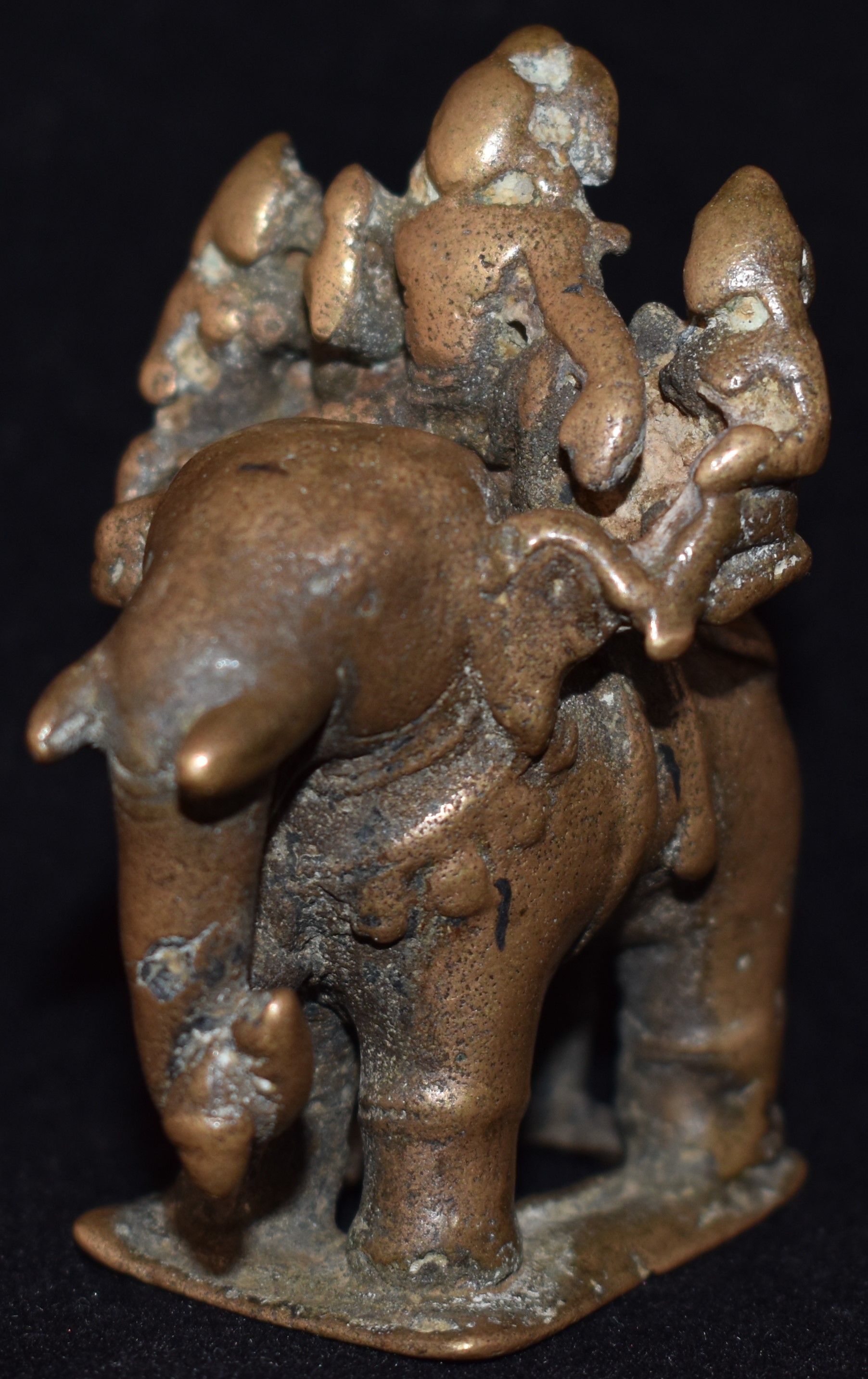
This is Ayyanar (also spelt Aiyanar and Iyanar) with his consorts Purana and Pushkala (At least one author identifies the consorts by the names Madana and Varani.). Ayyanar is a Grama-devata (Village God), a protective deity, worshipped in almost all villages in Tamil Nadu. Ayya, in Tamil, is a term of reverence (loosely translates to ‘The Lord’), and is applied to males who are superior.
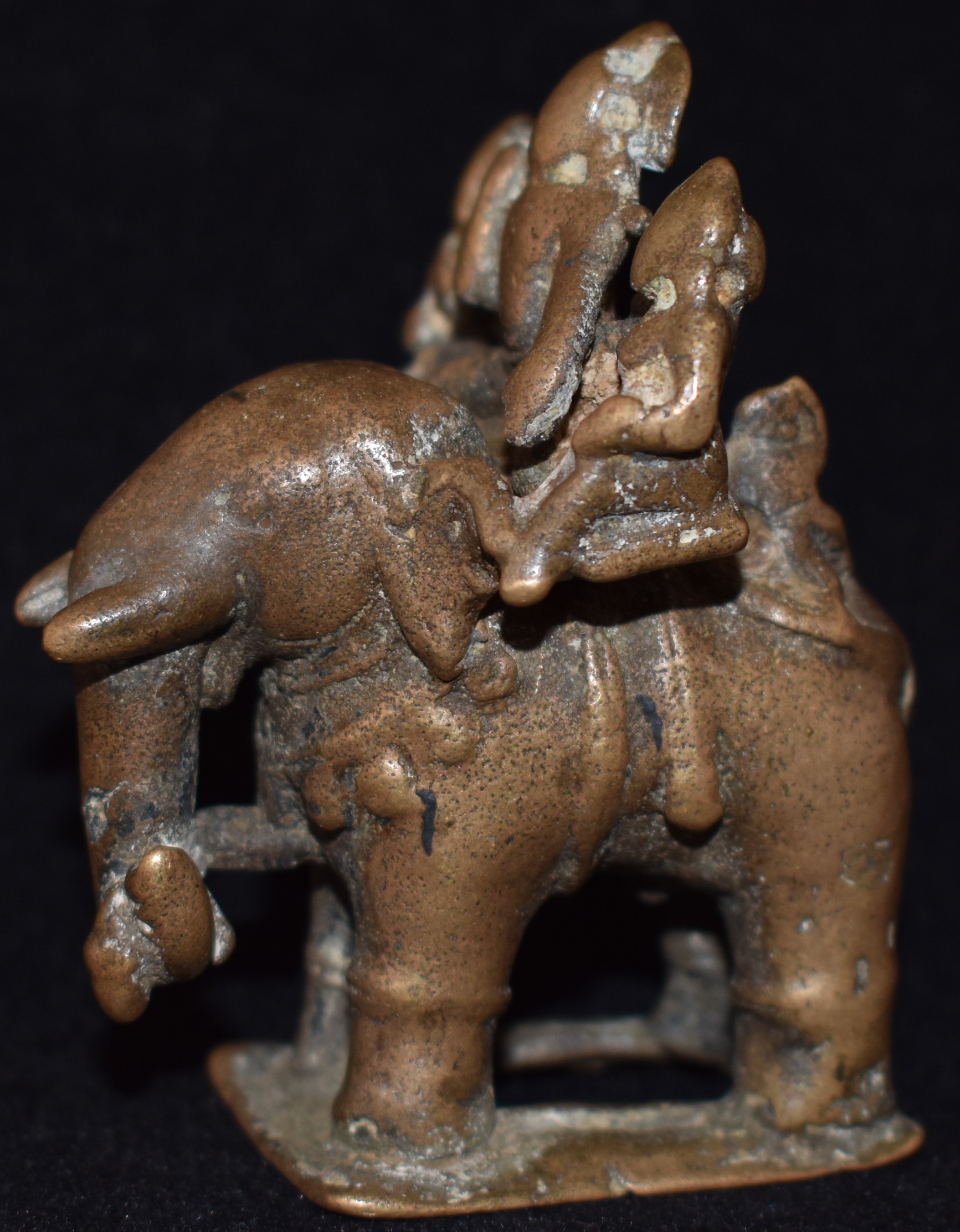
Ayyanar is normally seen sitting on a pedestal or on a horse. This form, where he is seated on an elephant with his consorts, is not common. That is Purna (on his right) and Pushkala (on his left).
Ayyanar is identified by fan-shaped hair, sitting posture and the attribute on his right hand.
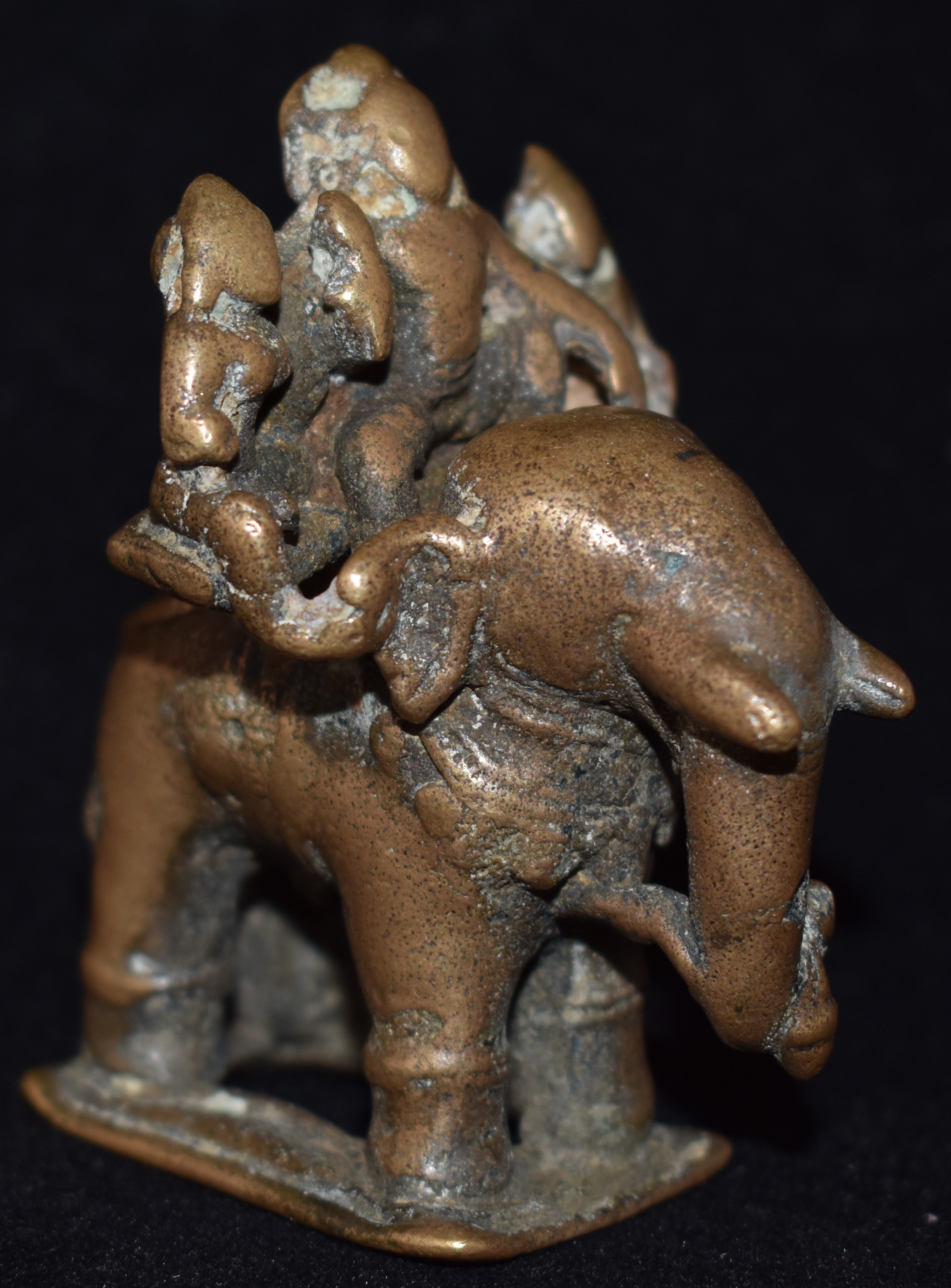
The myths surrounding Ayyanar are rich. He is a village guardian deity, Shasta (teacher), Hari Hara Putra (Son of Siva and Mohini – A form of Vishnu ) and is identified with Revanta.
Ayyanar is also known as Ayyappa or Shasta in Sabarimala, Kerala. The annual festival in Sabarimala attracts millions of people on pilgrimage. Ayyappa is celibate, and here we see Ayyanar with two consorts. Some dispute the Aiyanar-Ayyappan association.
The amount of detailing (five figures, garland of the elephant, lotus in elephant’s trunk, decoration on elephant’s back, the shaping of elephant’s ears, a platform for the deities, Ayyanar’s hair arrangement, rope running under elephant’s tail) that the artist has managed to capture in a metal sculpture of 6 cm is just amazing.

There is an attendant figure at the back. The positioning of the attendant and his posture is common to several examples of Ayyanar/Ayyappa I have come across ( Bronzes of South India by P R Srinivasan, South Indian Bronzes by C Sivaramamurti, Indian Bronzes – LACMA Vol 1 By Pratapaditya Pal and an example from the Metropolitan Museum – 1987.142.283, shown on the left)
This bronze is 6 cm in height, and it is from Tamil Nadu or a Tamil-speaking area. This has significant ritual wear; the surface is pitted, and there is some encrustation. This may date to a period earlier than the seventeenth century.
 Bronzes of India - A personal collection