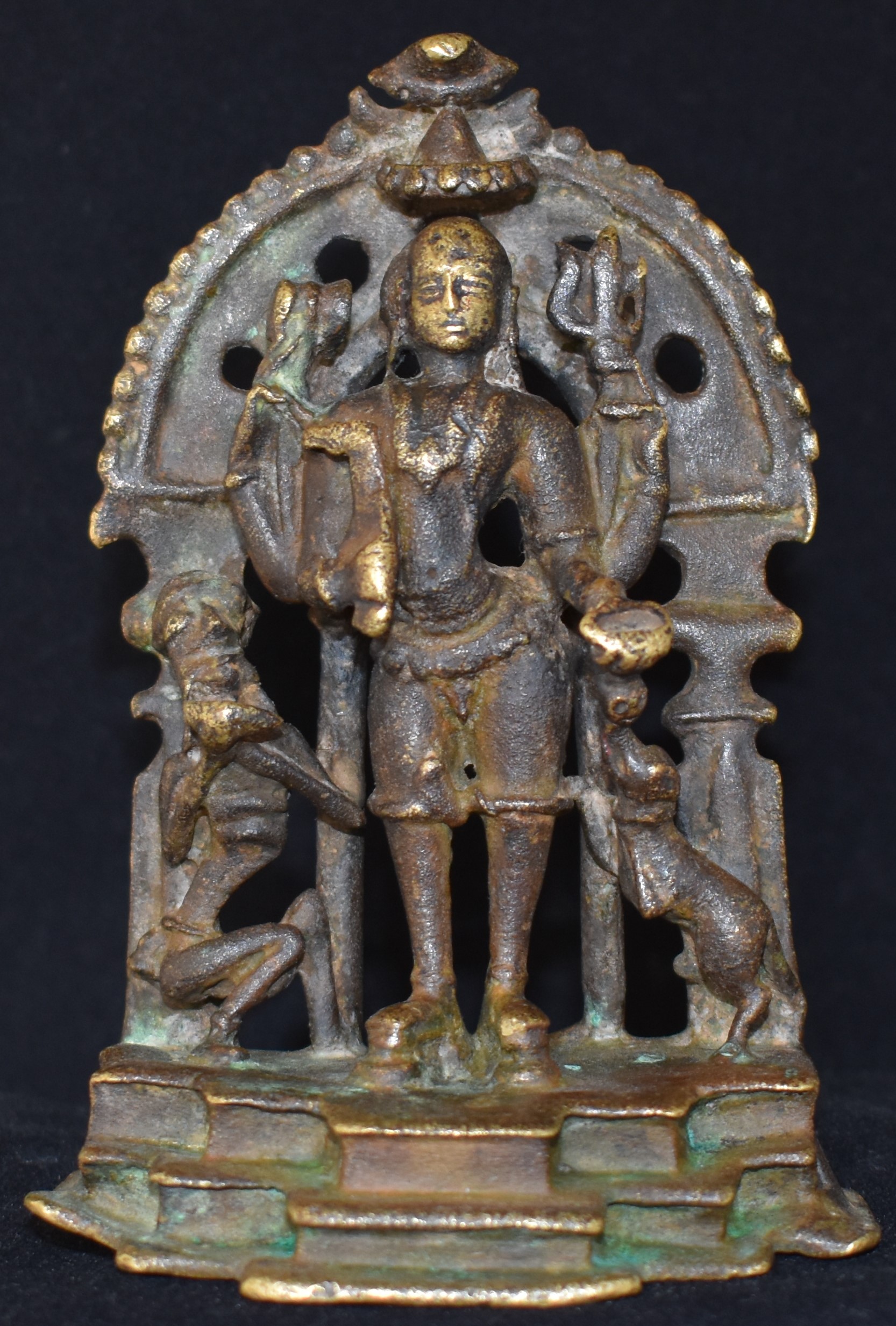
This is Siva in the form of Bhairava. The identification is based on what he is holding: a sword, a drum, a Trishul and a begging bowl (clockwise starting with his lower right hand). Attached to his lower left hand is a severed head, and the dog is reaching out to the severed head to catch drippings.
Bhairava is graceful in his posture. Tribanga and his serene face are at total variance with other aspects of this sculpture. On his right is an emaciated figure with a begging bowl. Not sure as to the purpose or what it depicts.
As is typical with Bhairava, Siva is wearing footwear, Paduka. There is a cobra tied across his legs, just above his knees. Some may refer to this bronze as Naga Bhairava (Naga means Cobra).
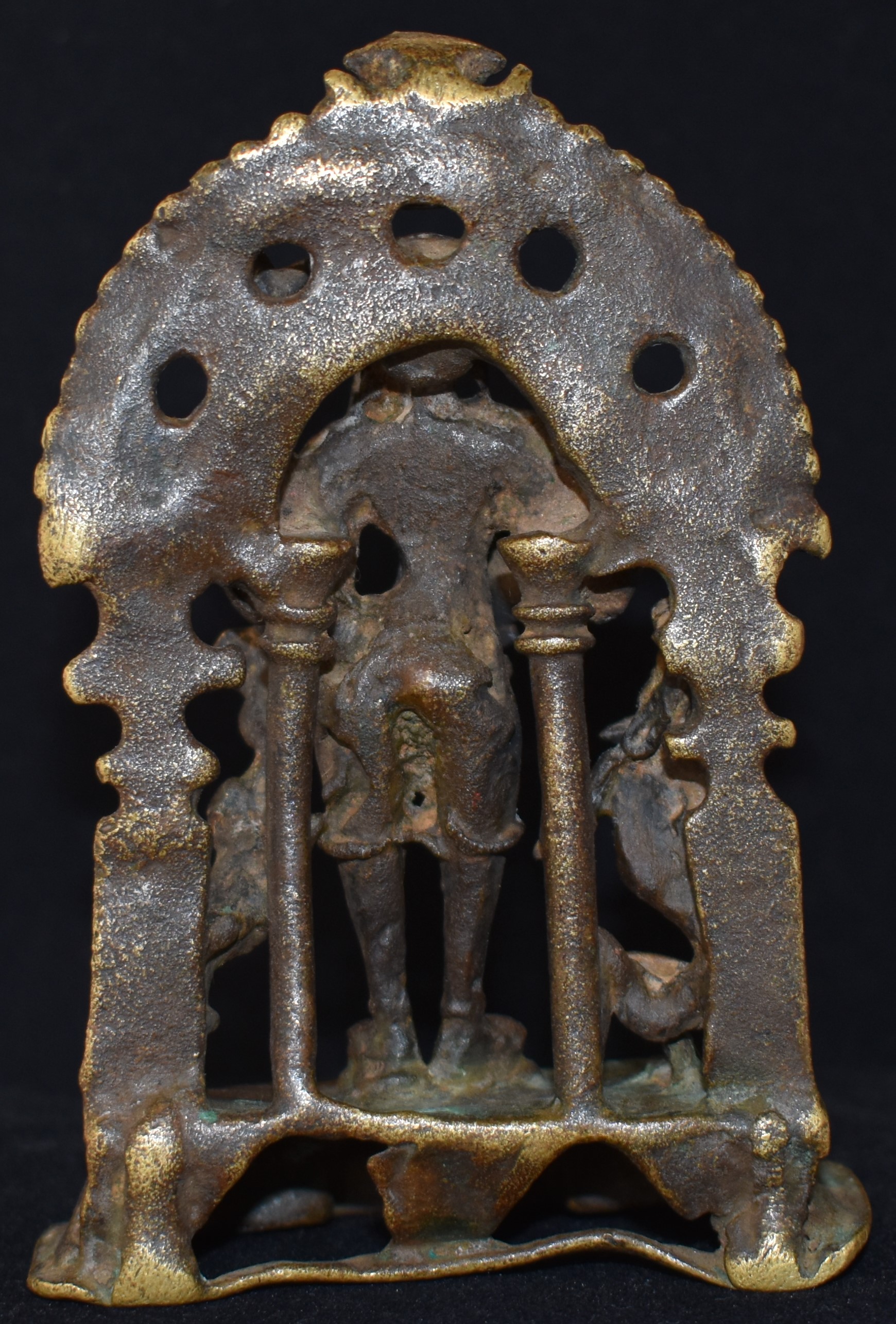
The stepped base is in pancharatha style. You tend to see them in Pala, Chalukya and Hoysala sculptures. Prabhavali is capped by an umbrella and a Kalasa (sacred water pot). This is a departure from what you see in South Indian prabhavali, namely Kiritimukha and cobra. Two pillars, one per side, support the top portion of the prabhavali. See the back view.
I have come across the pancharatha style base and pillared prabhavali structure in bronzes attributed to the Chalukya period.
This appears to be a single cast. Even otherwise, it is a class work. Notice the depiction of the folded foreleg of the dog and the serene expression of Bhairava’ s face.
For its age, the Chalukya period, 7th to 12th century, this bronze is in remarkable condition. It is quite likely that this was immersed in water for a very long period. The bronze is quite dark and corroded/pitted. The bronze is about 11.5 cm in height.
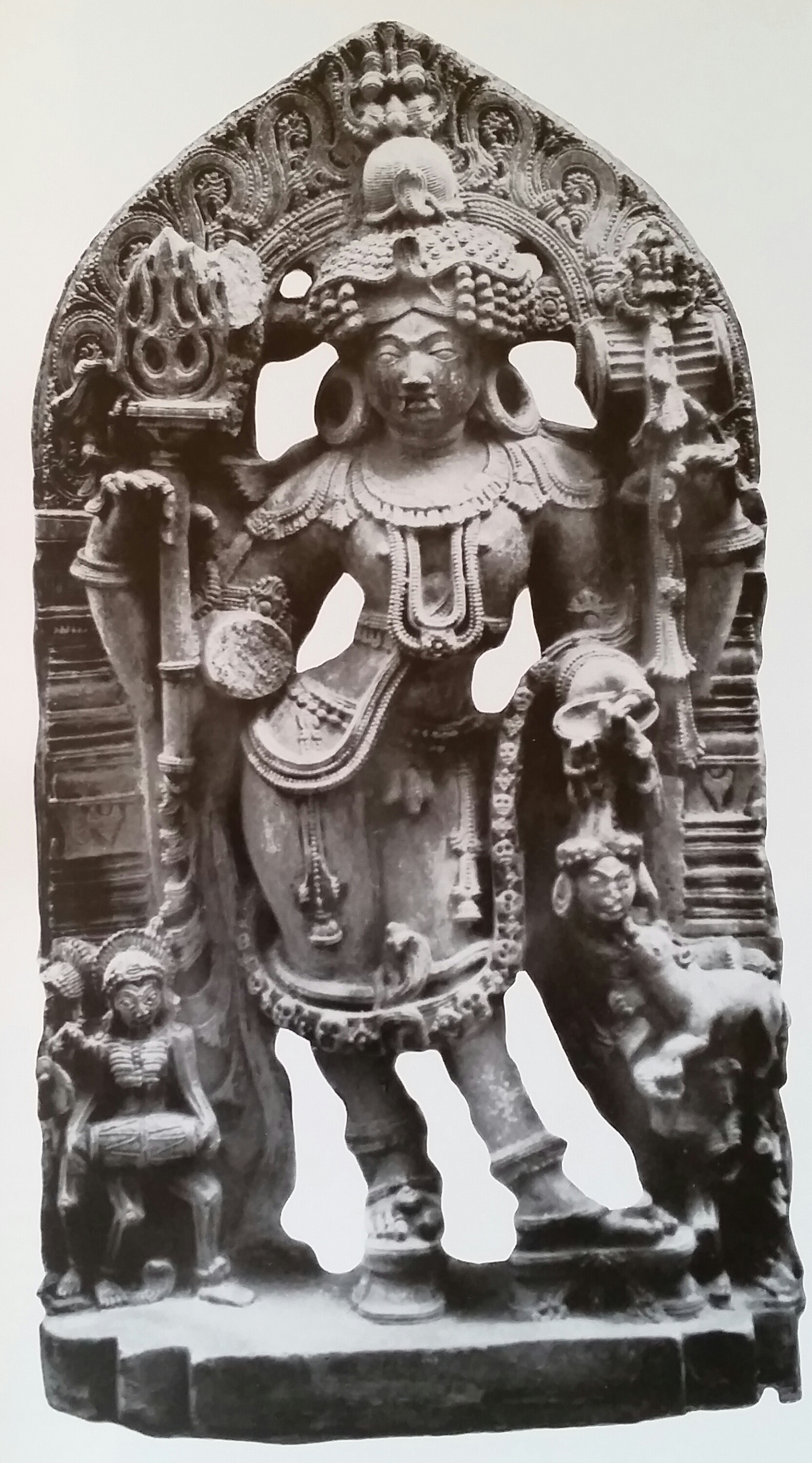
For comparison, included below is a Bhairava sculpture from the Hoysala period (stone, twelfth century, about 99 cm in height). This is in the Archaeology Museum, Karnataka.
 Bronzes of India - A personal collection