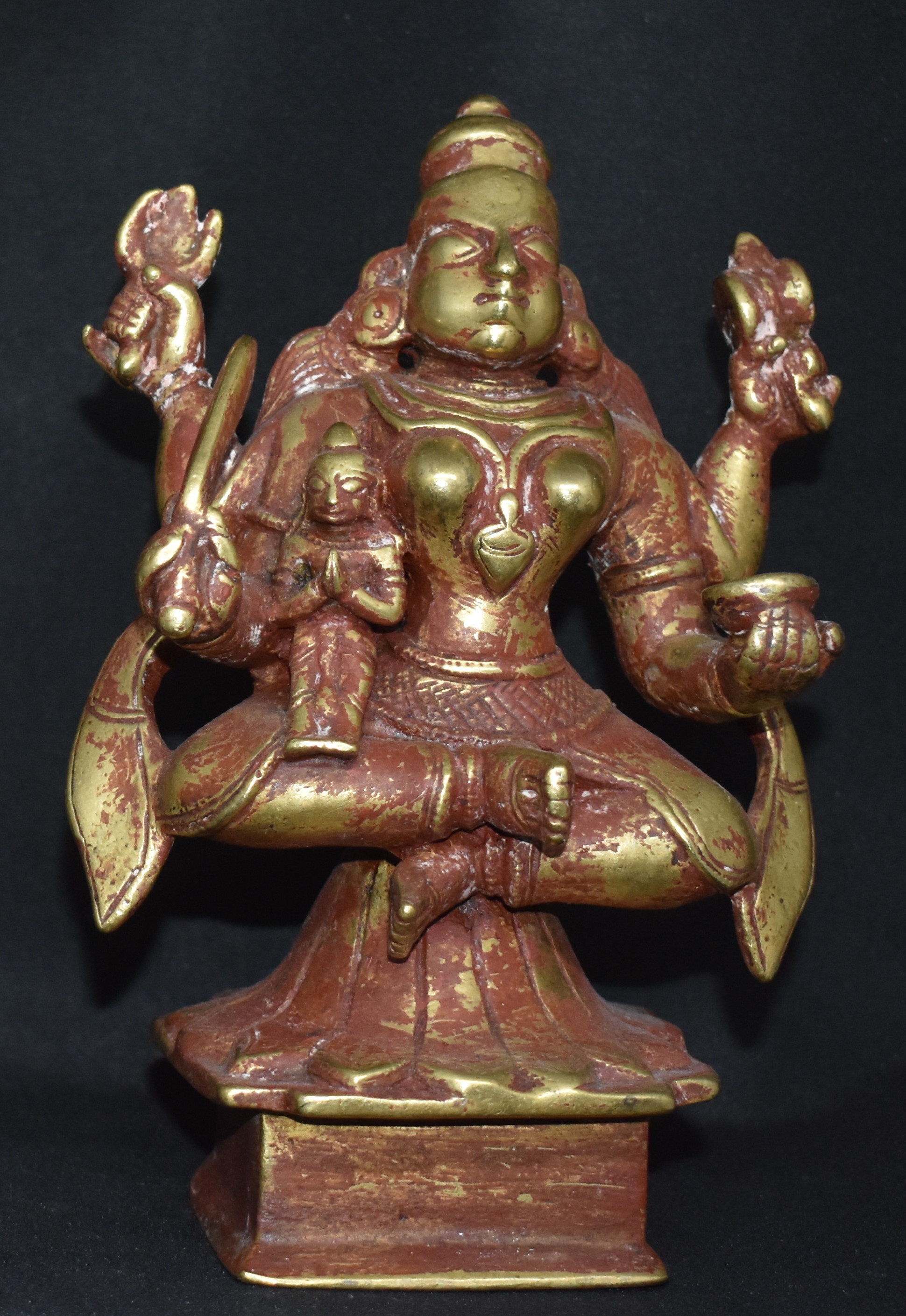
This is Bhairavi, consort of Bhairava (a form of Shiva). See Bhairava and Bhairavi an example.
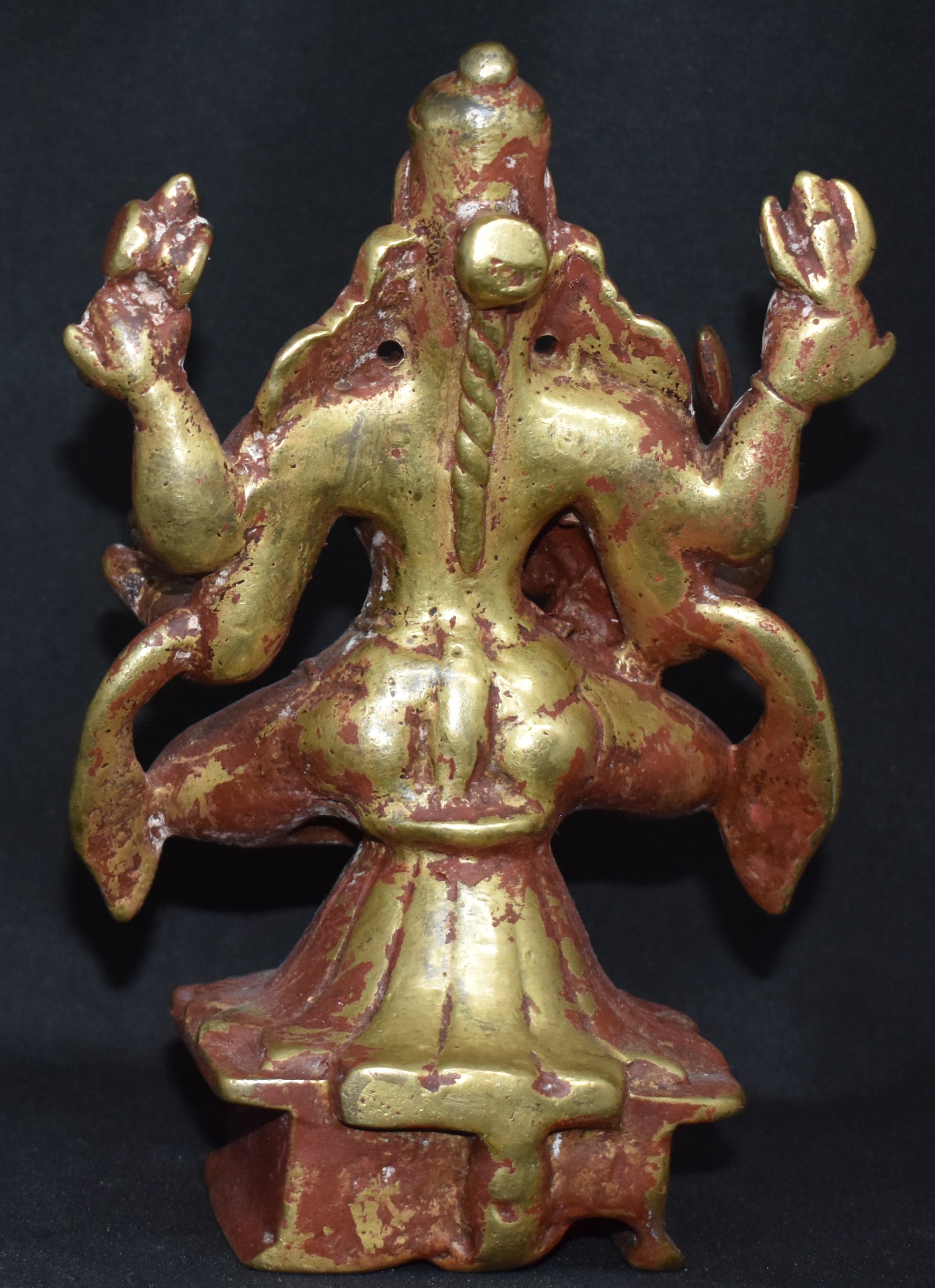
Bhairavi is identified by her attributes, a sword, Trishul, Drum and a bow. Clockwise, starting with her lower right-hand.
This robust-looking Bhairavi is sitting in Ardhapadmasana on an inverted lotus, which in turn rests on a ‘squarish’ platform.
Bhairavi’s ornamentation includes a crown, earrings, three necklaces, armbands, wristbands, a waist belt, and anklets. The scarf on the sides, supported by her arm, is an interesting feature.
What makes this Vigraha very unusual is the diminutive devotee, in Anjali mudra, sitting on her right lap. Normally, you see donor images on the pedestal. A common practice in North India and Pala bronzes. Here, Bhairavi, as one of the Mother Goddess is taken to the next level.
This Vigraha is about 17 cm in height, and it is from North Karnataka. Going by the ritual-related wear, this Vigraha may be dated to the nineteenth century.
Note: The red patches you see on the Vigraha are, I think, the remnants of the wax used to make a mould of this Vigraha. Not an uncommon practice in North Karnataka to replace a worn Vigraha.
7 March 2021: One of my friends, Krishna, sent a picture of the goddess Choolai Angalamman. Her temple is in Chennai. Picture below. It shows how varied the iconography and/or names can be, especially for the mother Goddess representation.

 Bronzes of India - A personal collection