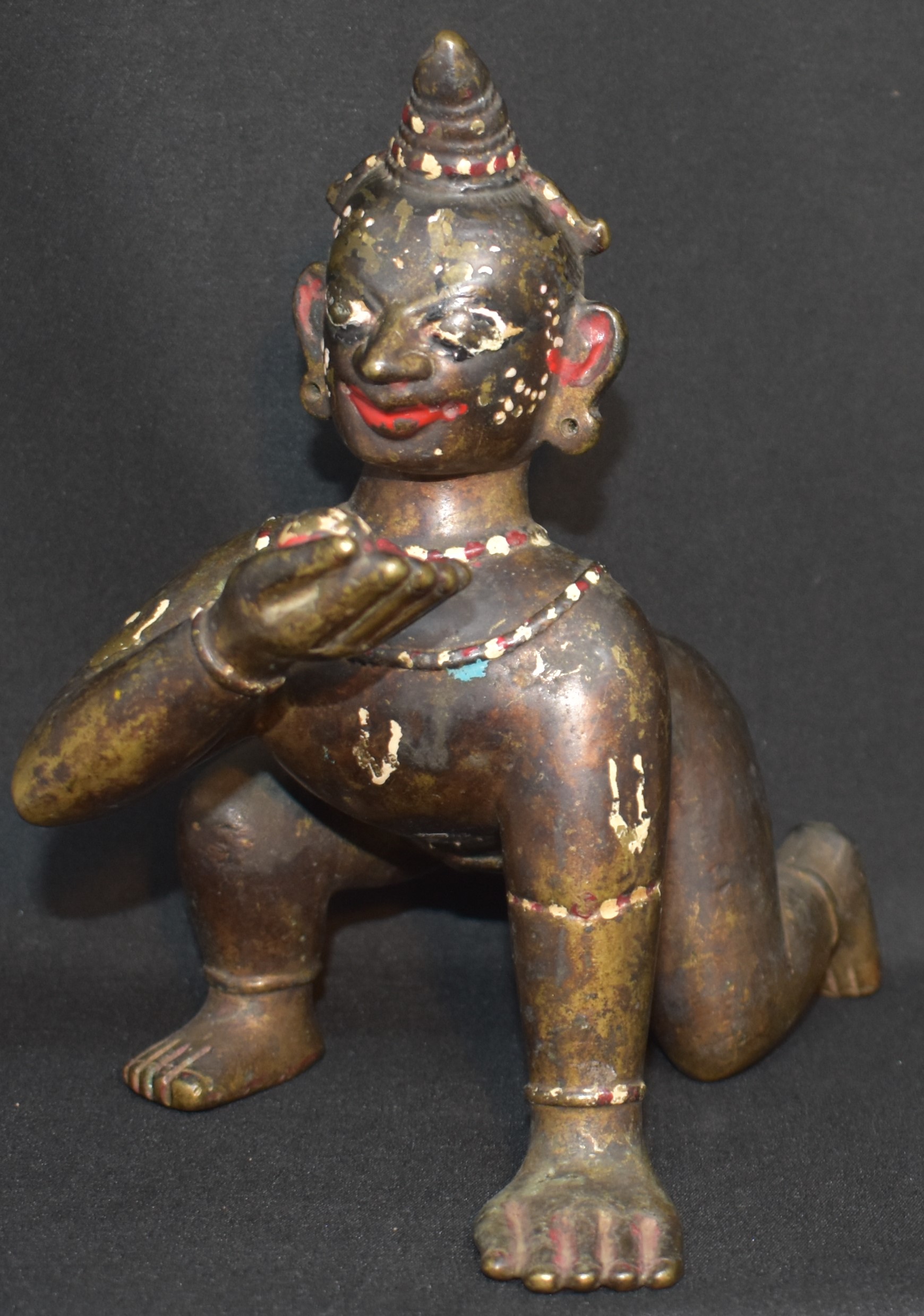
At 16 cm height and 15 cm length, it is definitely a large crawling Krishna vigraha. Very heavy as well.
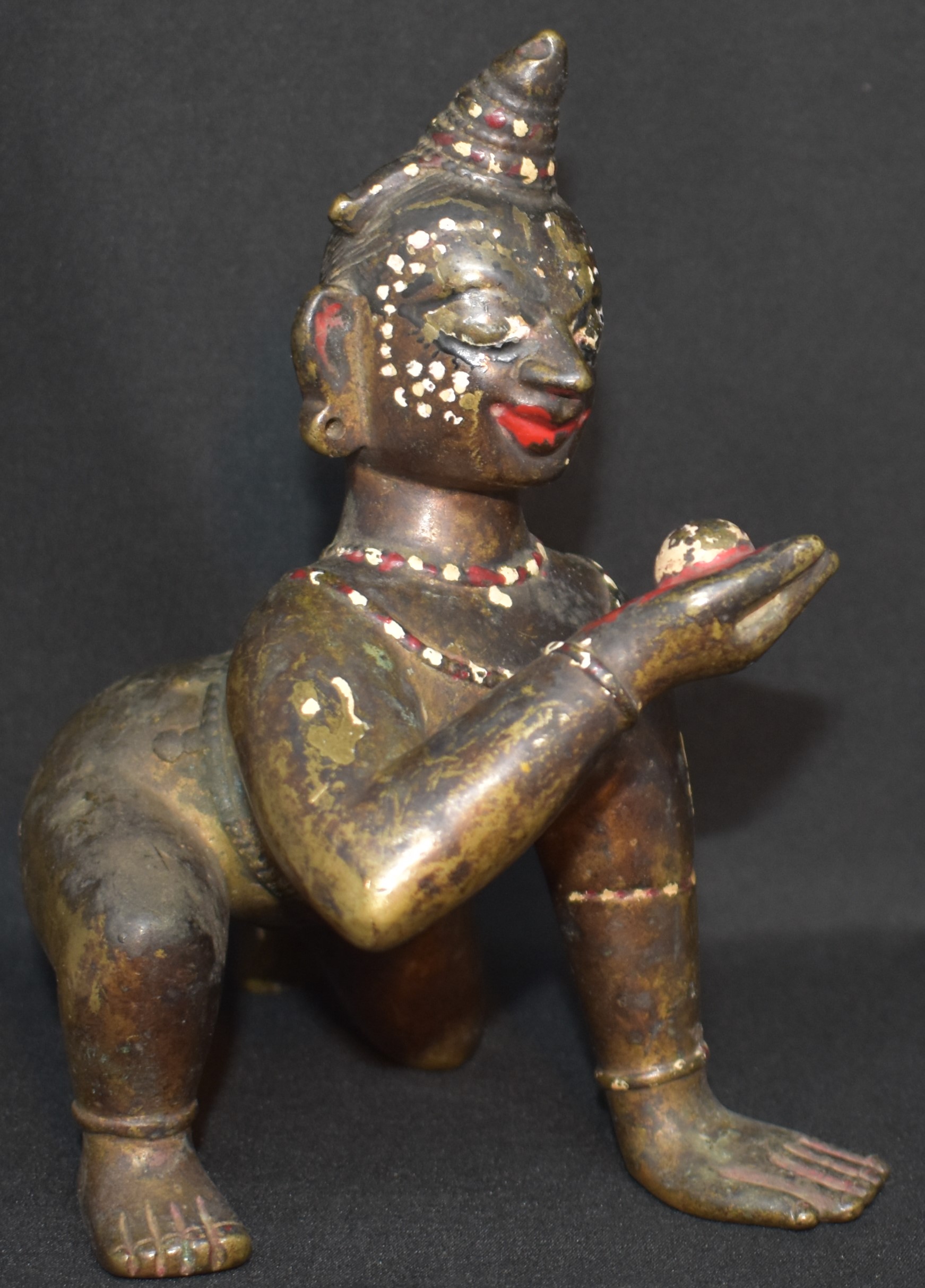
A typical representation of butterball Krishna, crawling on his fours and holding a butterball in his right hand. This is the scene of his running away from his foster mother, Devaki, after stealing the butter ball.
This Vigraha is from the Bengal region, identified by the top knot and painted decorations. Here, the painted decorations highlight the ornaments rather than represent the ornaments.
This Vigraha is meant for home worship. In Bengal, he is NaduGopal (Nadu- ball of butter and Gopal – the keeper of cows).
See the painting below, now in the British Museum, for comparison. https://www.britishmuseum.org/collection/object/A_1990-1031-0-3 
This Vigraha may be dated to the nineteenth century, coeval with the painting referred to above.

This iconography is also common in South India and Maharashtra. For another example crawling Krishna from Tamil Nadu
Though, as per literature, the worship of Child Krishna in Bengal dates back to the medieval period, I have not come across any standalone metal or stone Vigrahas of Krishna of that period. This is in contrast to Tamil Nadu. Some of the dancing Krishnas are dated to the 11th century, and the crawling Krishnas, like the one in this blog, are dated to the 15th/16th century.
 Bronzes of India - A personal collection