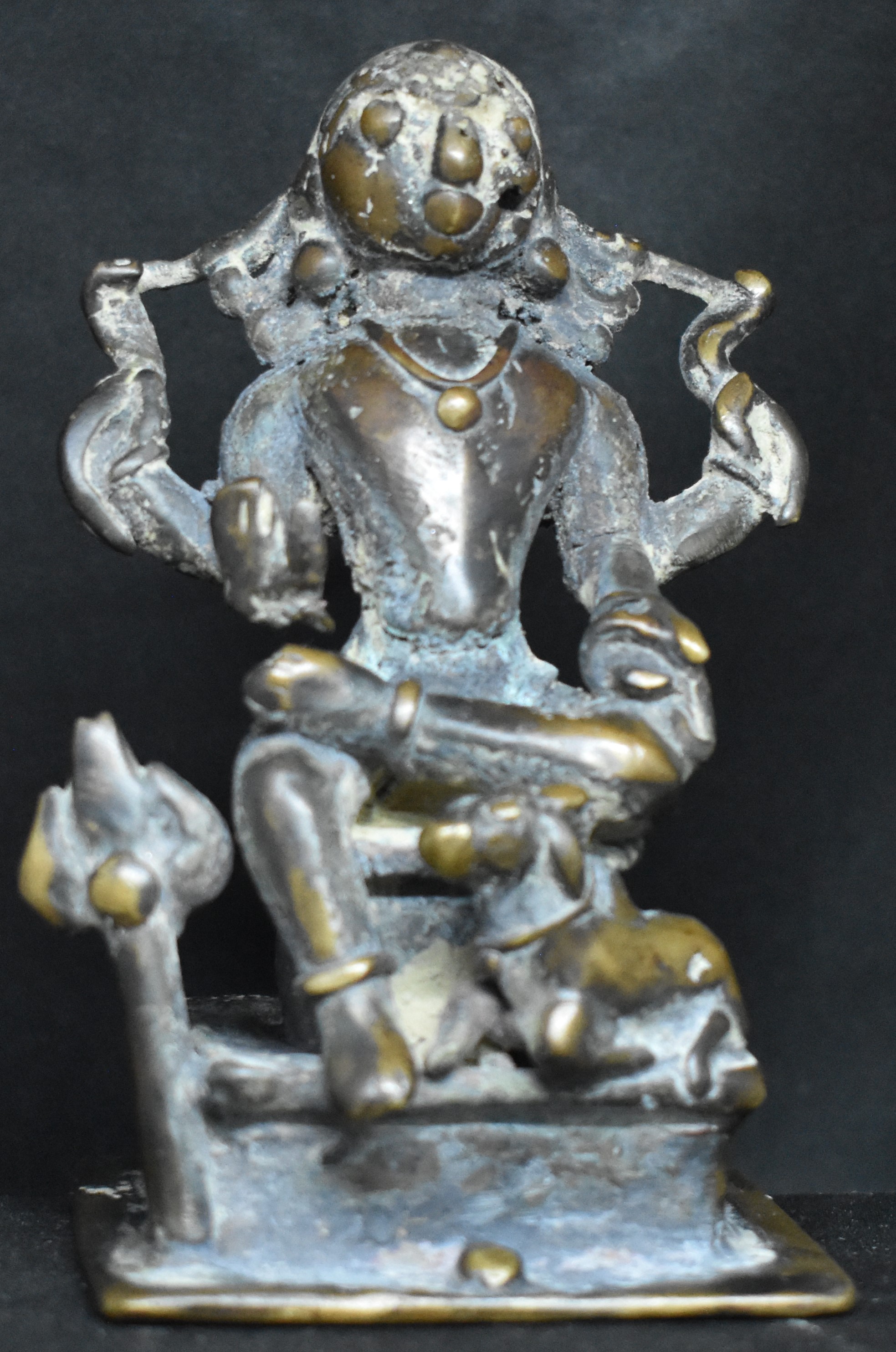
This is Shiva as the supreme teacher. In this form, he is Dakshinamurthy. Normally, he is kept facing South (Dakshin) and hence the name.
His identification is based on Trishul (on his right) and Rishaba, his vahana under his left leg. The Virasana pose, with the right leg pendant and the left leg crossed over and resting on the right thigh, is typical of Dakshinamurthy. The mudra of his lower right hand, cin mudra, and the attributes a cobra, mirga, and a manuscript on his hands reinforce the identification.

The folk style and the Trishul are unusual features of this bronze. Maybe they go hand-in-hand. In South Indian tradition, the Trishul is not featured. For more information on Dakshinamurthy, see this blog, Dakshinamurthy under a tree.
This Vigraha is possibly from the Telugu-speaking parts of South India. It is about 11 cm in height, and it may be dated to the nineteenth century.
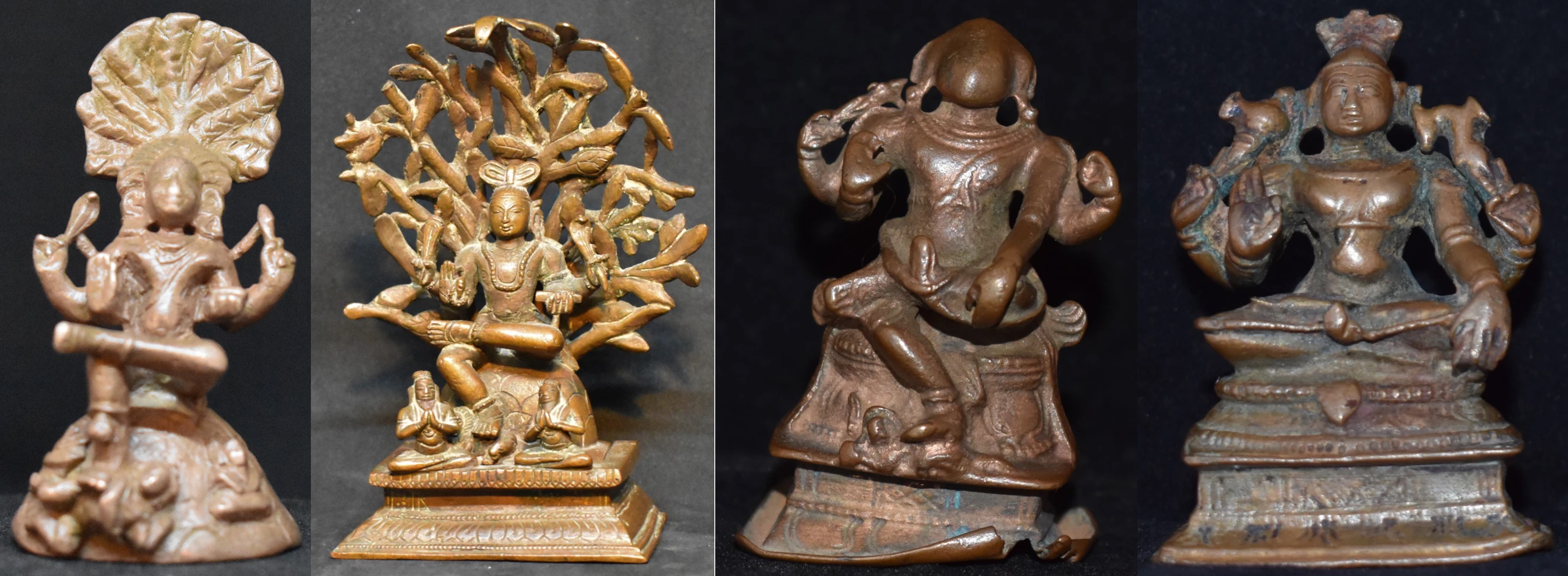
Some of the other Dakshinamurthy Vigarahas in my collection are below for reference.
 Bronzes of India - A personal collection