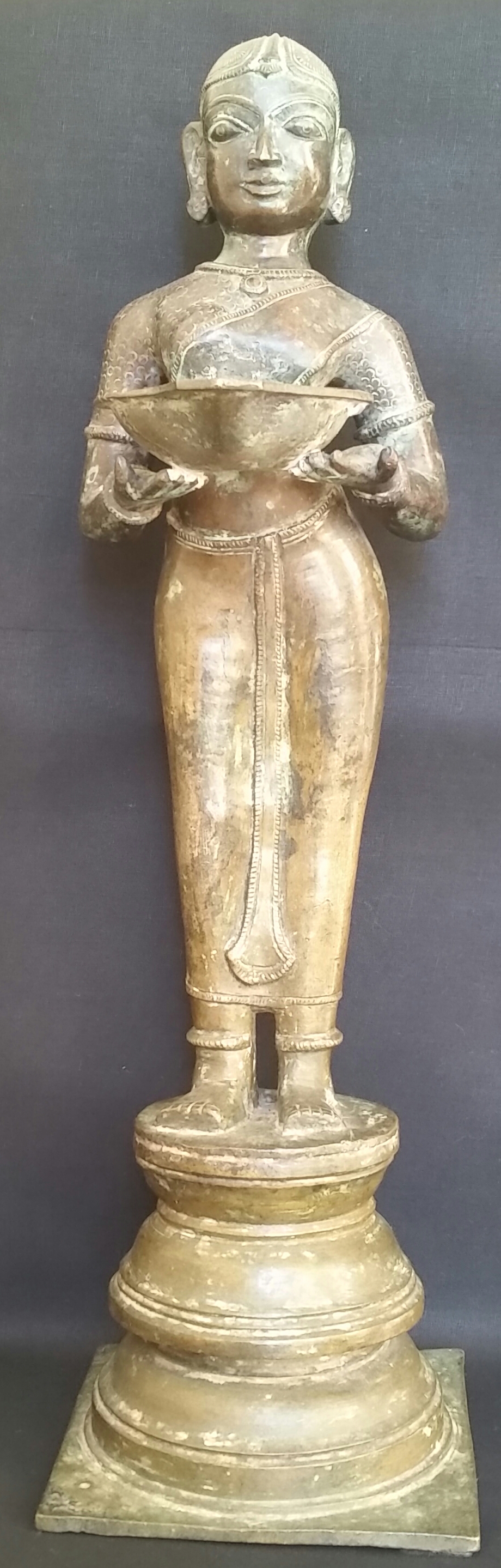
This is Deepalakshmi (Deepa meaning light). Lakshmi is Vishnu’s consort. Despite the name including Lakshmi, Deepalakshmi is not considered to be a version of Lakshmi. She is not the subject of worship on her own but is used in worship.
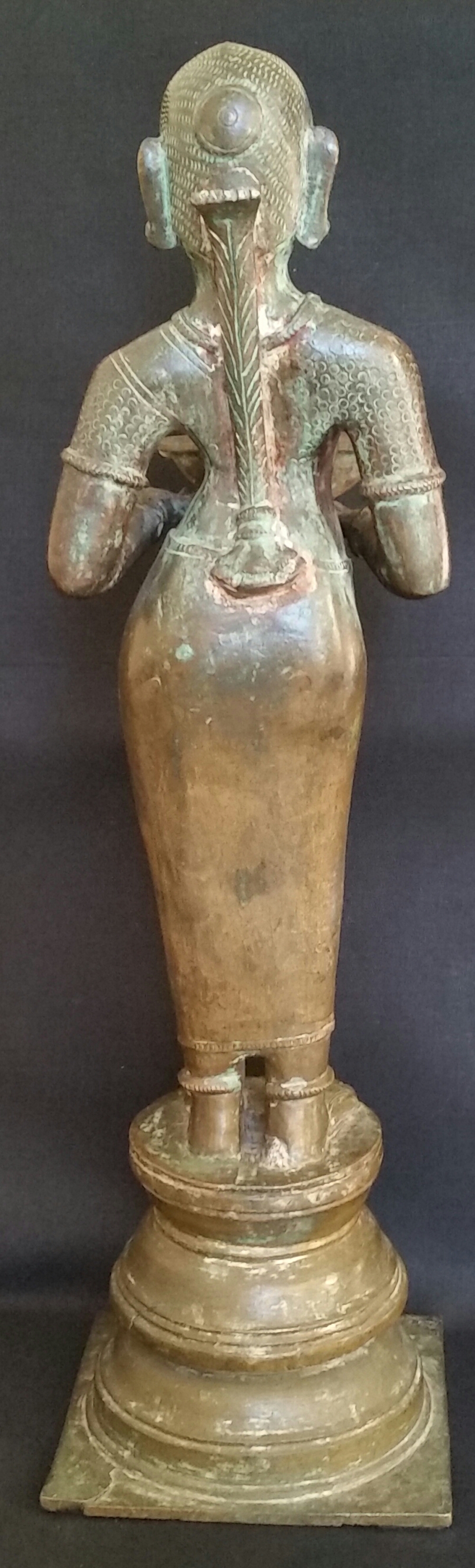
The lamp is oil and wick-based. Normally, these lamps are kept on either side of the deity or in front of facing the deity.
In earlier days, these lamps were the only illumination in the temples and in the inner sanctum. Such lamps are donated to the temples along with the means to keep them lit.
Quite often these lamps are portrait in nature, ensuring the donor is present in the deity’s presence for eternity. There is one more example on the site, and that one is from Nepal.
Here Deepalakshmi combines grace, poise, dignity and a deferential posture and is holding a lamp in the palms of cupped hands. She is standing on a multi-level drum-shaped base. The base is simple, devoid of any decoration.
This Deepalakshmi is about 50 cm in height. It is quite large to have been used in a home shrine. This is one of the largest bronze sculptures in my collection.
This is from South India, going by her wear (saree and blouse) and ornaments. Possibly from Tamil Nadu or South Karnataka.
This may not be earlier than the 19th century.
 Bronzes of India - A personal collection