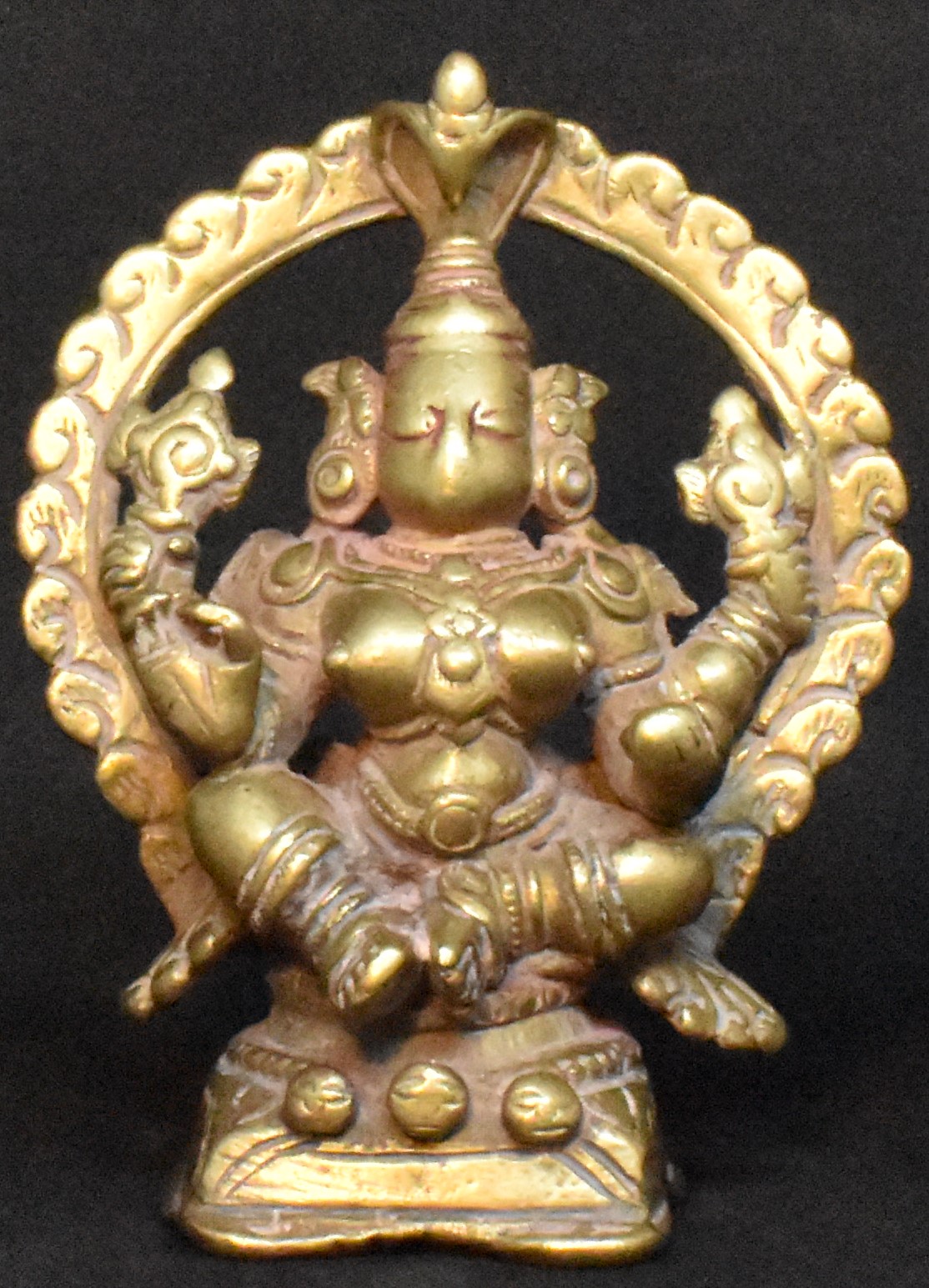
This is Durga. In North India, especially in Bengal, Durga is synonymous with Mahishasuramardhini. In the South, distinction exists, and Mahishasuramardhini is considered a form of Durga.
Framed by prabhavali and with serpent hood, this four-armed Durga is sitting in lalitasana/Maharaja lalitasana pose. Durga’s rear hands are holding a wheel and a conch, typically the attributes of Vishnu. Her right front hand is in Vitarka (teaching) mudra, and she is holding a bowl in her left hand. There are three spherical objects in front of her on the pedestal. In the absence of these spherical objects, she could be identified as Vaishnavi, depending on where she is from. In this form, she is sometimes called Vishnu Durga.
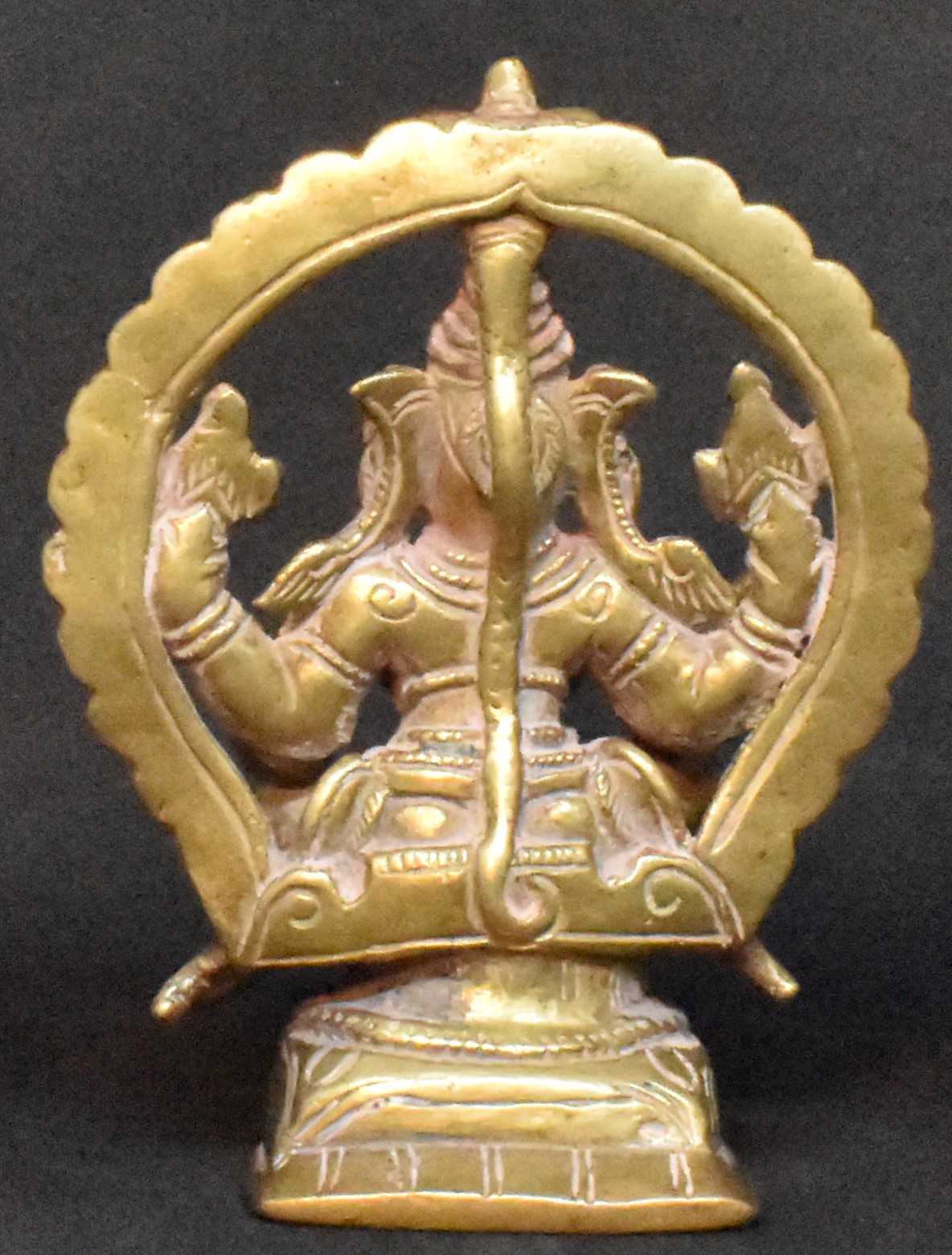
The serpent’s body runs down her back, rather than being a part of prabhavali as commonly seen. There is one other bronze in my collection where this is the case.
Shrines of Durga may be independent or a subsidiary in temples dedicated to Shiva and Vishnu. But Durga is worshipped on her own, as the concept of Durga involves her superiority over all male divinities.
This is about 9 cm in height and is made of brass. This icon is likely to have come from North Karnataka or Maharashtra (Western Deccan region). There is significant ritual-related wear, and it still has power (kumkum) used in puja. Going by the wear, this may be from the 19th century or slightly earlier.
 Bronzes of India - A personal collection