
The collage below is based on a series of sculptures along the Western wall of the Sri Vidyashankara temple, Sringeri. According to the records of Sankara Mutt, which manages the temple, it was built in 1338 CE. The temple is a real treat for iconography lovers, and every square inch of interior and exterior has a story. We are about to encounter some of them.
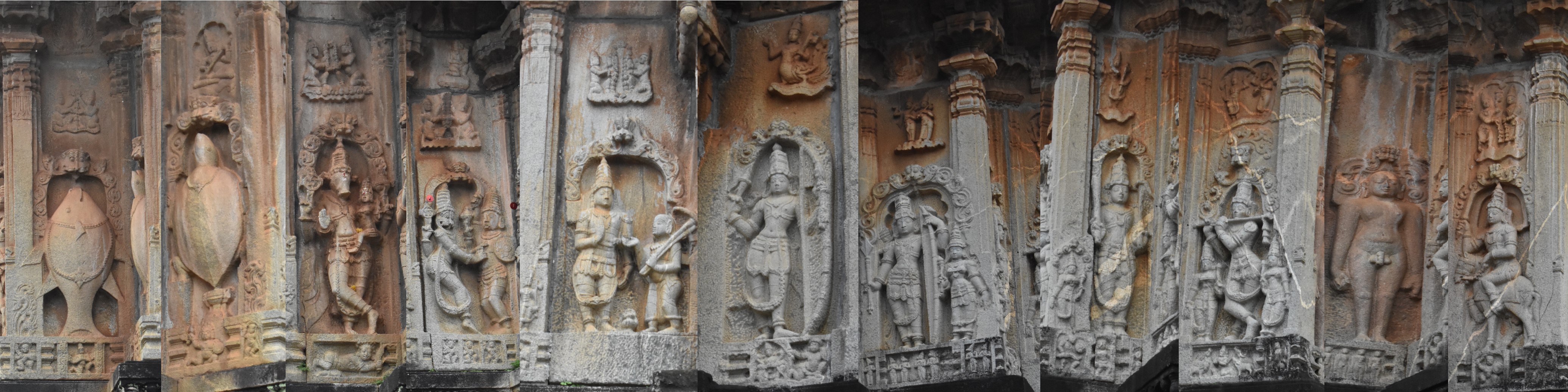
The above collage is not a standard depiction of Dasavathara. It has eleven Avatars. From our left. Matsya, Kurma, Varaha, Narsimha, Vamana, Parasurama, Rama, Balarama, Krishna, Jina and Kalki. These eleven figures are flanked by Harihara and Brahma’s manapurtas, and they form a group. When you do Pradakshina of the temple, you will see them starting with Kalki and ending with Matsya.
As this temple was built during the Vijayanagar period, I did some research on the Dasavathara depictions of the Vijayanagar empire period. Hampi, the capital of the Vijayanagar empire, has three different versions of Vishnu’s avatars.
- Near the Elephant Stables, ten avatars are shown, including Jina but excluding Krishna.
- In Koti-Tirtha, eleven figures match the depiction in the Vidyashankara temple.
- In the basement of the mahamantap of the Vittala temple, there are ten avatars. In this case, Balarama is excluded, and Jina is present.
The above information is from the book Sculpture at Vijayanagar: iconography and style by Anna Dallapiccola and Anila Verghese.
The inclusion of Jina in place of Buddha is a Vijayanagar variation, and we will get to that later.
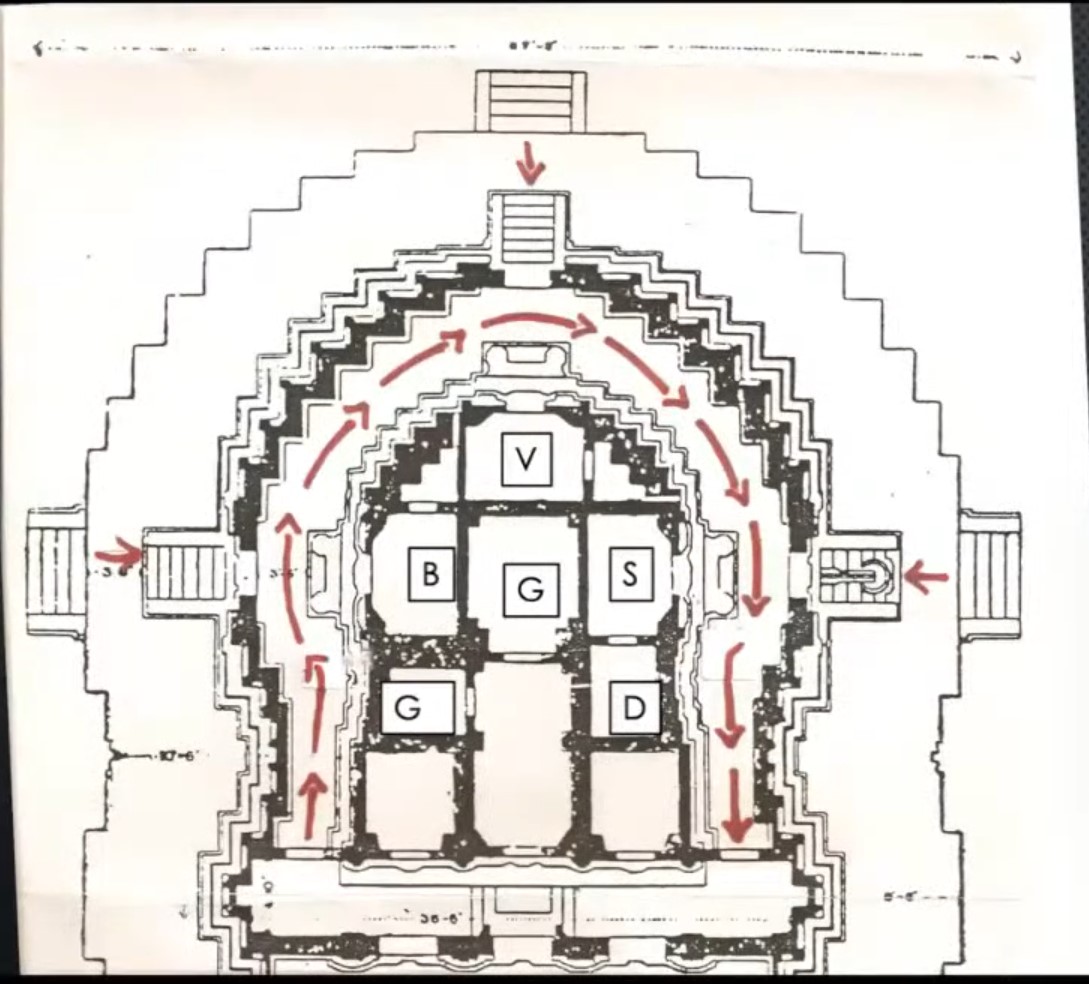
What is also interesting is the placement of Vishnu’s avatars. When you visit the temple these days, in the Garbhagraha, you will see Ganesha, Linga and Durga. Behind them are Brahma, Lakshminarayana and Umamaheshwara, facing the three doors on the South, West and North. The Vishnu’s avatars are aligned with the West-facing Lakshminarayana’s shrine, marked by a ‘V’, in the layout below, a screen capture from a lecture by Dr Poornima Srikrishna. Vishnu’s avatars flank the steps.
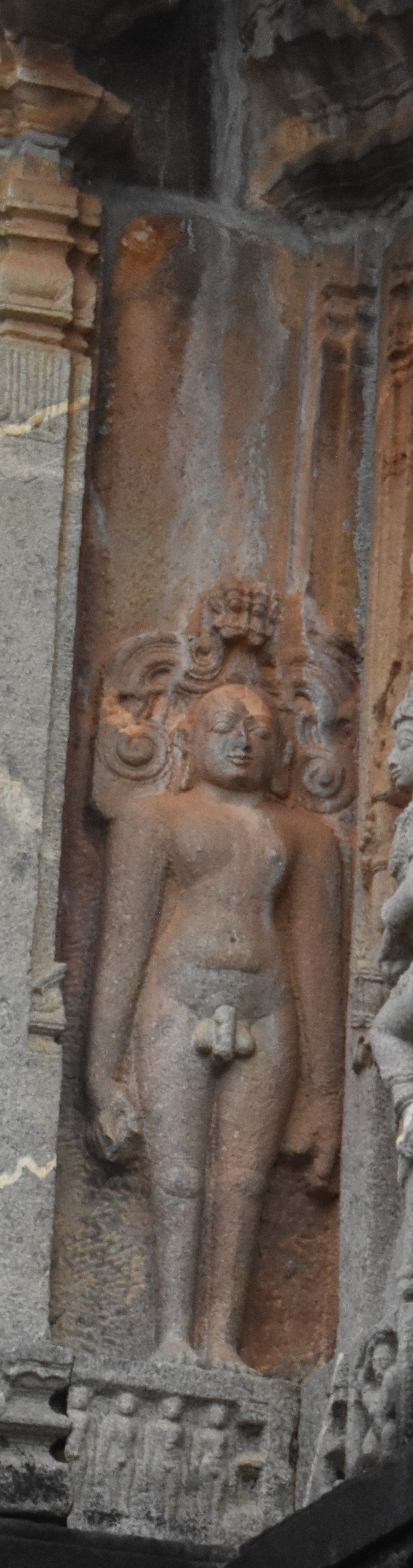
Going back to Buddha as an Avatar of Vishnu, this inclusion dates back to the Gupta period, and it is also reflected in the Mamallapuram stone inscription. Normally, Buddha, as an avatar of Vishnu, is shown in the prabhavali with other Avatars. In Karnataka, and Karnataka alone, Buddha is replaced with Jina. The locals call him ‘battale Buddha’, meaning naked Buddha.
In this example, four other naked figures are at the bottom accompanying the main figure. In Jaina literature, this composition is Pancha-Tirthika. I am of the view that it is meant to represent a Thirthankara. Buddha or his disciples are never shown naked.
PS: Do not miss a chance to visit this temple. More about the temple later.
 Bronzes of India - A personal collection