
Ganesha is probably the easiest Hindu deity to identify and, of course, you come across several of his sculptures. Sometimes you see sculptures and they make you look at it again. Pick it up and hold it in your hands. This Ganesha sculpture is an example.
I have seen, though rare, several examples of two-armed Ganeshas and they generally fall into three categories: pre-medieval period, tribal and from outside India. Exceptions are rare.
The book The Elegant Image By Dr Pratapaditya Pal has an example (Page 140 Cat item no 70) and Dr Pal attributes it to the Pallava period (6th century CE). Dr Pal goes on to say in South India ‘there are no stylistic comparisons available in stone or metal.’
Initially, I thought I found another example. Well, it turned out to be short-lived joy. The story is elaborated below.
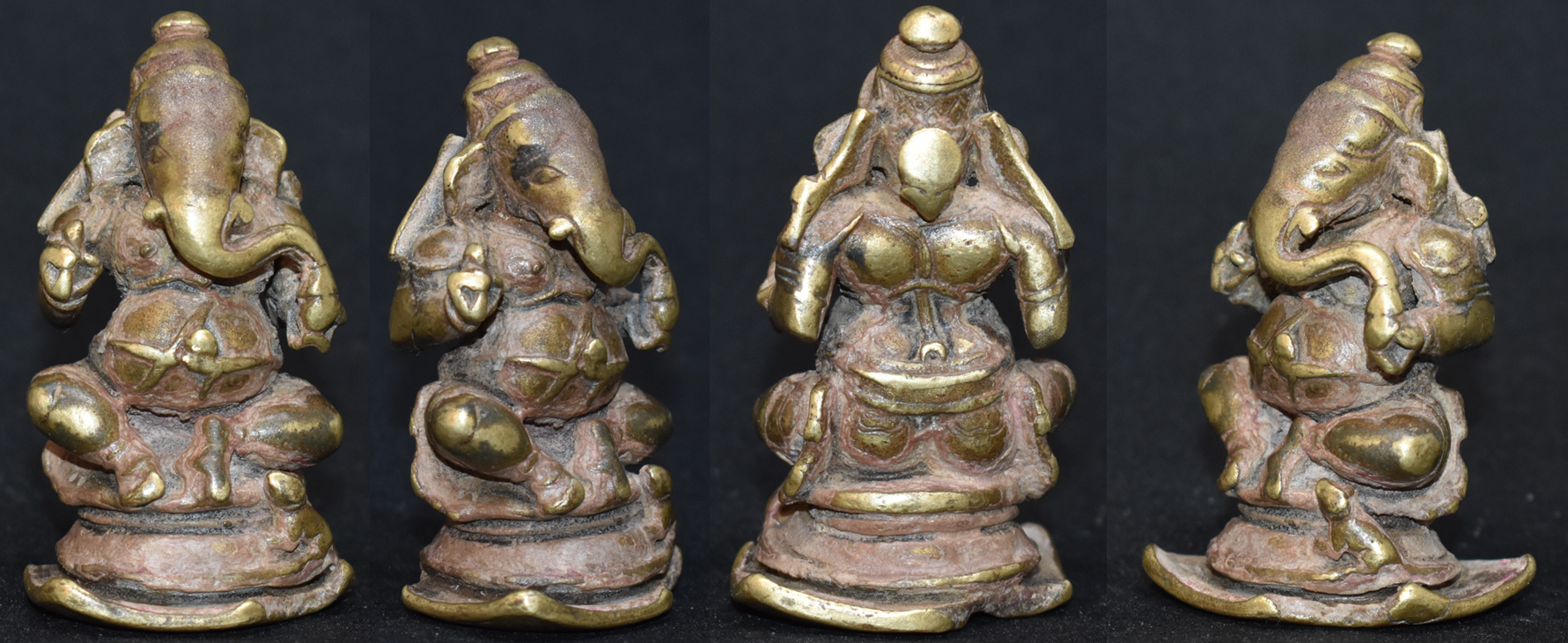
The story of a two-armed Ganesha: When I showed this Vigraha to a Mumbai-based dealer/friend, he suggested based on the shiny elbows, that it may have been modified. The Vigraha may have started as a four-armed Ganesha and lost/damaged the arm(s). The seller(?) may have removed/filed the remaining portion of the two arms to give it a new life as a two-armed Ganesha.
Interesting, I thought. If the ‘additional hands’ were attached at the elbow and not at the shoulder, then such modification is possible.
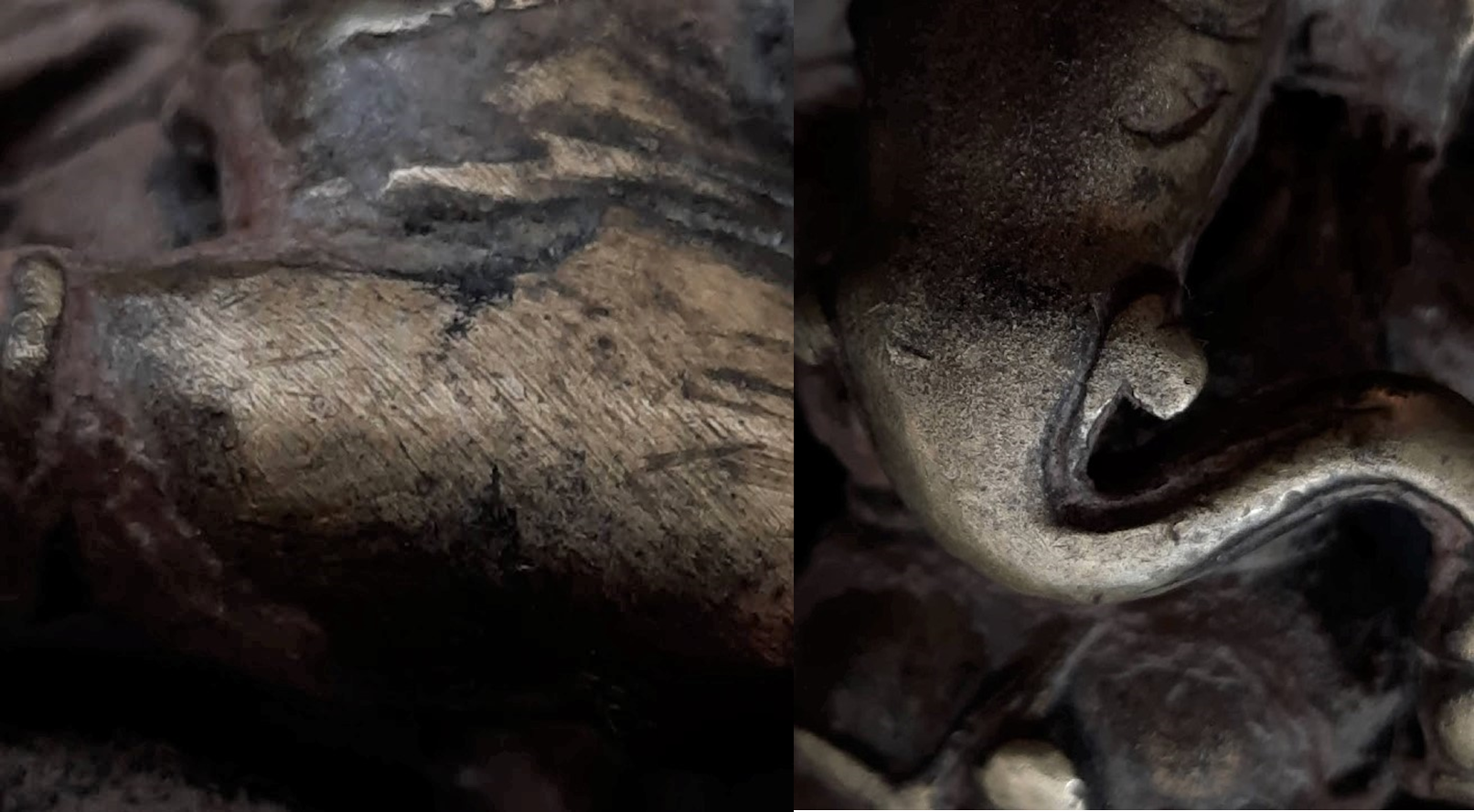
I took a second look/third look. ..The elbow’s colour matched the other exposed portions, knee, trunk and hand. Still not convinced. Then used a magnifier to look at the elbows and compare them to another similar shiny part, the trunk. The file marks on the elbows are clearly visible. I have included closeups of the left elbow (first picture) and the trunk for your perusal.
As this blog site is meant to create and raise awareness, I decided to share ‘the story’.
Anyway, after this learning came across another such two-armed Ganesha. It looks like such ‘engineering’ is not uncommon. There is a lot to the adage ‘ If it is too good to be true, then it probably is’.
As usual, your comments and views are welcome.
This Vigraha is probably not more than 300 years old. Well-loved and worshipped. See the gap between his left leg and his belly. That is craftmanship.
This bronze is from North Deccan and it is about 6.5 cm in height.
 Bronzes of India - A personal collection