Let us do it differently in this case.
The Hindu Pantheon by Edward Moor, 1810, is one of early books in English to document Hindu Iconography. Despite the generic title, the book focuses more on the Vigrahas from the Deccan Plateau.
Let us see what Edward Moor says about Khandobha. To start with, he calls the deity Kandesh Rao.
On the deity: “What I have to relate of KANDESH RAO is gathered chiefly from Poona Brahmans; who state SIVA became incarnate in this personage for the purpose of destroying an oppressive giant, named MANI-MAL, at a place in the Carnatic, called Pehmer. PARVATI, they say under the name of MALSARA, accompanied her lord, who appeared as a man clothed in green, (but I have no picture of so clothed): he is generally represented with PARVATI on horseback, attended frequently by a dog”. Pages 421-422.
On the popularity of the deity: ” There are few deities more domestically popular, throughout Mahrata countries, than those of the Avatara under our consideration; more especially in the districts around Jejury, where KANDESH RAO has, I think, his principal temple, and where, indeed, it is said by some, that the incarnation manifested. ” Page 423.
But for the language, what Edward Moor had to say about the deity has remained unchanged for over two hundred years. Somewhere the giant Mani-Mal became two demons Mani and Mala.
The deity continues to be ‘popular’. In my collection, there are over ten images with varying iconography. Some of them were made after the book was published in 1810.
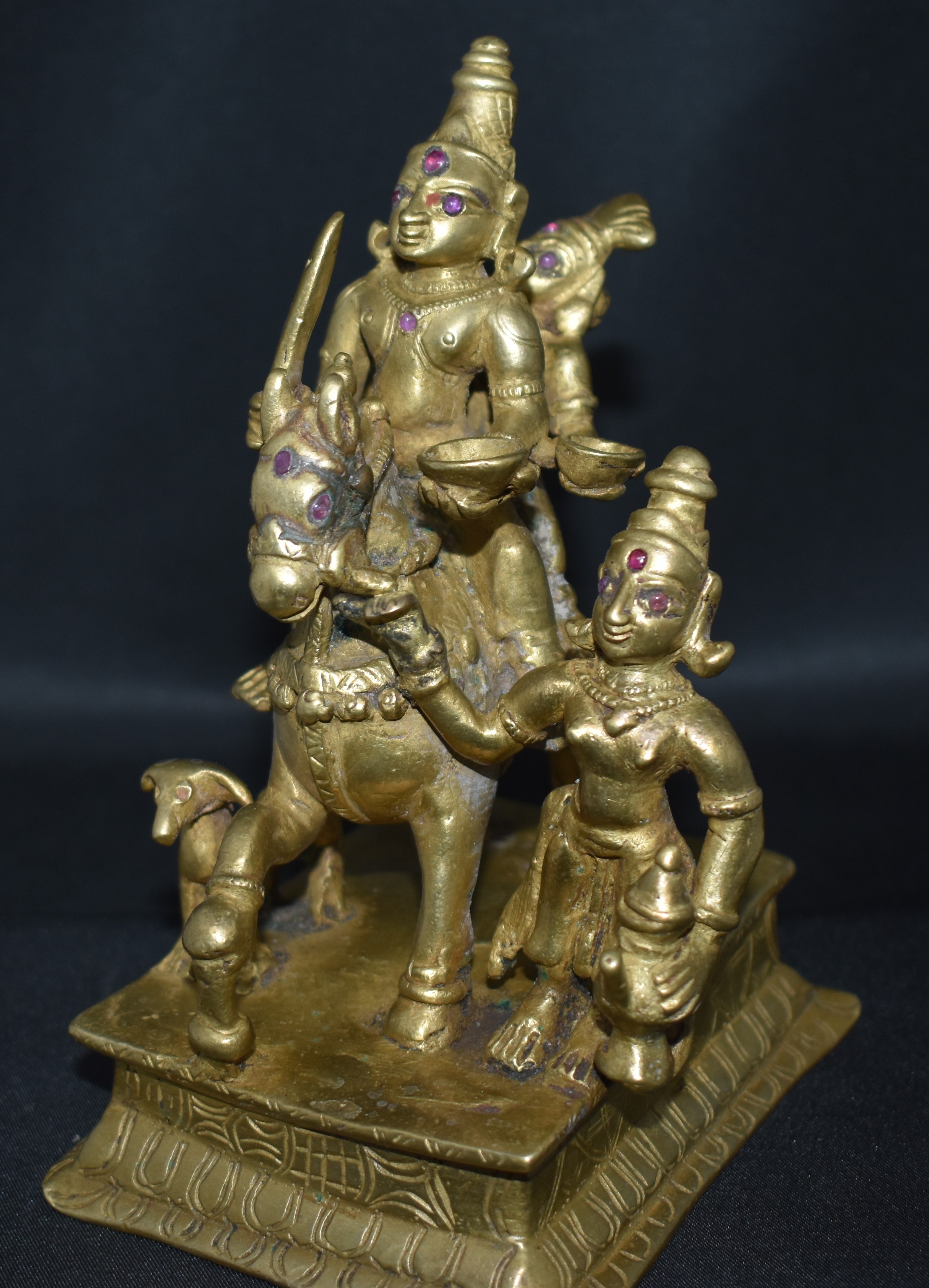
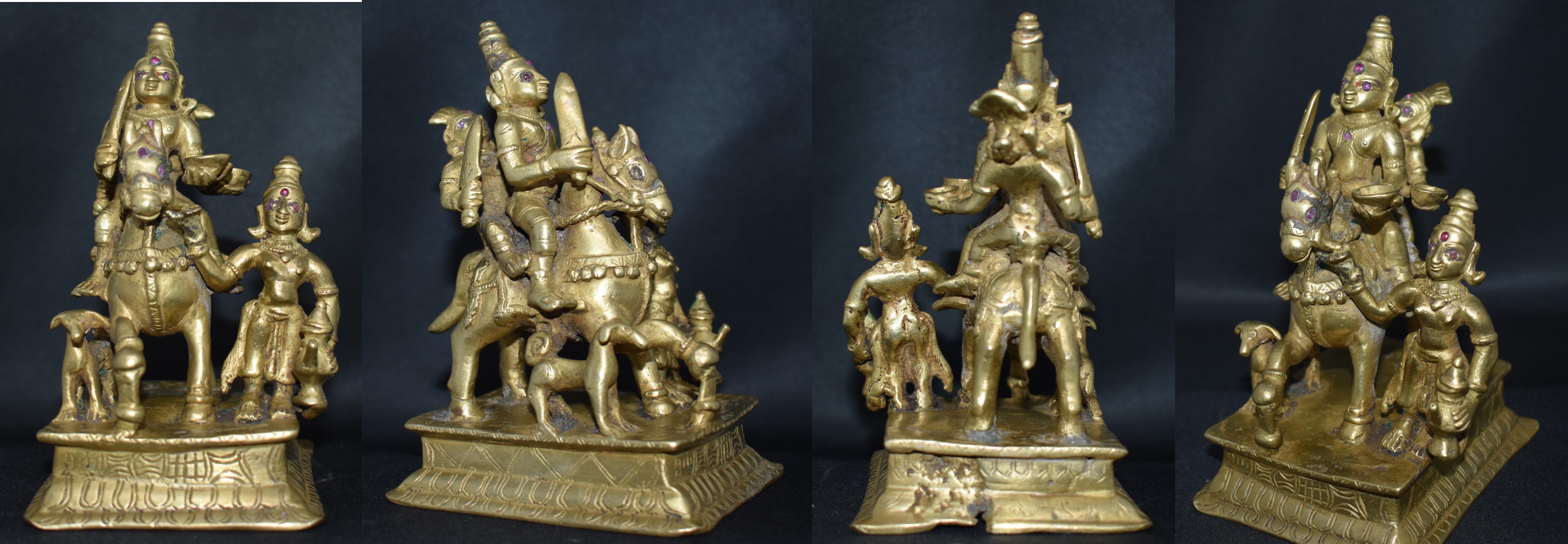
This Vigraha is from Maharashtra, and it is about 16 cm tall. This is a classical and an elaborate example. Among the features worth noting are a two-armed depiction of Khandobha, Mahalsa also carrying sword and cup, the stone inlays and the attendant carrying the ewer.
 Bronzes of India - A personal collection