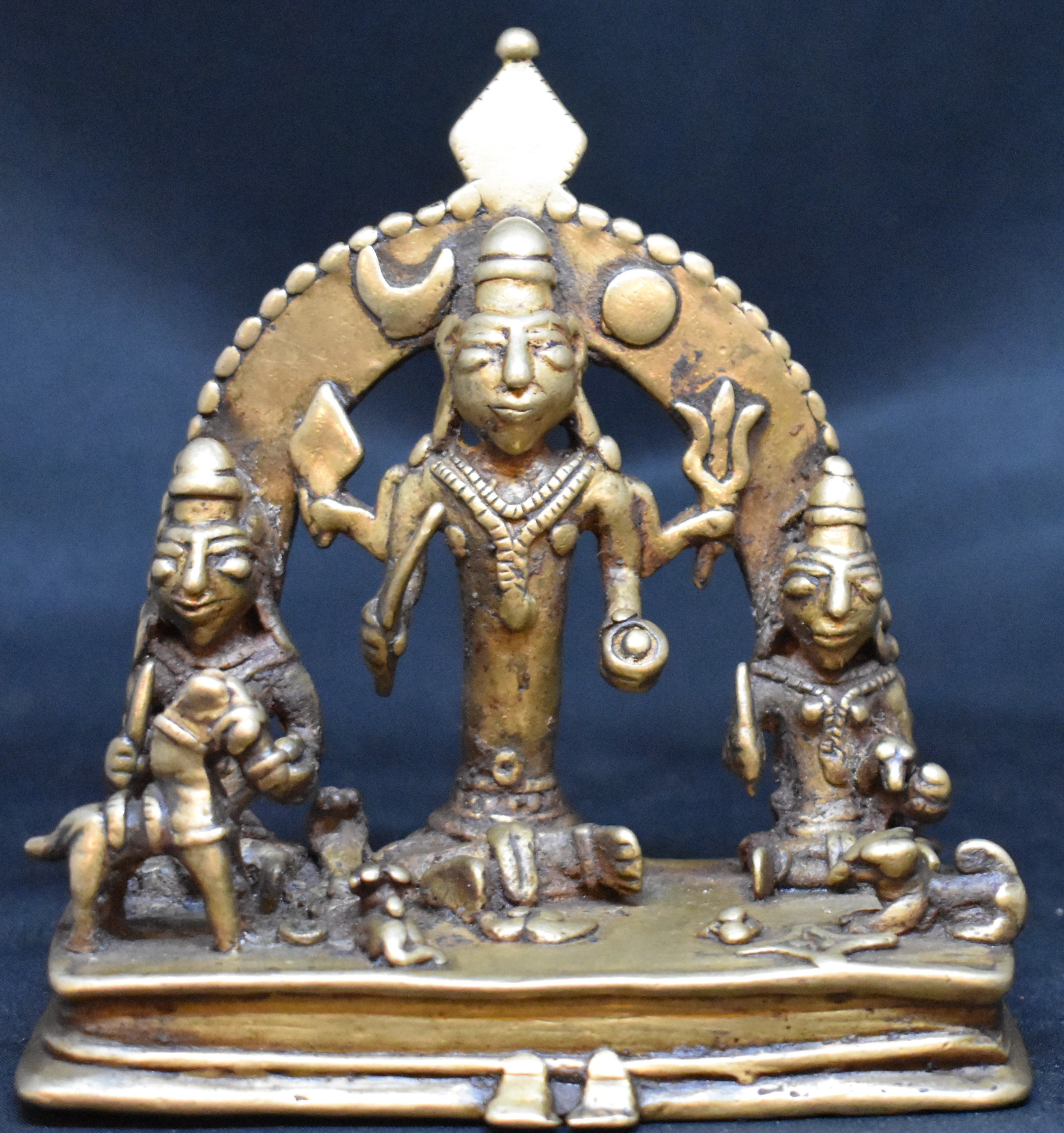
This is Khandobha and his consorts seated ona platform full of sacred objects. The identification of Khandobha is through his attributes sword, drum, Trishul and a skull cup (clockwise starting from his lower right hand). The presence of a horse (our left side) and a dog (on our right side) reinforces the identification.
Khandobha’s consorts are Mhalsa and Banai. It is unusual to see them together with Khandobha. As per the Ithihasa (Translates to : as it happened), Mhalsa was angry with Khandobha when she learned about his second marriage and did not let Bani stay with her. In the main Khandobha pilgrim center, Jaijuri, only Mhalsa is present with Khandobha in the main temple on top of the hill. Banai has her own shrine half way up the hill.
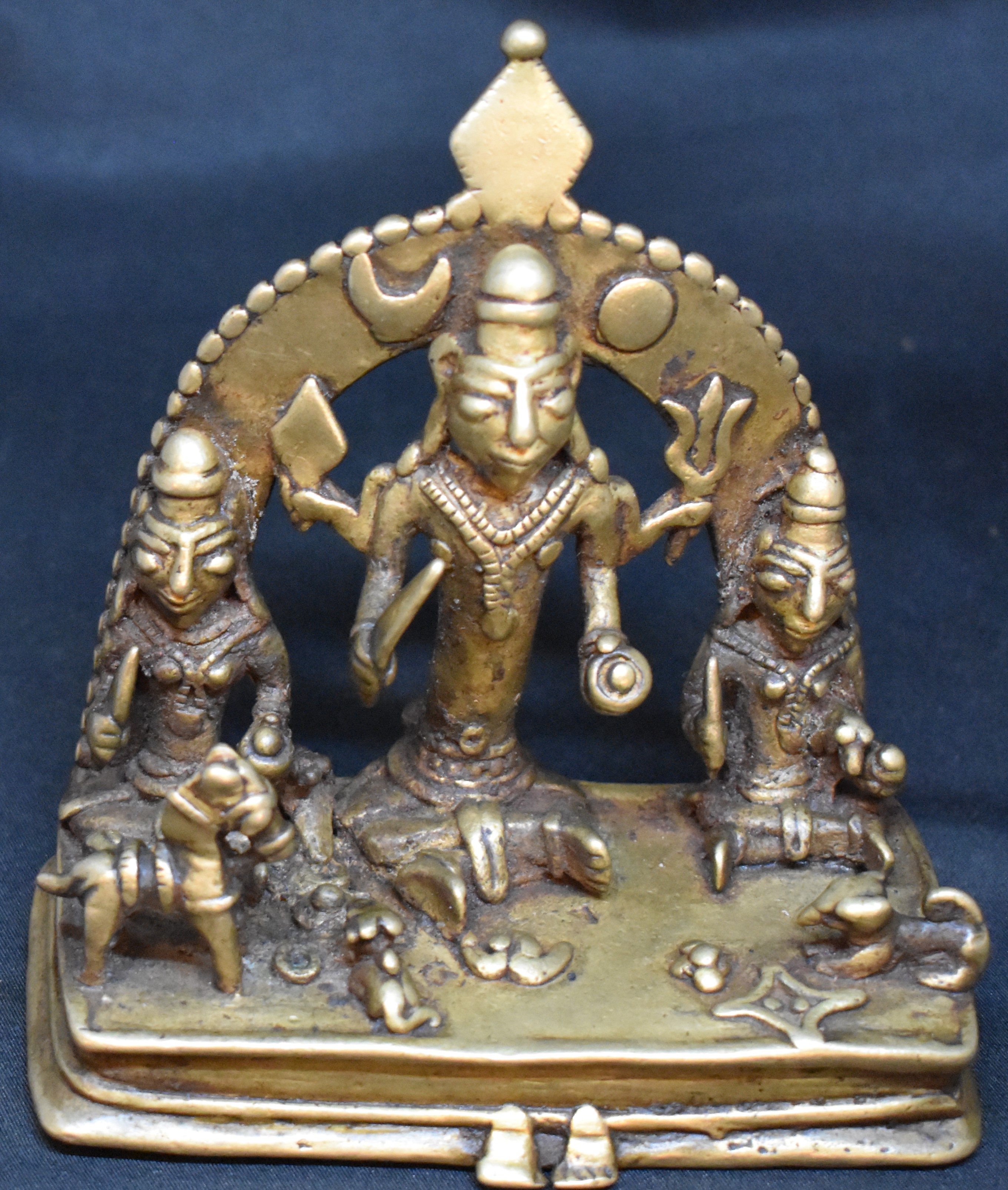
The platform has several sacred objects Sun symbol, a bull (Siva’s vahana) sitting in front of Linga (an aniconic form of Siva), a cobra protecting the Linga, a Moon symbol (?) near Khandobha’s feet, a heap of five spherical objects (denoting Pachayatna), a fire altar (Homa Kunda) and a pair of feet in the front.
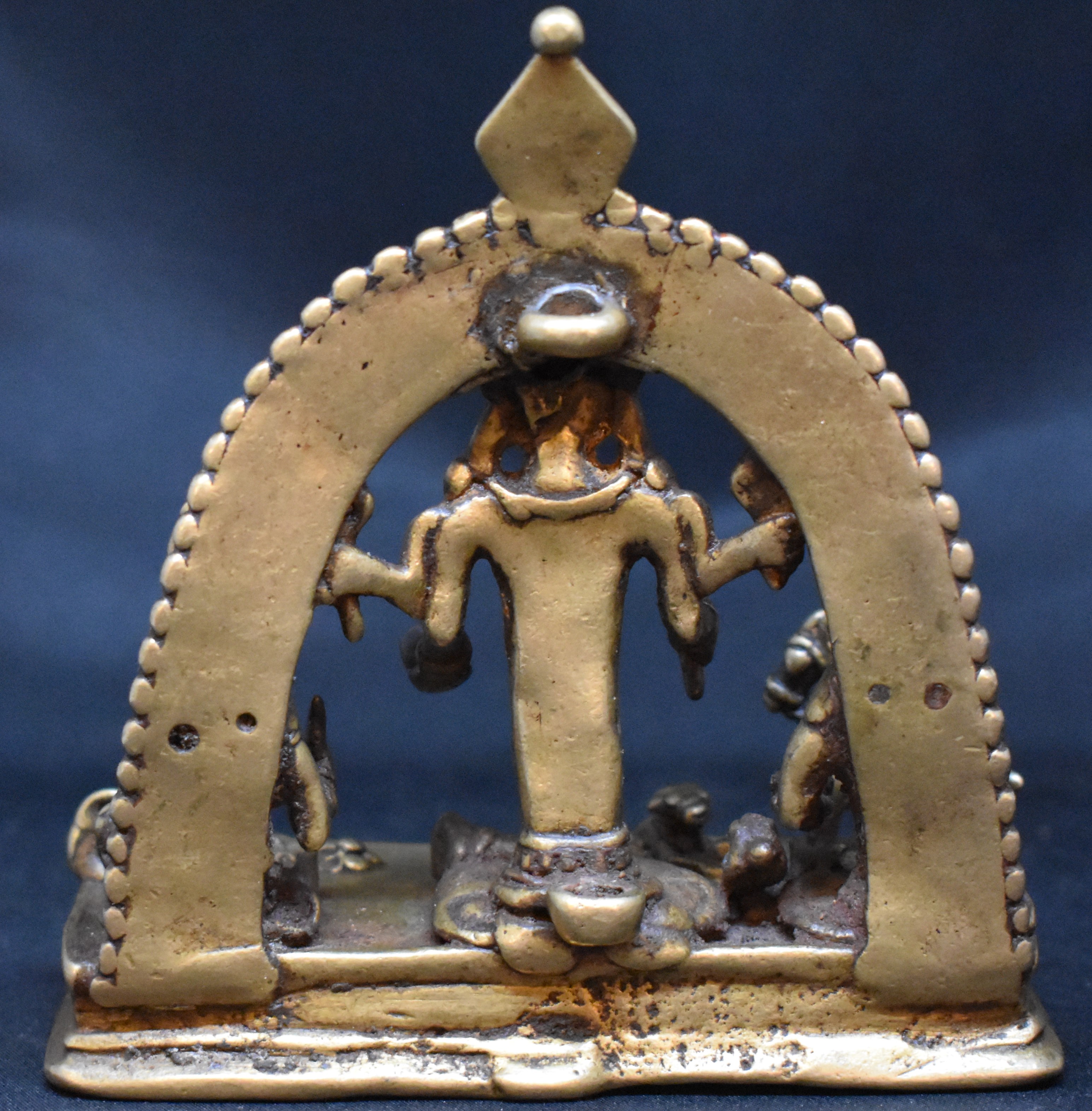
The presence of these religious symbols on the platform is an interesting aspect. I have not fully understood the concepts behind them. I can not but notice some similarity between these ones and the one’s on Govinda Bhairava’s platform.

Even more curious is the consort on Khandobha’s left holding an animal , possibly a dog, in the crook of her left arm. This is a feature I have not seen in any other Khandobha entourage.
This Vigraha is about 12 cm in height and it is from North Deccan. This may be dated to the nineteenth century.
 Bronzes of India - A personal collection