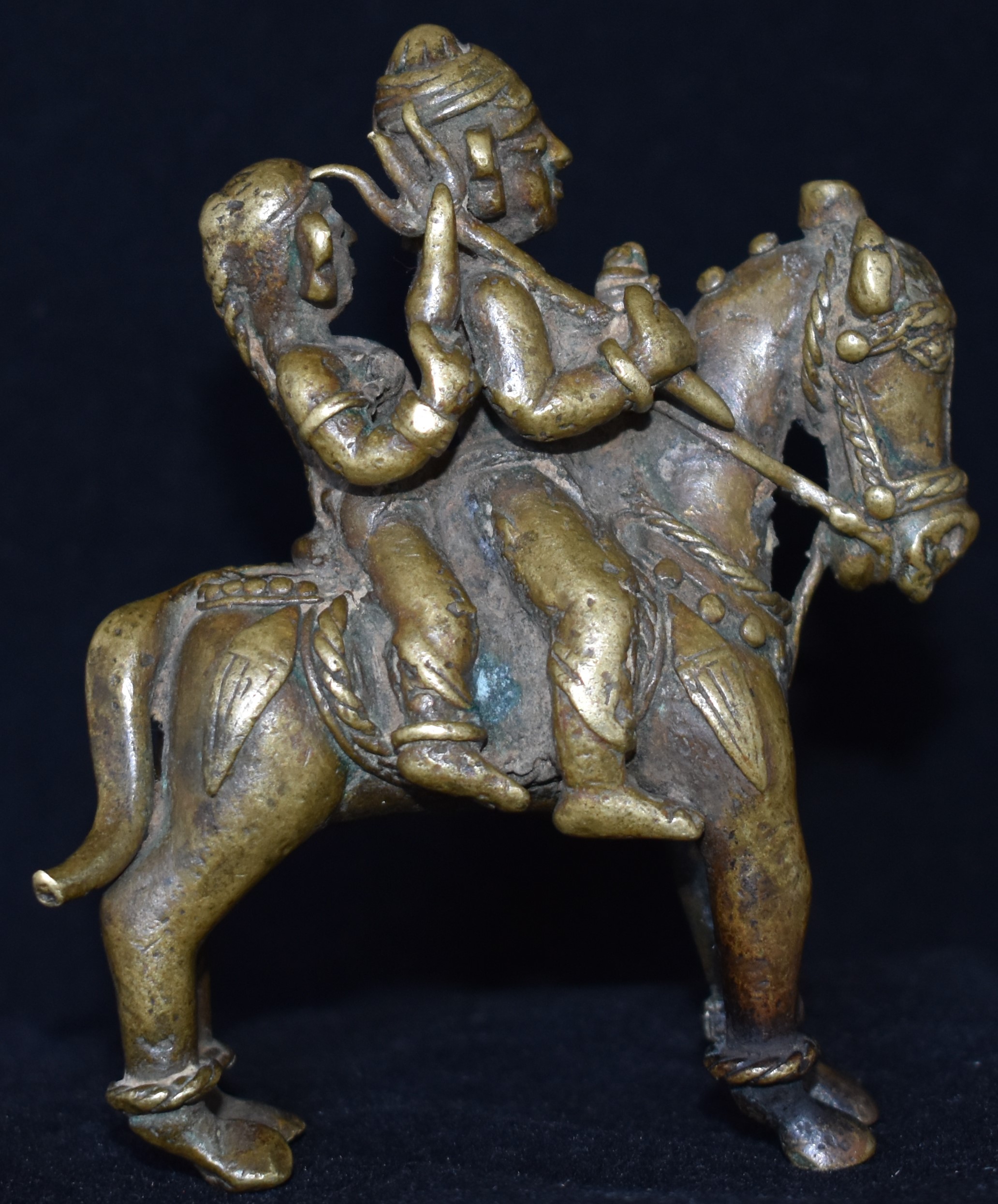
This is Khandobha, a form of Siva. He is identified by the Trishul in his hand. His vahana, a horse, marks this form Khandobha. Here, his consort Mhalsa is seated behind him and is holding a lotus in her hand. On this site, there are several Khandobha featured and refer to them for the mythology.
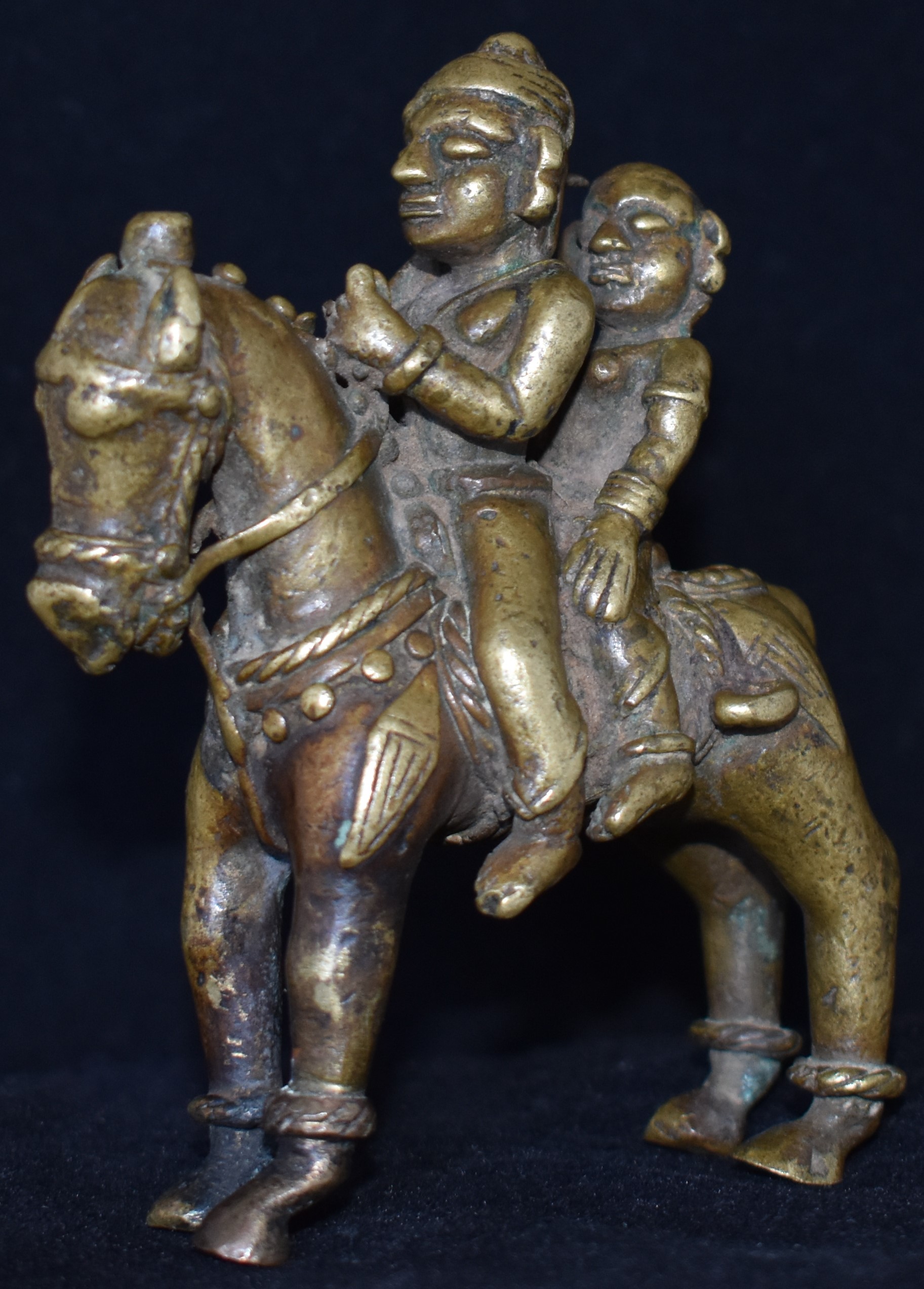
As is the case with most of the Khandobha sculptures, this is also folk in nature. But the features of the bronze have a level of sophistication that is uncommon in folk bronzes.
For example, see the horse’s legs and hooves. Almost in all the bronzes on this site have hooves and legs in a straight line. In this one, the hooves extend beyond the legs, just the way horses’ hooves do.
The quality of work is also evidenced in the sculpting of horses’ reins, horses’ decoration, plaits of Mahalsa, the border of the saddle, and the way the saddle’s support is taken below the horse’s tail.
There is a loop on the left side, the purpose of which is not known. May have held an umbrella, a way of protecting the deities from the sun.
Now to the bottom view. The pattern of saddle edges continues on the bottom as well. In addition, a rope is tied to the sides of the saddle to keep it in place. To detail the bottom part, someone must have really loved what they did.
This bronze came to me in a lot, and I was planning to sell it. Changed my mind after I saw the bottom.
The bronze is about 9 cm in height. It is from North Deccan (North Karnataka/South Maharashtra). This may date to the nineteenth century or a bit earlier.

 Bronzes of India - A personal collection