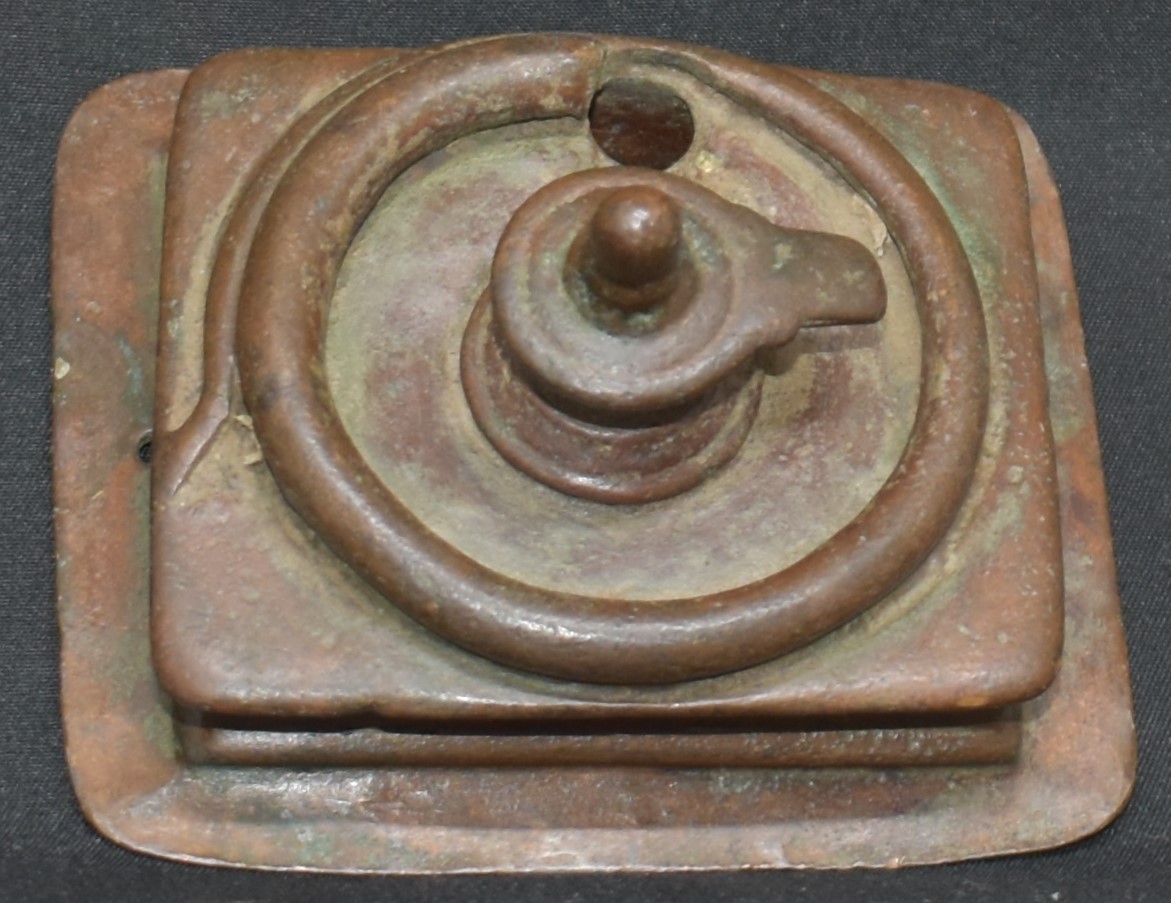
This is Linga, Shiva’s aniconic form. Here it is missing the head of the cobra. The rest of cobra’s body is coiled around the Linga.
There is something about the design, proportion, clean lines and copper-rich alloy that catches eye.
Despite the missing part this remains one of my favourites. It is unusual to find such Linga sculptures from Tamil Nadu. It measures 8.5 cm by 7.5 cm. This Vigraha is probably about 150 years old.
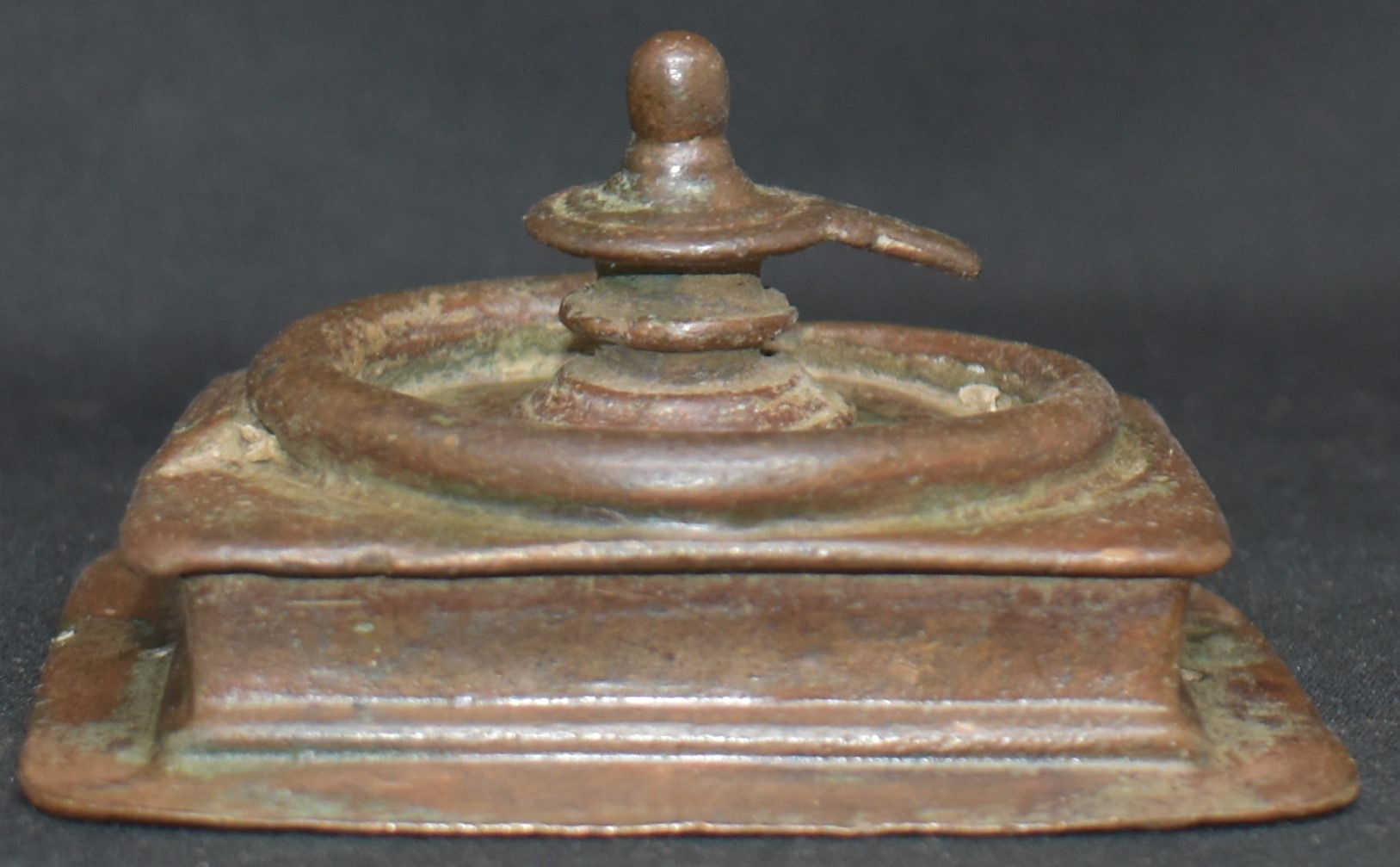
There are different views about the spout portion of the LInga. One view is it was meant to drain the liquids poured during the ritual bathing.
Some view it as a representation of Yoni and see the Linga as the union of male and female symbols. This view probably came into vogue when Saktha worship (worshipping of Goddess as the primary deity). For some reason or other that interpretation has found favour and it has a large following.
To me that interpretation, the circular portion and the spout represents Yoni, it is not convincing. Let me list some of my reasons.
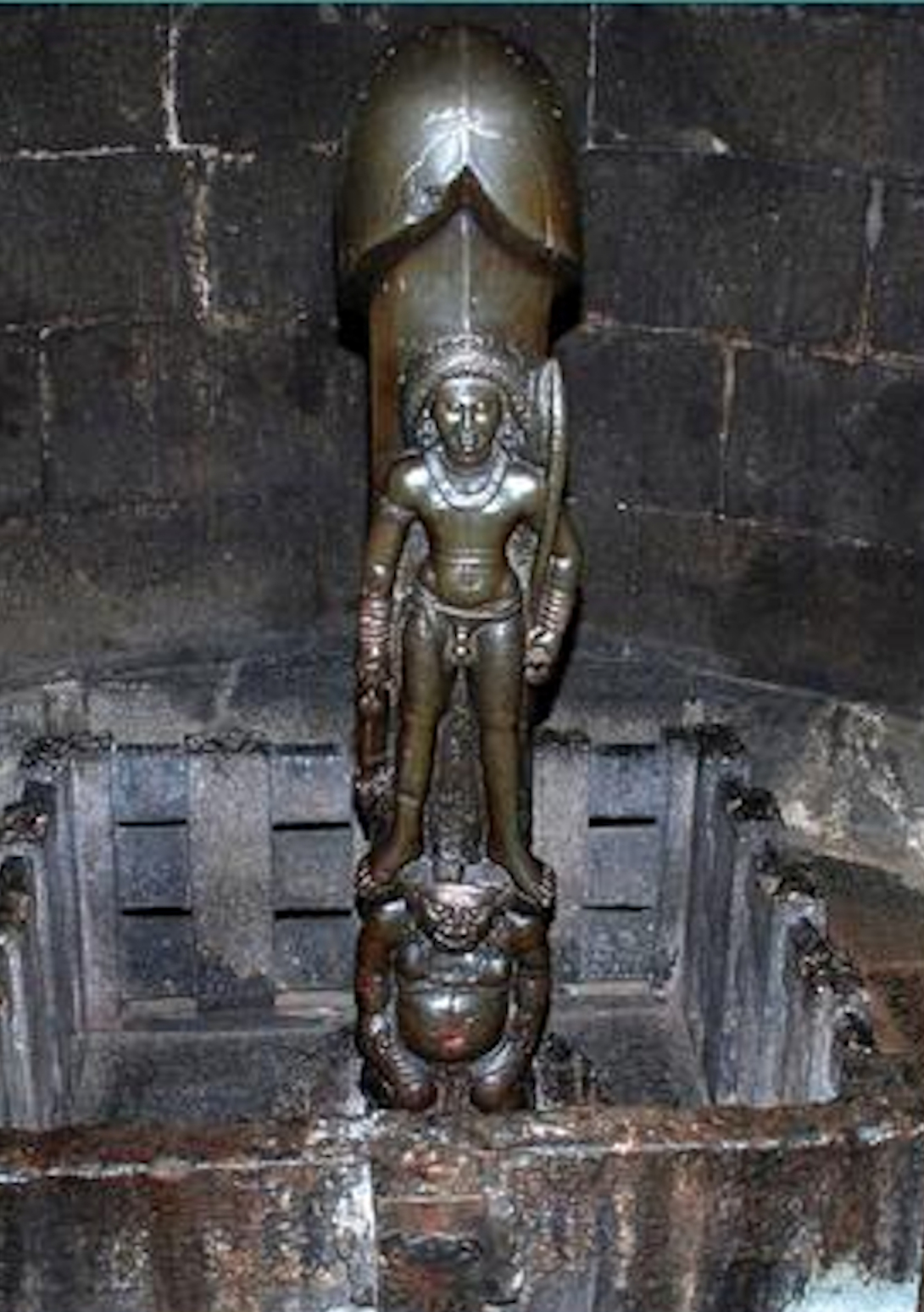
The early images of Linga, as aniconic form of Shiva , did not have the drainage portion. The example, to our right, is Gudimallam Linga dated to the 1st – 3rd century BCE. Here the Linga is positioned on the shoulders of a dwarf. Picture from the Internet.
Despite the popular view that Linga represents male and female features, in almost all the Saivite temples Linga is is worshipped as a male deity. In the Saivite temples, there is invariably a separate shrine for the consort . In fact, some temples practice the ritual of taking the Goddess to the God’s shrine for the night, just before closing the temple.
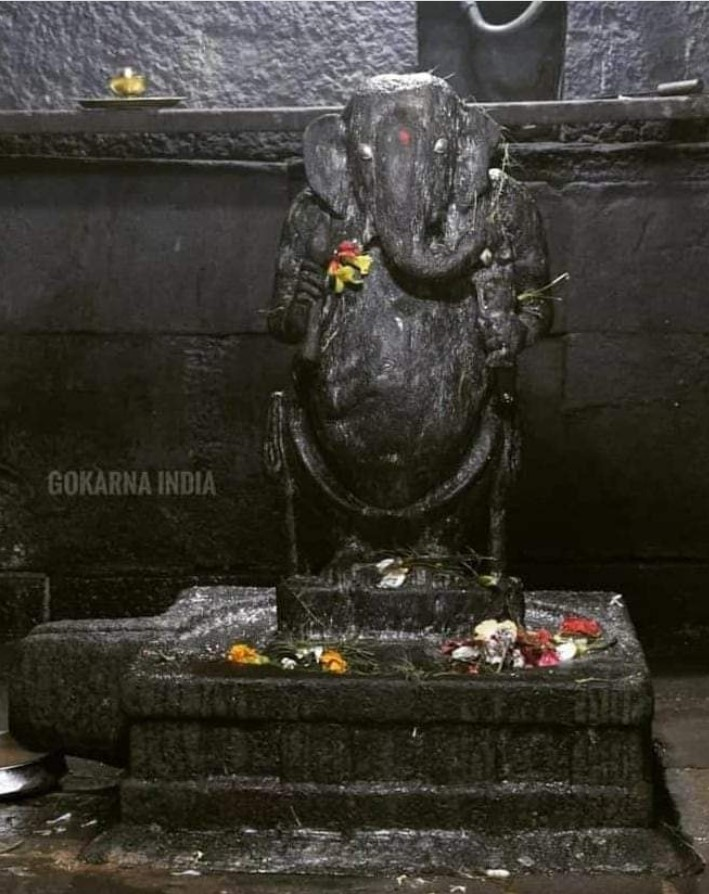
The circular platform and the spout is actually used as a drainage platform as seen in the example on our left. It is from Gokaran, Karnataka. Photo courtesy FB pages of K P Ravichandran.
There are several non-Linga examples of early Himachal Pradesh and Kashmir sculptures, prior to the 12th century CE, with such drainage spouts.
For those who view the Linga as the union male and female organs, without going into the details, I would like to remind them of biological facts.
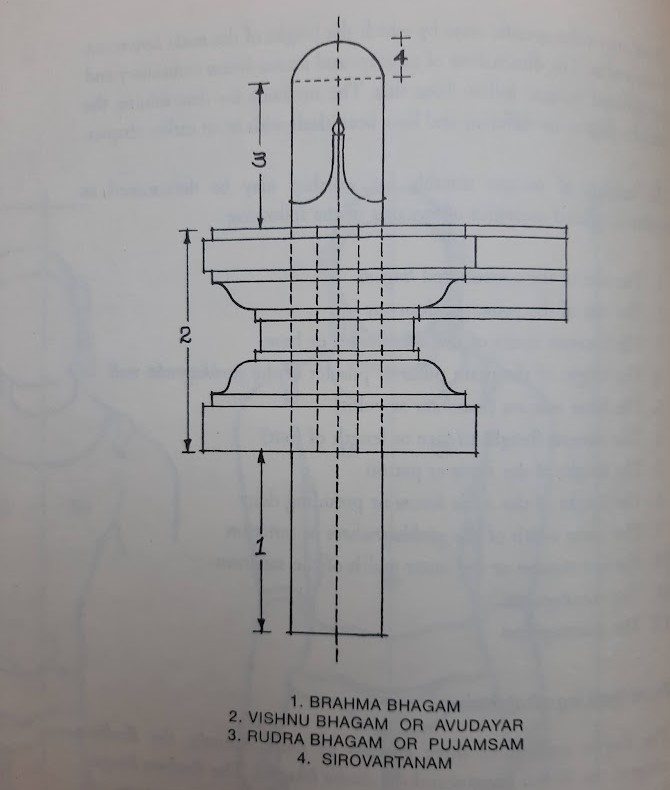
There is also a view the Linga actually represent the Trinity, Shiva, Vishnu and Brahma. See the photo on our right. It is from the book Indian Sculpture and Iconography Forms and Measurements by V Ganapati Stapathi.
It is possible what started as a way of dealing with Sakta worship popularity, got reinforced and amplified during the British Colonial days.
 Bronzes of India - A personal collection