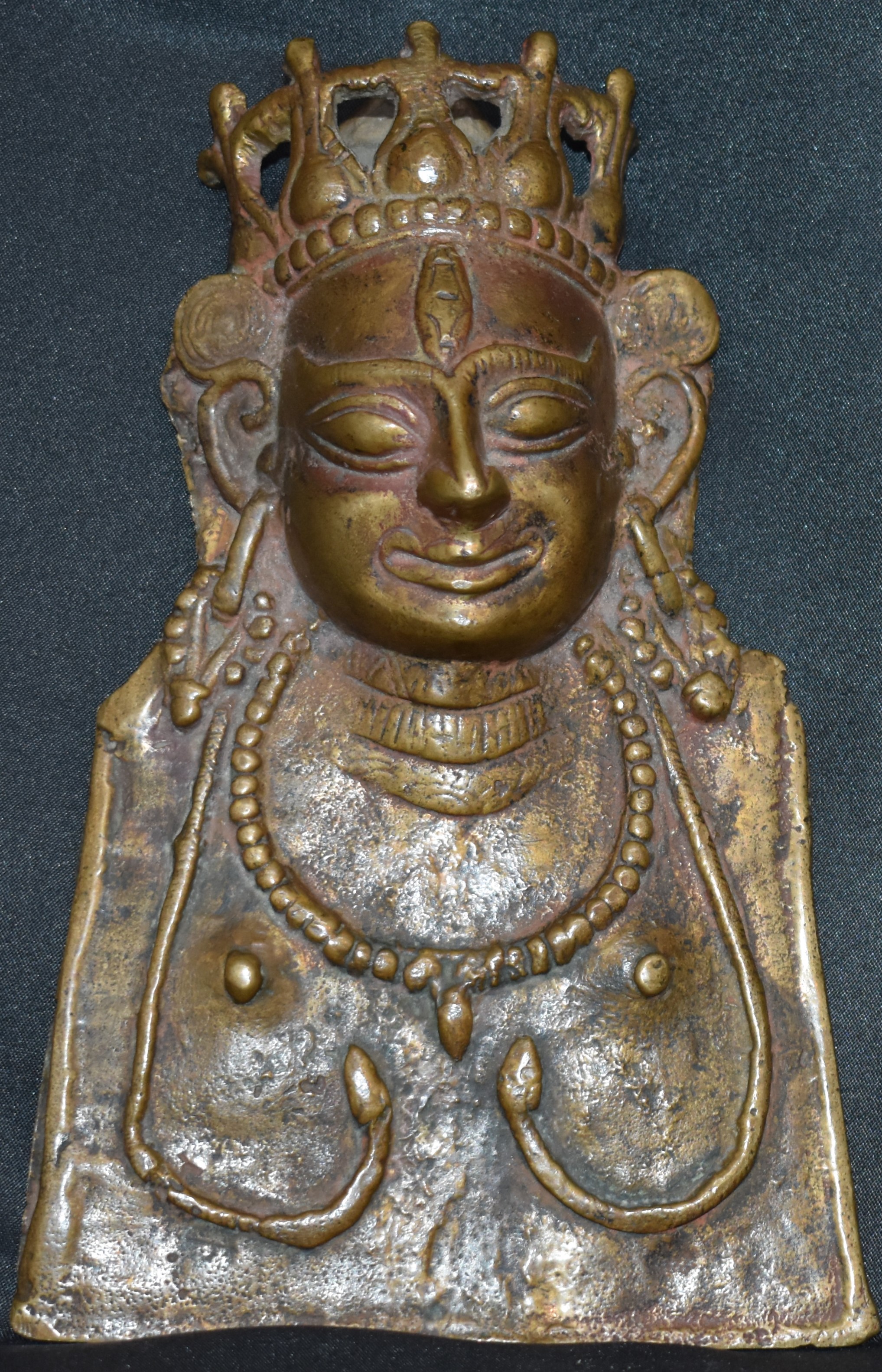
Mohra means mask. But these figures are never used as masks and they are more like a bust. Mohras depict deities. They are from the Himachal Pradesh and its neighboring areas. Mohras are plaques and are either cast or embossed. This is an example of cast Mohras.
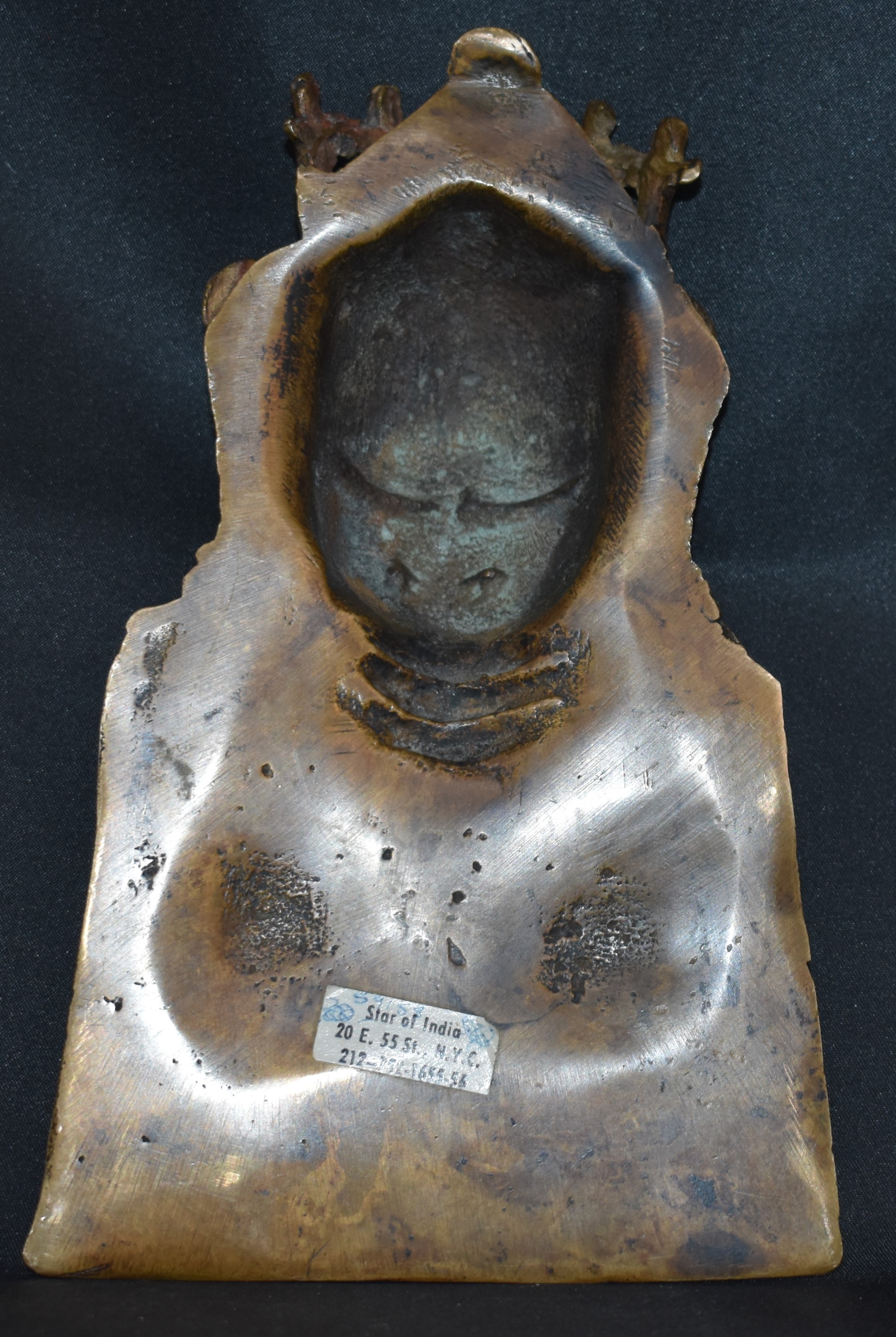
Features to note include chiselled eyebrows, elongated pear shaped earrings, the diadem’s design, wrinkles on the neck folds and the two snakes.
This Mohra is about 18 cm in height. It is dated to the fifteenth century CE, based on the stylistic features. The earliest Mohras are dated to the fifth century CE.
For more information on the Mohras, please see the book Antiquities of Himachal by M Postel, A Neven and K Mankodi.
Rest of the blog is comparing a fake/reproduction published in the above book with this Mohra. On page 239, the book has two Mohras (Figure 238) and one of which is reproduced here for comparison. That Mohra is in the Simla Museum and, as per the authors, it is a ‘flabby copy from a mould taken from an original specimen of the late fifteenth century’
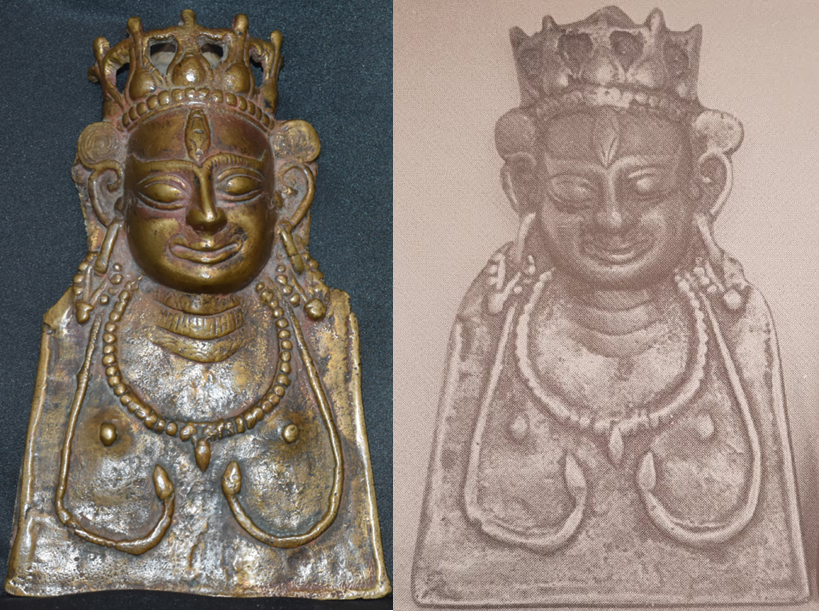
A quick comparison and some of the differences:
- The definition of beads in the necklace. In the Simla museum example, the beads are fused.
- The breakage in the snake (right one) has ‘filled up’ in the copy.
- Nipples lose their round shape and gets elongated
- The circular disc above the ears lost their circular chiselled rings
- The neck folds lost their wrinkles.
In general, the copies lose their definition and the features get a bit more rounded. This is because they are made using a mould taken from the original. In addition, the chiselled/engraved features are not reproduced faithfully.
However when it comes to worship, to most people, a copy or original will not make a difference. It is deity and that is it. But to the art historians and collectors the differences do matter. The question is: How would a collector treat a ‘copy’ that has been in worship for many decades/centuries?
 Bronzes of India - A personal collection