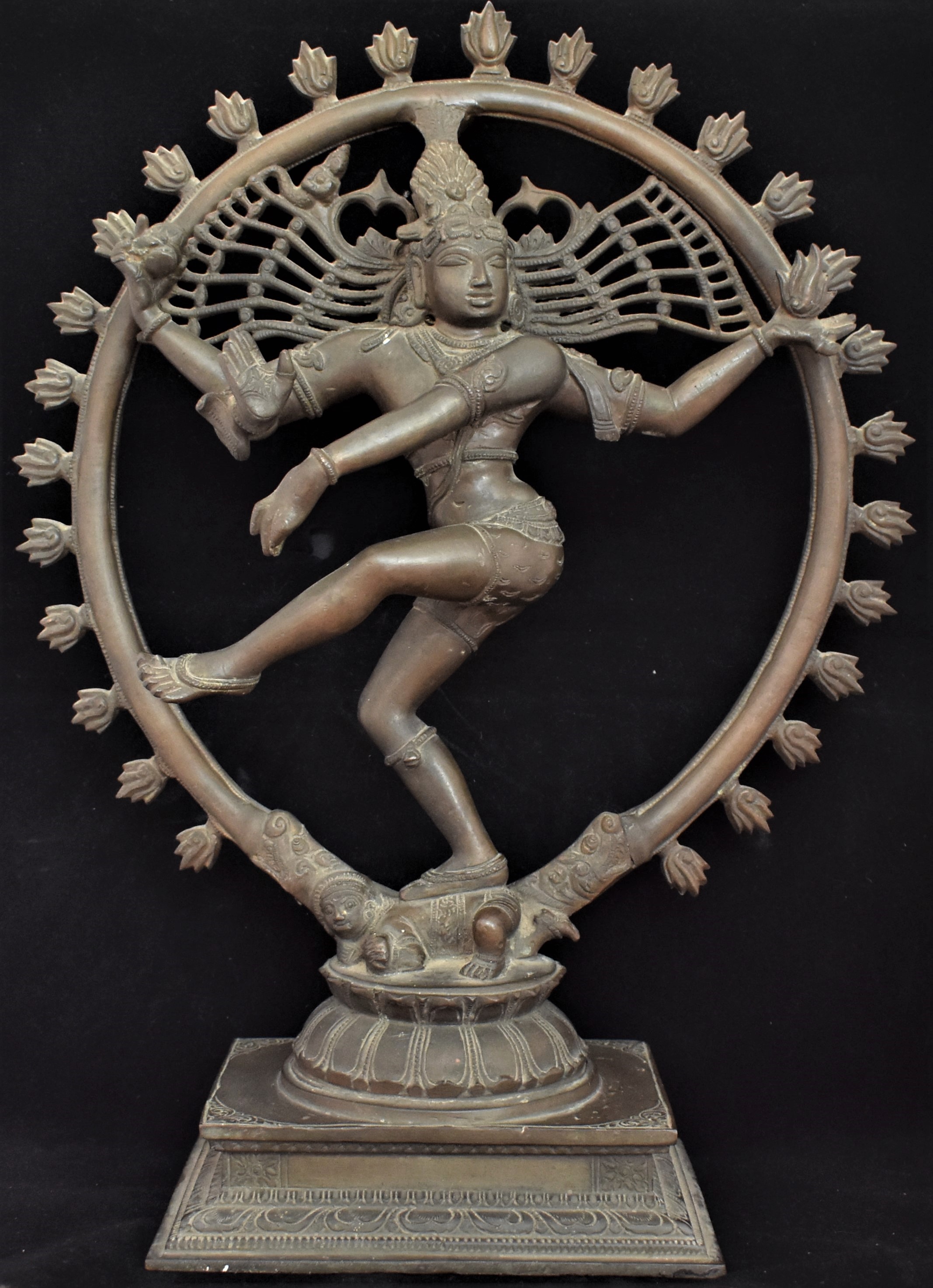
This is Nataraja, the Lord of Dance.
According to Auguste Rodin, Nataraja’s sculptures are ‘ The perfect embodiment of rhythmic movement’. Who would not agree?
Nataraja has come to represent Indian sculptures more than any other figure you can think of, and it is a compelling image.
Four-armed Nataraja is dancing on the back of Apasmara, a dwarf who symbolises ignorance, while the front right hand shows Abhaya mudra (protection) and the left front hand points to his raised, crossed-over left feet. The rear hands hold a drum, which symbolises time/creation, and fire, which marks destruction.
According to R Nagaswamy, Timeless Delights, South Indian Bronzes in the Collection of Sarabhai Foundation, the Prabhavali, which should have twenty-seven flames, with each of them representing a star, is meant to represent the Universe. According to the Hindu calendar, twenty-seven stars (nakshatras) define the universe. In this case, it does have twenty-seven flames.
Normally, Nataraja is worshipped with Sivakama Sundari, as Parvati is known when accompanying Nataraja. Hence, the slight turn of Nataraja’s face to the left.
This dance is called Ananda Thandava (Dance of Bliss), and Nataraja is said to have performed this in Chidambaram, a town in Tamil Nadu.
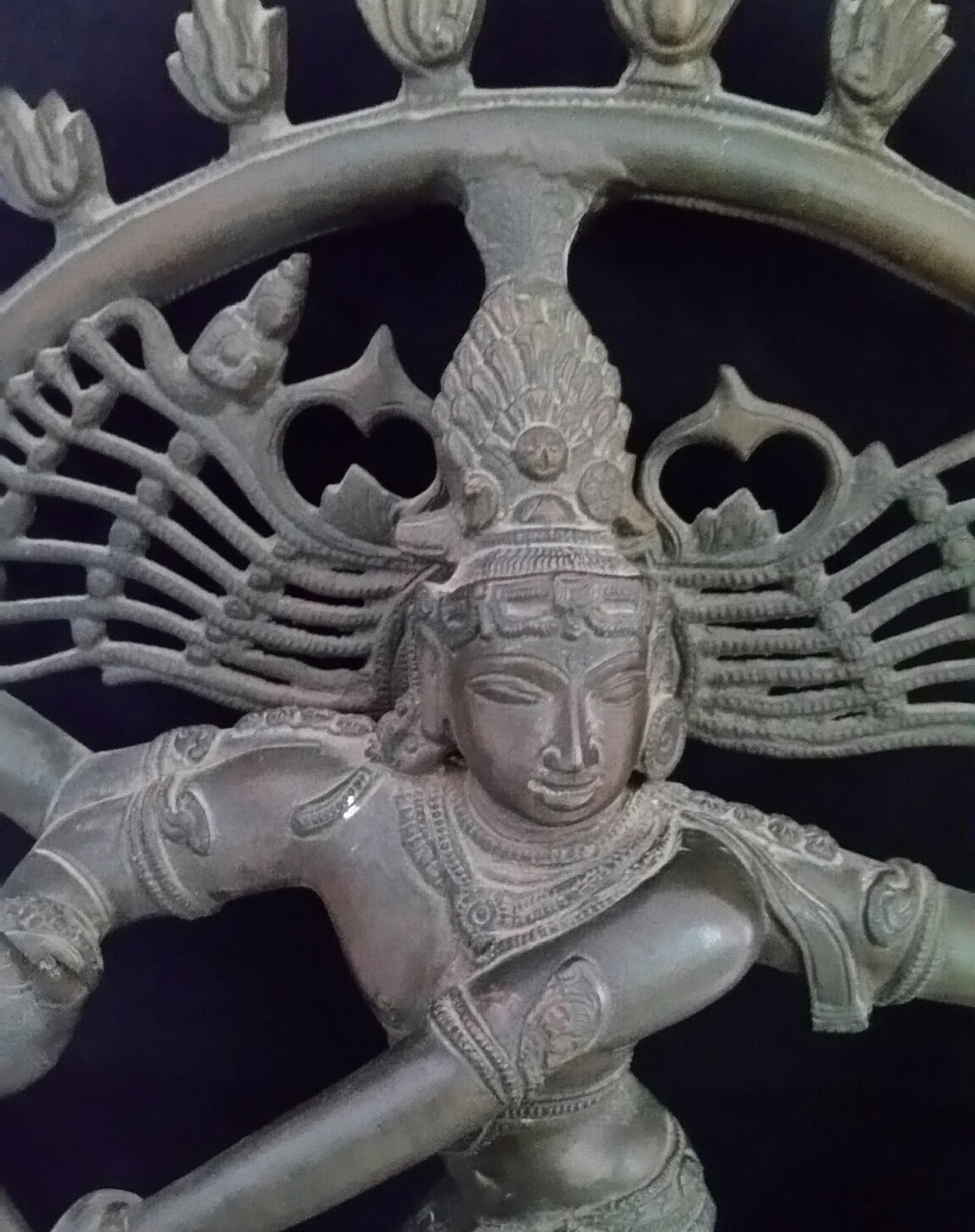
The close-up image shows Ganga, with a human upper body and wavy lower body, with his swaying hair on his right and a half moon just above his right ear. Notice the earrings, the left ear has a circular earring, and the right earring is shaped like a Makara.
This bronze is about 39 cm in height and 30 cm across. This is from the Tamil language speaking part of India.
This is a recent piece and may date to the late nineteenth century. When I bought it about thirty years ago, the dealer said it was about 100 years old, and I asked again recently, and he said it is about 100 years old! A timeless image.
(Visited Chennai Museum Bronze gallery in March 2018. On display is a Nataraja from the nineteenth century of comparable size and style. It may be after all 100+ years old)
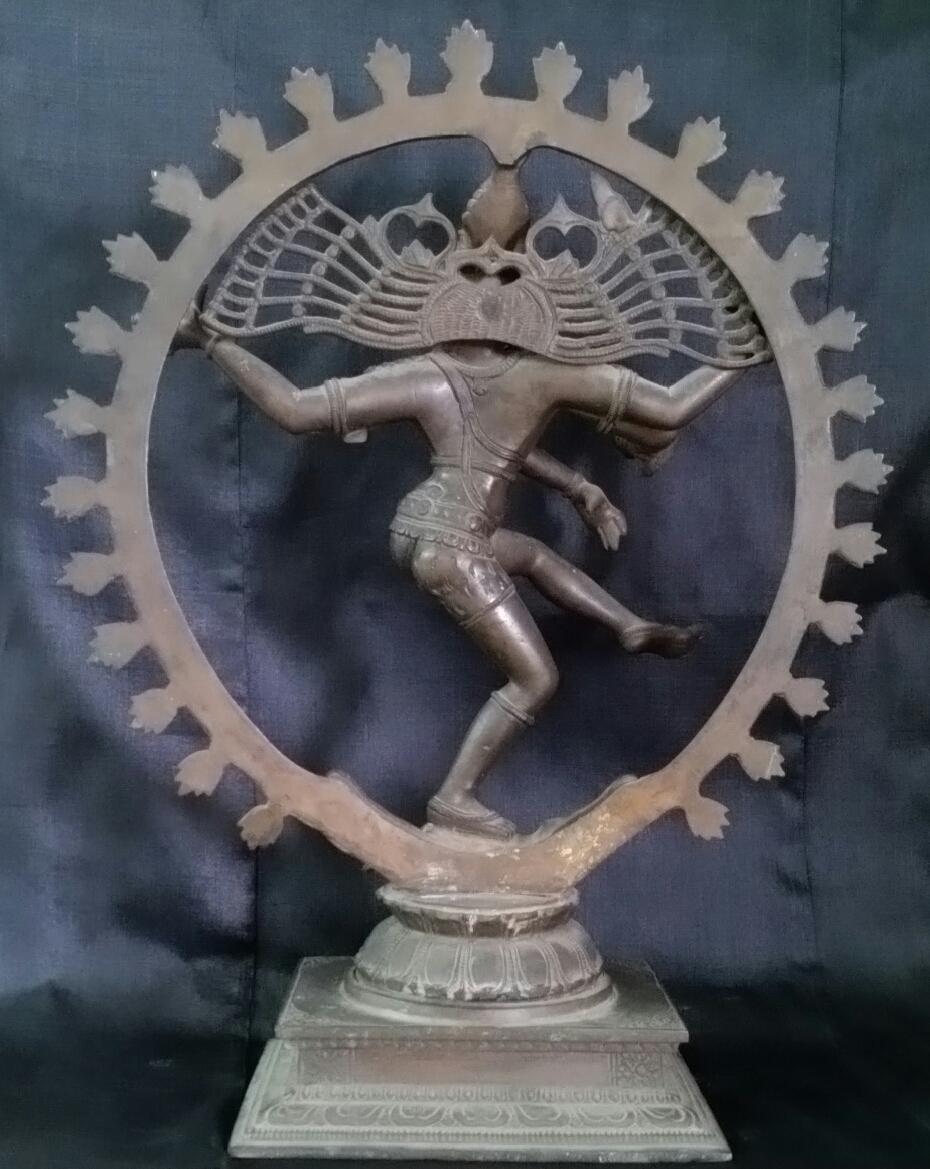
Write-ups about Nataraja are numerous, and let me sign off by giving indicators as to where to start your search.
References:
The dance of Siva: Fourteen Indian Essays by Ananda Coomaraswamy
Timeless delight: South Indian Bronzes in the Collection of the Sarabhai Foundation by R Nagaswamy
The Sensuous and Sacred Chola Bronzes from South India by Vidya Dehejia
 Bronzes of India - A personal collection