
The East-West divide is stark when it comes to cleaning sacred bronzes. Collectors in the West attach importance to the accumulated story in terms of patina and accretion of materials used in worship. Whereas in the East, especially in India, collectors are open to cleaning. In a ritual environment, the sacred bronzes are cleaned regularly, if not every day. The cleaning is for ritual purification; but often the measure is how shiny the surface is after cleaning.
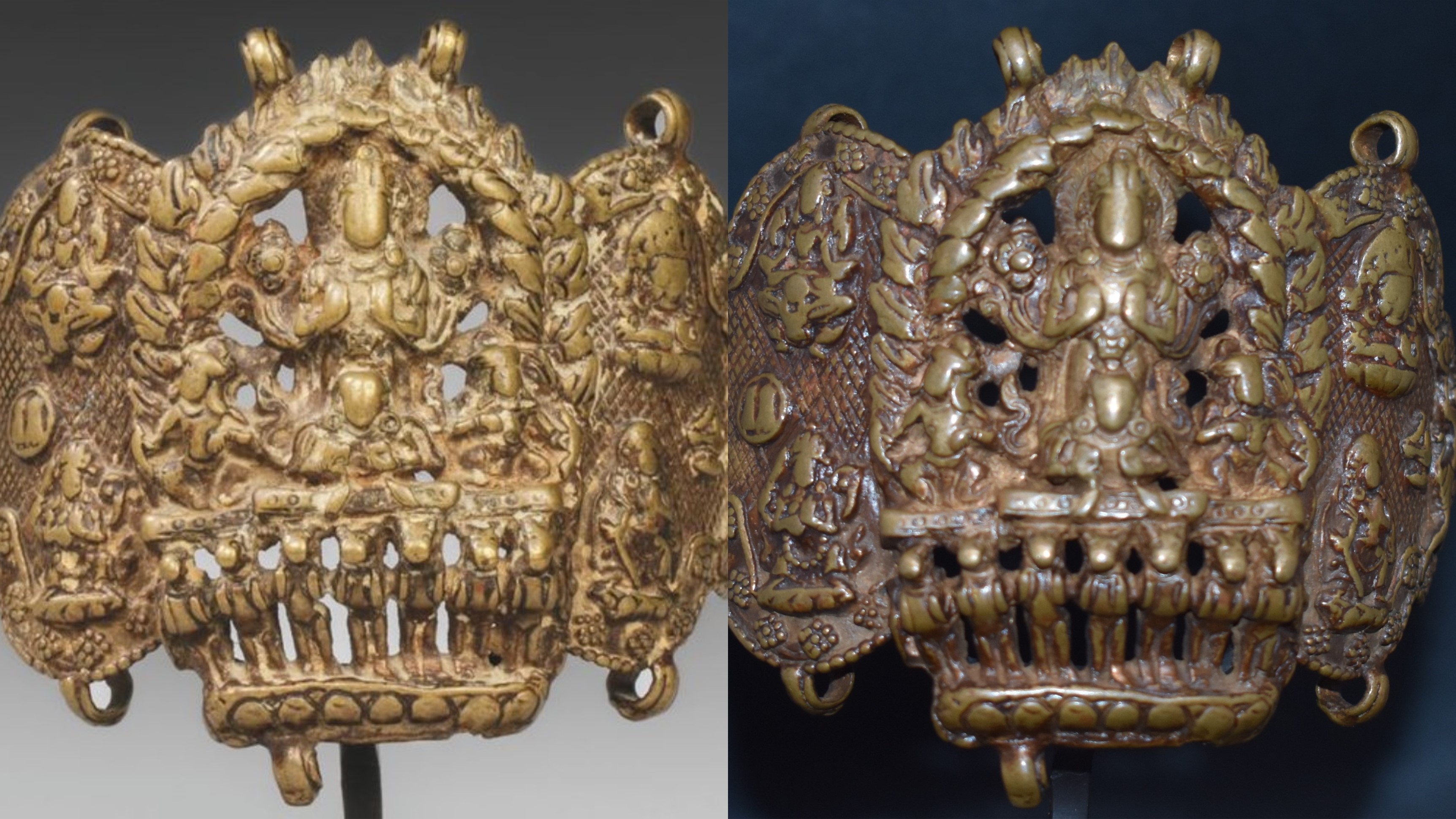
My preference is to clean to view and showcase the details. Over the years, I have experimented with various techniques and agents, including hot water and a brush, mild detergents, lemon and lime, Tamarind, a cycle of heating and cooling in water, mechanical means, and olive oil, among others. One private museum in India resorts to mechanical dental implements to clean. The results were mixed, and I would not recommend using any of them without experimentation.

About three months ago, I started using an Ultrasonic tank for cleaning, and the results are positive. Some of the before (our left) and after images are shared in this blog.
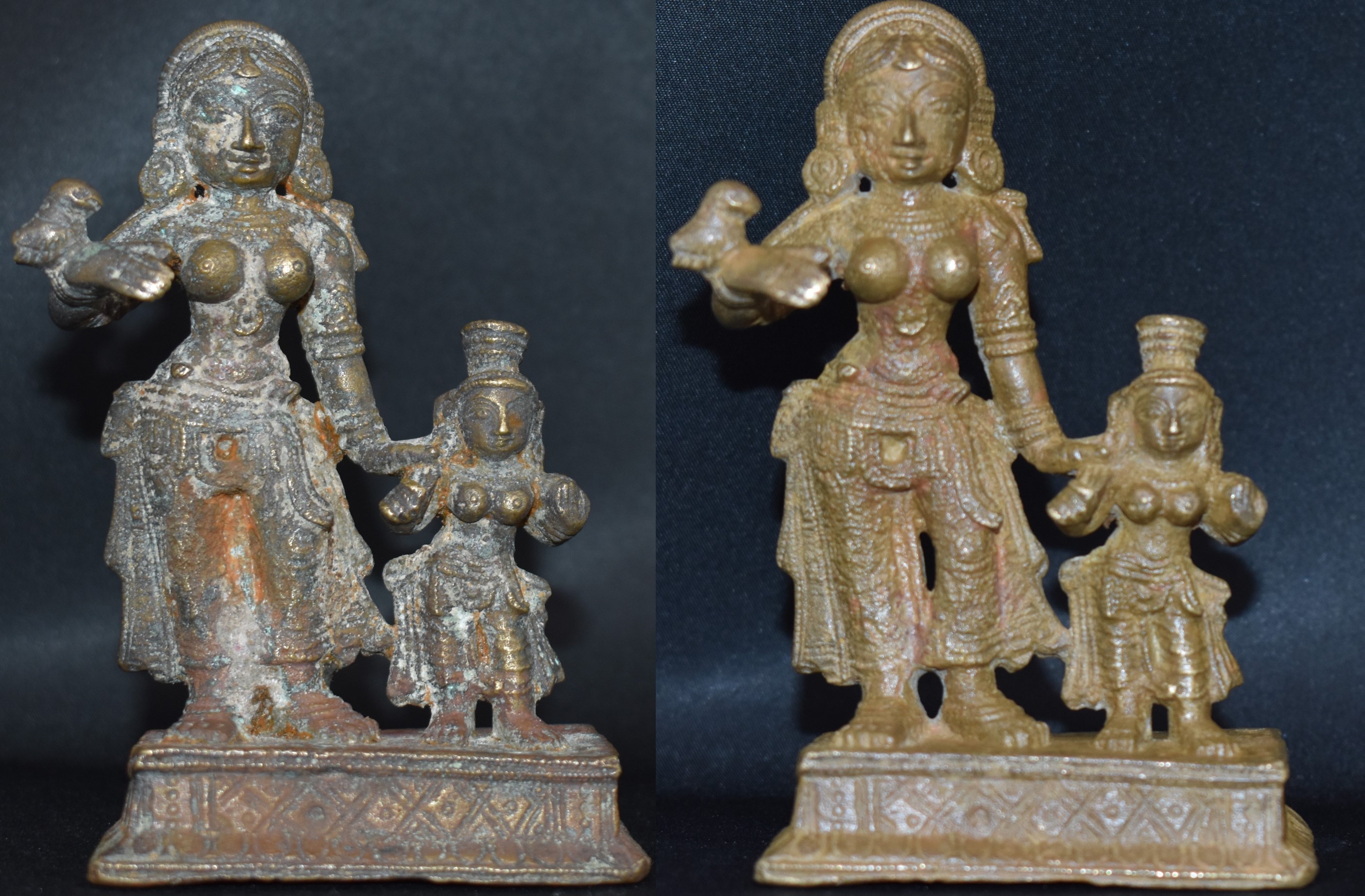
When I posted Andal, above, the dealer sent me a message complimenting me and thanking me for showcasing the details.
What would appeal to most collectors is that the ultrasonic cleaning does not affect the patina and removes dirt from difficult-to-reach places.
For cleaning, I tend to keep the temperature at 50 degrees centigrade and run the cleaner for 30-60 minutes in 15-minute slots.
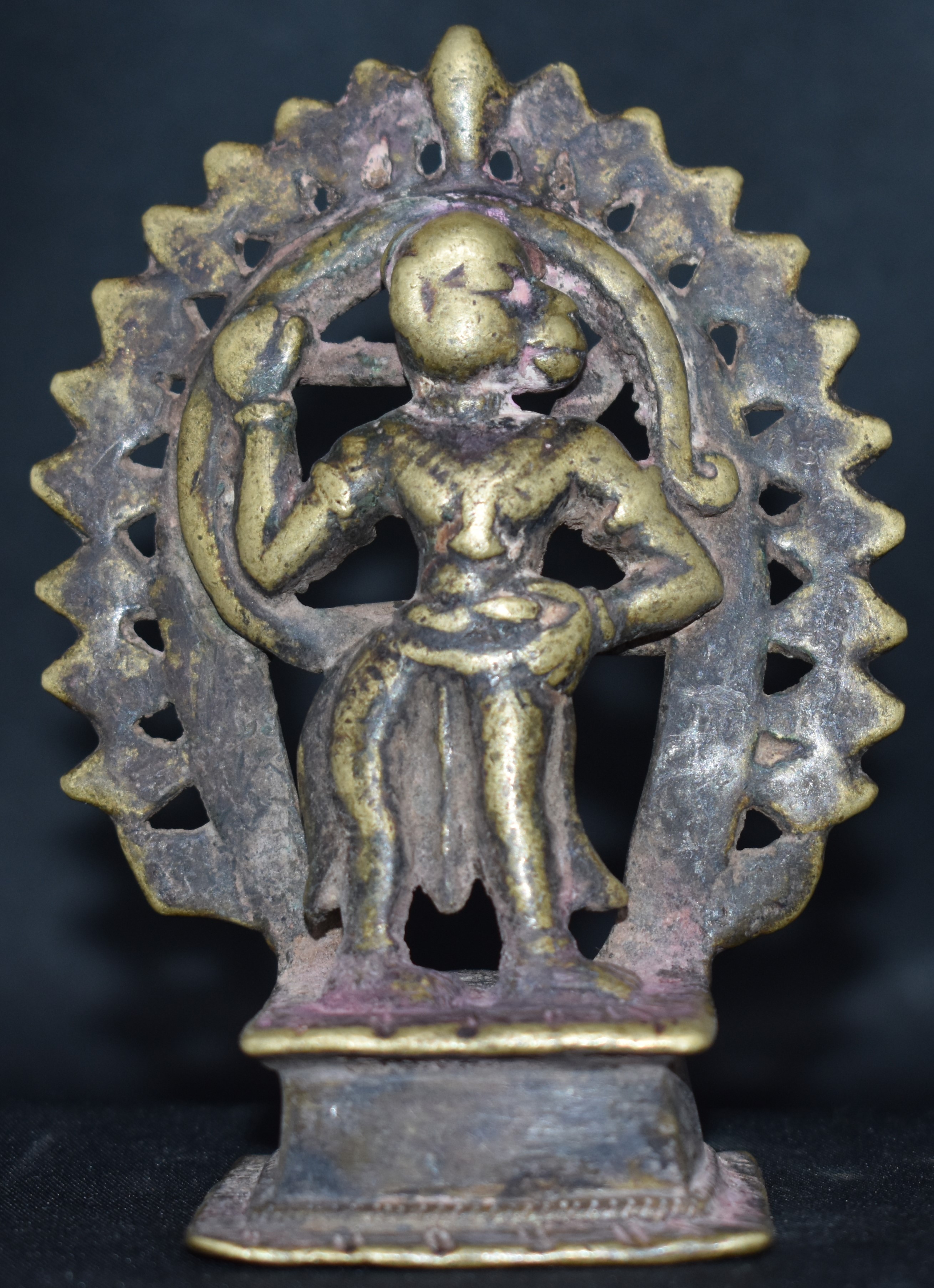
Of course, there are cases where the retention of ‘dirt’ is desirable. One such example, Veera Anjaneya, is shown to the right. Within bounds, cleaning is often a personal choice.
The ultrasonic cleaning will leave the bronze ‘dry’. The application of museum wax is an option to restore the luster and shine.
As I mentioned earlier, there are horses for the courses. Educated experimentation is a good way to learn. But start with low-risk items.
 Bronzes of India - A personal collection