
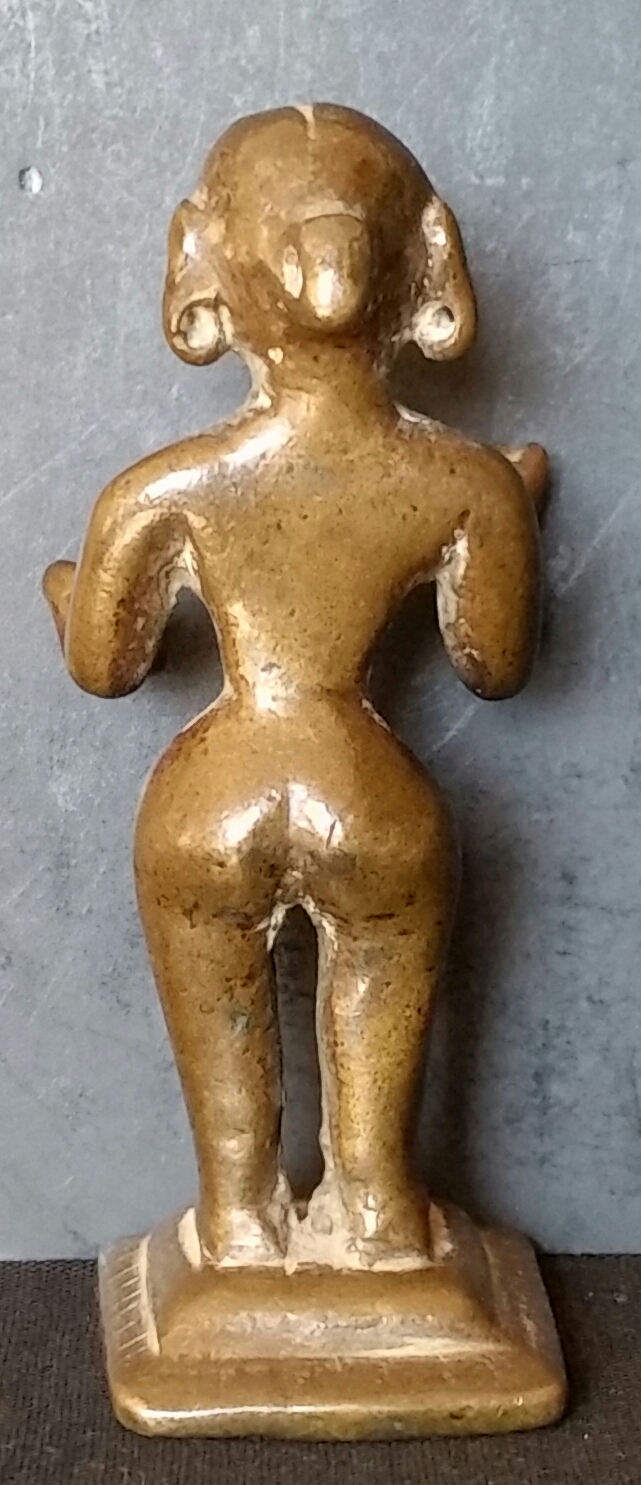
This is Radha, a consort of Krishna. It is common for them to be separated, as normally they are not mounted on a common base.
This bronze is possibly from Bengal or Orissa. The bronze is only about 8.3 cm in height, and the patina is deep. This may date to the eighteenth century or so.
Wanted to highlight a couple of features about this bronze.
Notice the way her left eye is filled, with gold leaf defining her eye and a precious stone denoting the pupil. Such decoration is not uncommon in North Indian bronzes. Visiting temples in India means going there to see the deity and be seen by the deity. It is Darshan. Normally, deities in Indian temples are decorated with clothes, flower garlands and jewellery. And it is almost impossible to see any features other than eyes and face. Highlighting is one way of drawing attention to the eyes. Unfortunately, the decoration of the other eye is lost.
The second feature is that Radha is unadorned, with no ornaments and no clothes. The only grooming we see is her hair tied in a bun. This is, of course, intentional, and it is expected that the devotees will decorate the deity with clothes and ornaments. Such decorations could vary from region to region and may also depend on the occasion/festivals. Notice the holes in her ears to receive earrings and the hole in the hair bun for appropriate decorations. This kind of decoration, called Shringar, is common in North India, especially for Radha and Krishna. While in South India, they do decorate deities, but the bronzes are always made draped and come with a full set of ornaments. Talk about cultural differences.
 Bronzes of India - A personal collection