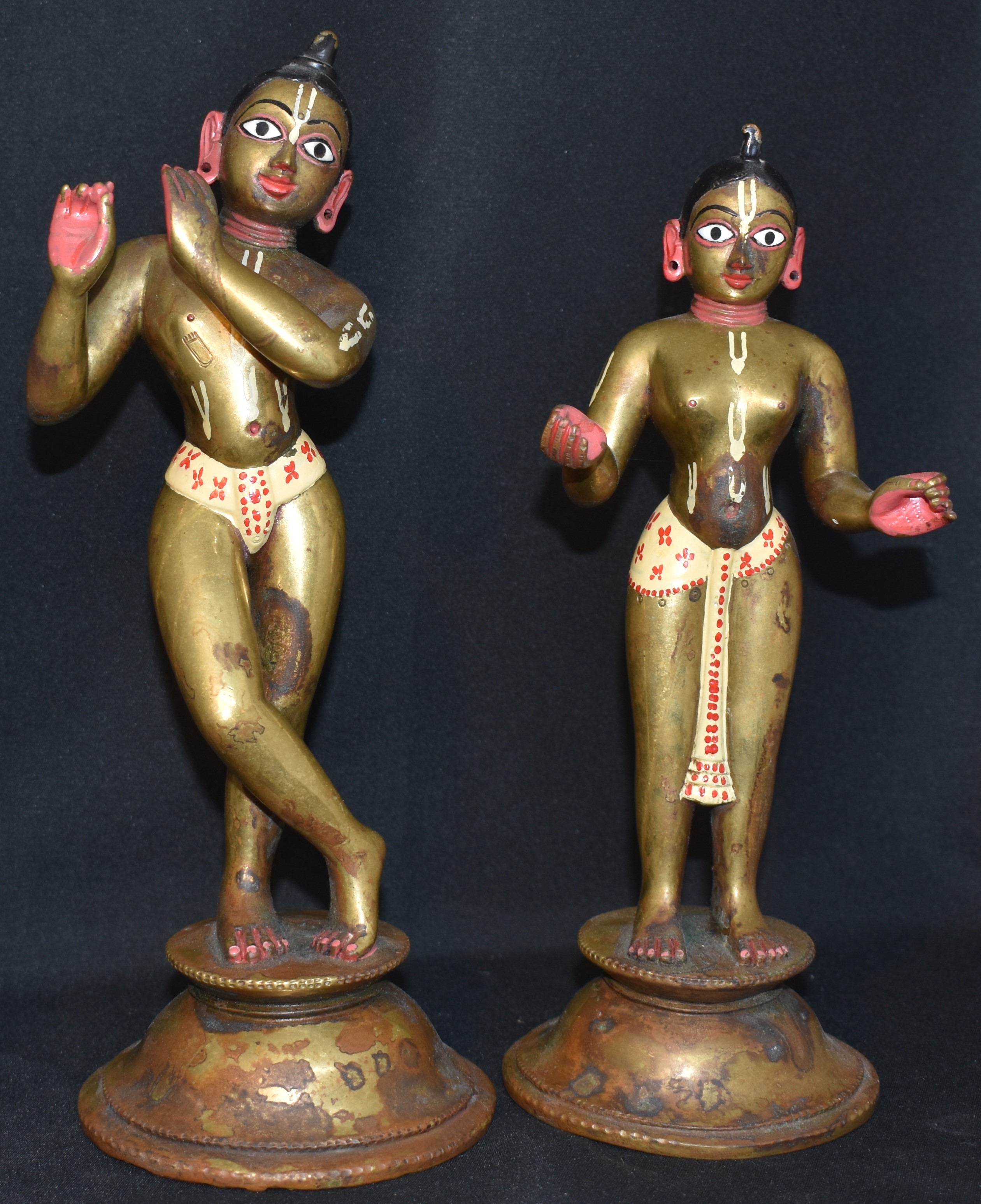
These Krishna and Radha Vigrahas, Radhakrishna as the couple is called, are from the Bengal region.
Painting of the Vigrahas, especially the eyes, is common in the Bengal/Orissa region. In this case, there is a bit of overindulgence; see the Vaishnavite mark (Namam) on the torsos.
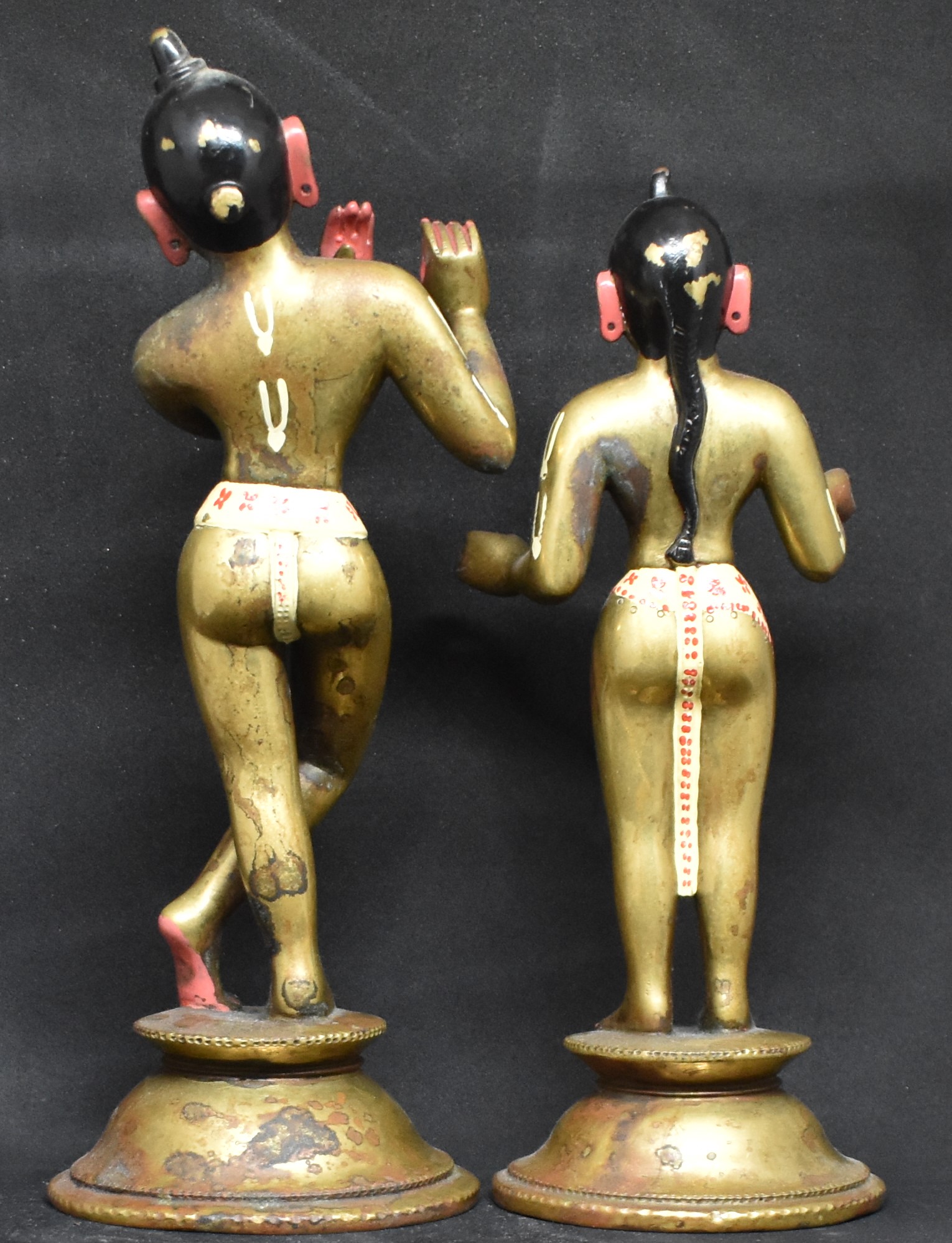
This pair may date to the twentieth century. It is Krishna’s eyes that got my attention and influenced the purchase. The eyes remind me of Jamini Roy’s paintings.
The association of Radha with Krishna dates back to the medieval period. It started possibly in the Bengal/Orissa region, and the concept spread to North India and Western India through different sects. Over a period of time, Radha has been portrayed as a lover, a proxy for the devotees, the Sakthi of Krishna and his consort.
Traditionally, Rukmini and Satyabhama are identified as Krishna’s consorts. That association continues in South India, along with worshipping Krishna and Radha as a divine couple. This blogsite has two examples of the triad of Krishna, Rukmini and Satyabhama (Venugopala triad and Vithoba Triad).
Some of the features to note are the imprint of feet on Krishna’s right chest and the top hair-knot of Radha and Krishna. The contrast in the postures, Krishna with legs crossed and slightly bent, and Radha erect in Samapadha, is unusual.
The earlier Vigrahas of Venugopala show him naked, with the idea that the devotees will drape him appropriately depending on the festivals/seasons. Here the Venugopala/Krishna is wearing a loincloth, and this may be a reflection of changes in cultural norms.
Krishna and Radha are 23 cm and 21 cm tall, respectively. The material is brass, highly polished in this case.
29 Mar 2020: B N Aryan of the Museum of Folk & Tribal Arts, India, pointed out that this set of Vigrahas could be from Mathura, where it is a living tradition.
 Bronzes of India - A personal collection