Sometimes I get to buy idols which I cannot help but publish at the earliest. This bronze is one of them.
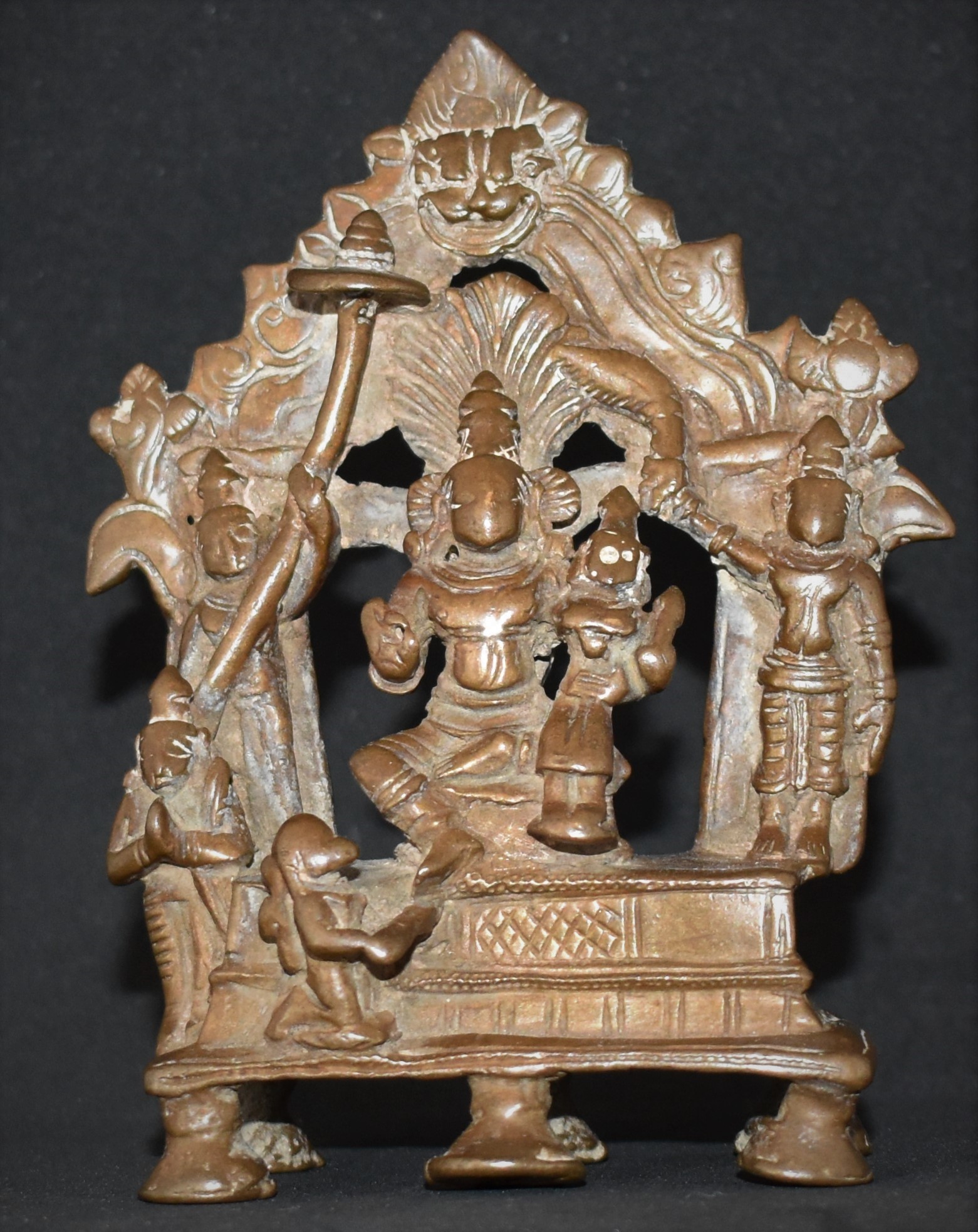
This is Ram Darbar, Rama holding court, accompanied by his spouse and his brothers.
The central figure is Rama with his consort, Sita, sitting on his lap. Rama’s ardent devotee, Hanuman, is at his feet paying respect.
Laksmana is standing to Rama’s right, one level lower. Lakshmana’s hands are in Anjali mudra. His bow is slung on his left shoulder. Bharata is standing on Rama’s right and is holding an umbrella, a royal insignia. Shatrughna, standing on Rama’s left, is holding another royal insignia, a Chamara.
Note Rama’s right hand, and he is displaying Cin mudra. Unusual, considering this is meant to be his Darbar. The Bhadrapeetha, lower platform, is supported by six legs. Unusual construction helps us in assigning this bronze to the Vijayanagara style.
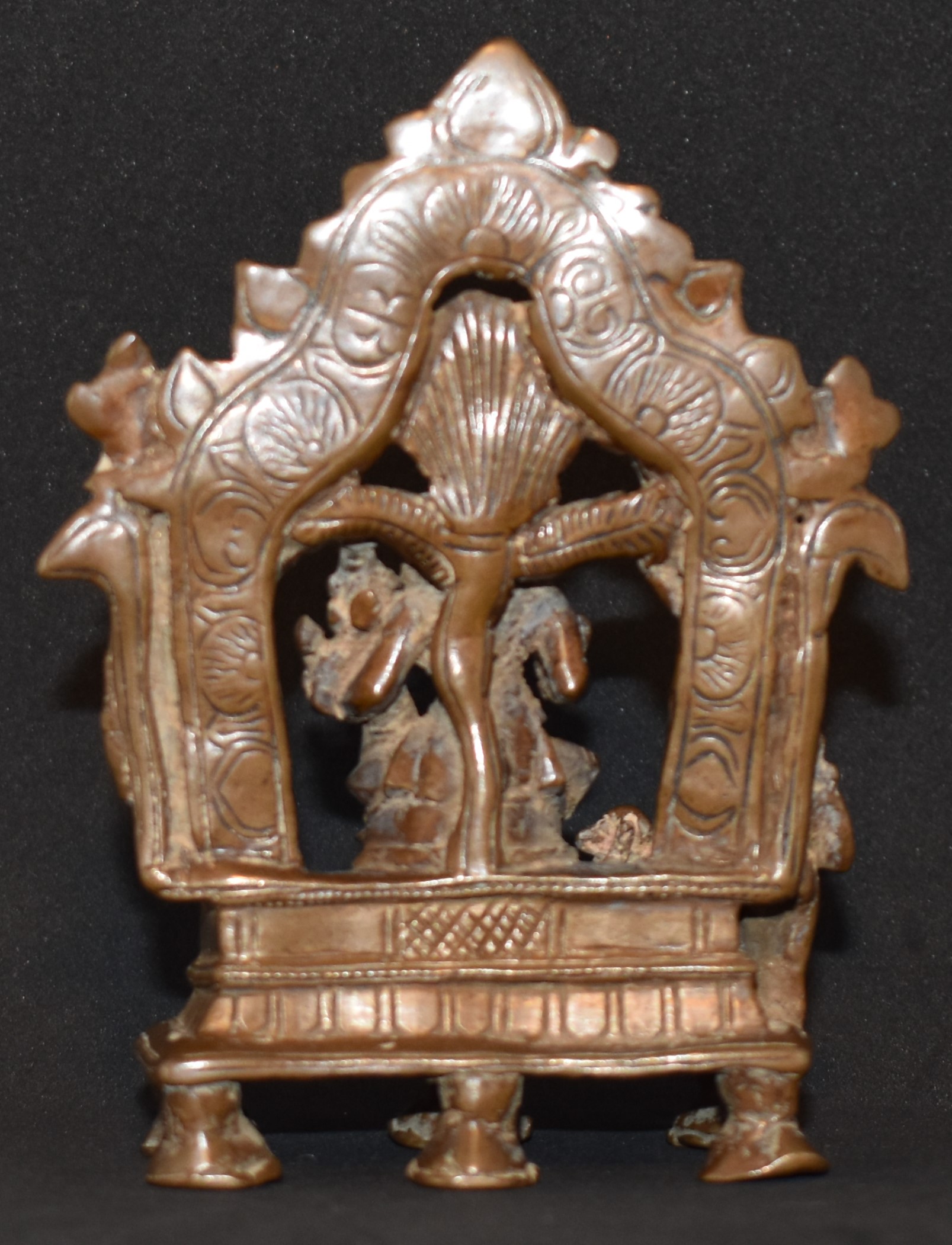
Note the Vaishnavite emblems Shankha and Chakra, above to the side of Bharata and Shatrughna. This iconographic feature is common in bronzes from Karnataka and Andhra.
This bronze appears to be single cast, but not entirely convinced, given the complexity of the composition. In any case, it is an unusual bronze. Have come across full Ram Darbar sets but with individually cast pieces. This is the first time I am seeing ‘ a single piece Ram Darbar’.
This bronze also helps in confirming the iconography of Lakshman and Shatrughan.
See the backside. Obviously, this idol meant a lot to the craftsman and to the patron.
The idol is about 11.5 cm high. It is from Karnataka. It definitely shows Vijayanagara influence. Most of the Ram Darbar sets are dated to or after the Vijayanagar period.
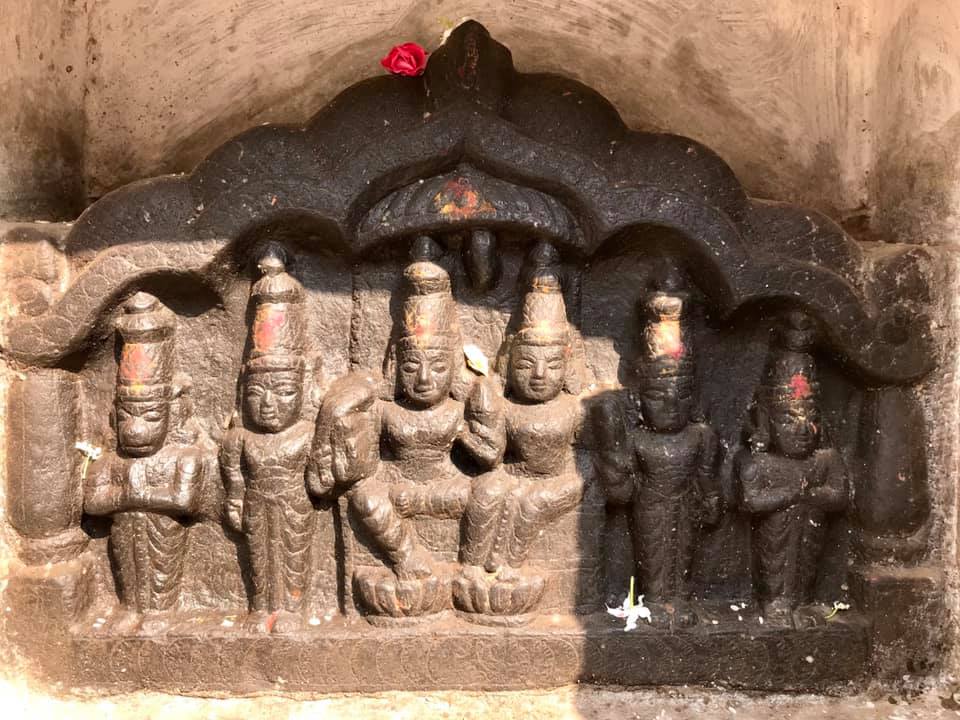
The picture below was taken and provided by Ramesh. The Ram Darbar panel is in the Malyavant Raghunatha Temple at Hampi.
 Bronzes of India - A personal collection