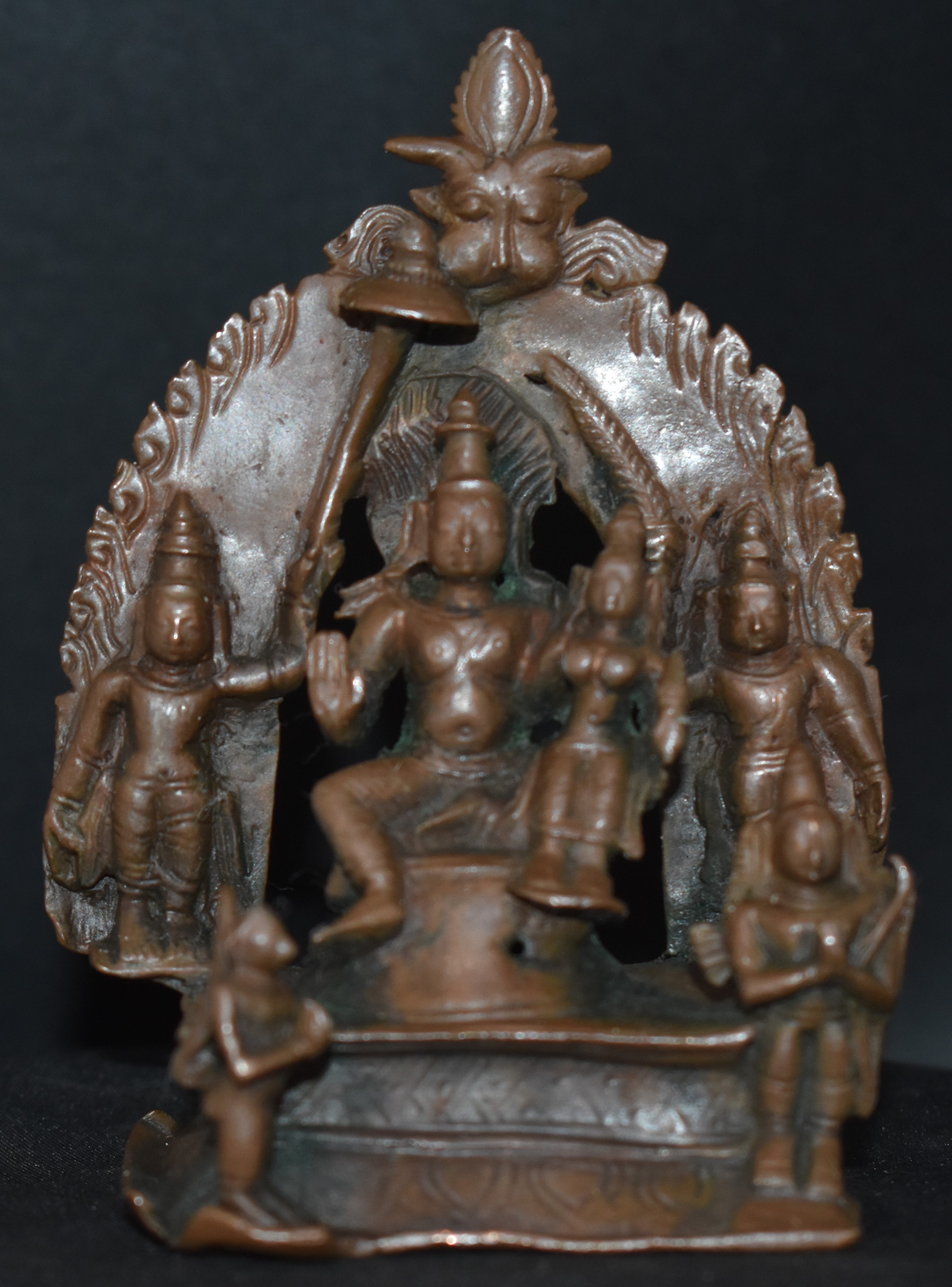
In a strict sense of the term, this is not a fake, as it was gifted to me by a well-wisher/friend/dealer as a reproduction for study purposes. Do you think it is a reproduction? Take a guess.
That gift gave me a chance to pen my thoughts/learnings on how to identify fakes. My definition of fake is anything made/sold intentionally as something it is not.
For identifying fakes, my preference is to look for signs of usage, age indicators, iconography and surface conditions.
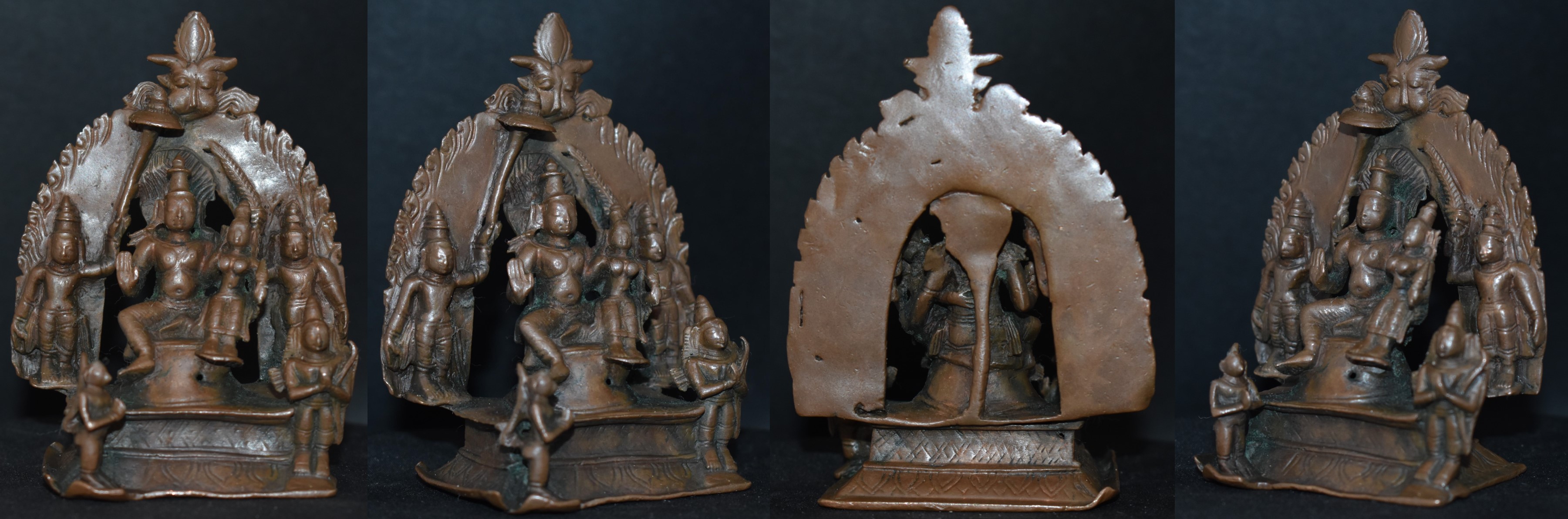
In this case, the iconography is impeccable, and it is a typical Ram Darbar featuring Rama, Sita, Lakshman, Bharatha, Satrughan, and Hanuman. This site has two other examples of Ram Darbar and one is shown below as a comparison. The iconography is complete, consistent, congruent, and appropriate for the age. On that count, it passed the test.
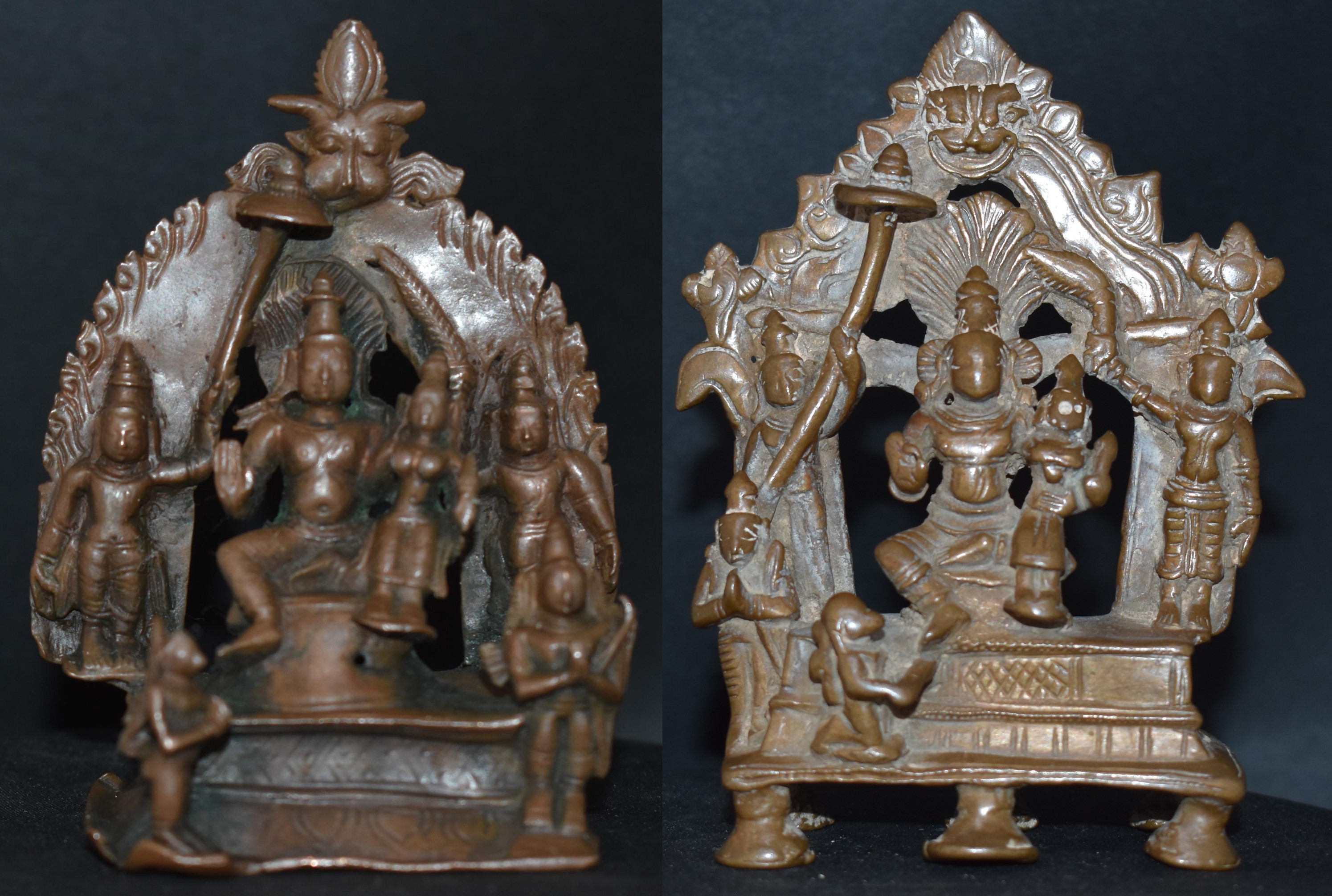
The next I look for is surface conditions. In a ritual environment, the Vigraha gets cleaned regularly and, often, using abrasive materials. Due to this, the surface is normally smooth, barring corrosion-related pits. This bronze checks that as well. The patina looks reasonable.
The next thing is to check for signs of usage wear, wear pattern, breakage, bronze loss (due to age) and deposits from worship. And that is where we get some red flags. See the crispness of the engraving on the prabhavali (an easy-to-reach place) as opposed to the worn engraving on the base (harder to reach). It does not make sense. The faces show more wear than the prabhavali.
Then as a mandatory check, look at the bottom. There is no wear on the edges and the inner area’s patina is consistent. That is not right either and it is a giveaway. See the comparison of some other bronzes with me.

The Viigraha is about 9.5 cm tall. It is done in Vijayanagar style.
Note 1: Learning to spot fakes takes time and I am sure even now I end up buying fakes (Hopefully less frequently than I did decades ago).
Note 2: As a test, I shared photos of this Vigraha with two collector friends. They thought it was genuine. I wish it were.
 Bronzes of India - A personal collection