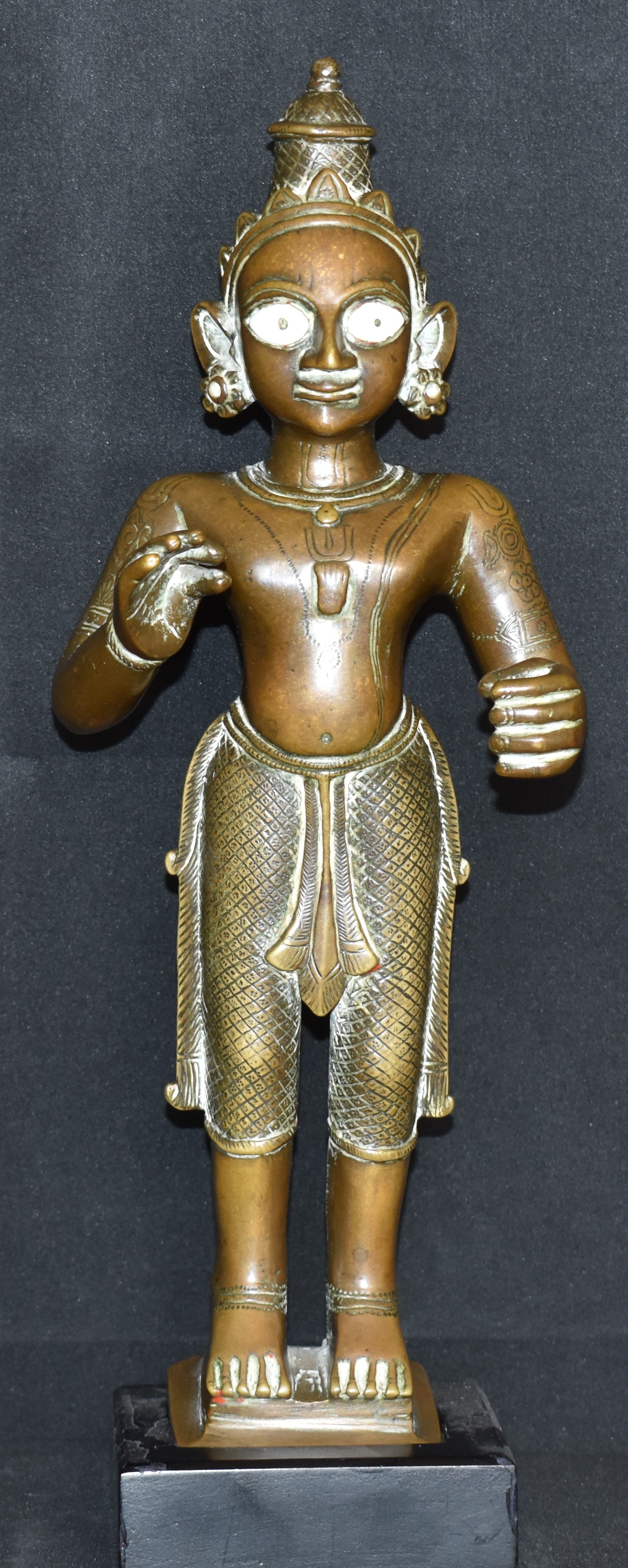
This is Rama from Gujarat, and the technique used for fabrication is Ganga-Jamuna, a combination of two metals/alloys. The use of GJ technique makes this bronze rare and interesting. The GJ technique was practised in North Karnataka, and all the examples I have come across, barring this one, follow typical post-Vijayanagar Karnataka iconography. This Ganga Jamuna Rama may have been a part of a commissioned set, and I hope somebody still has Lakshman and Sita.
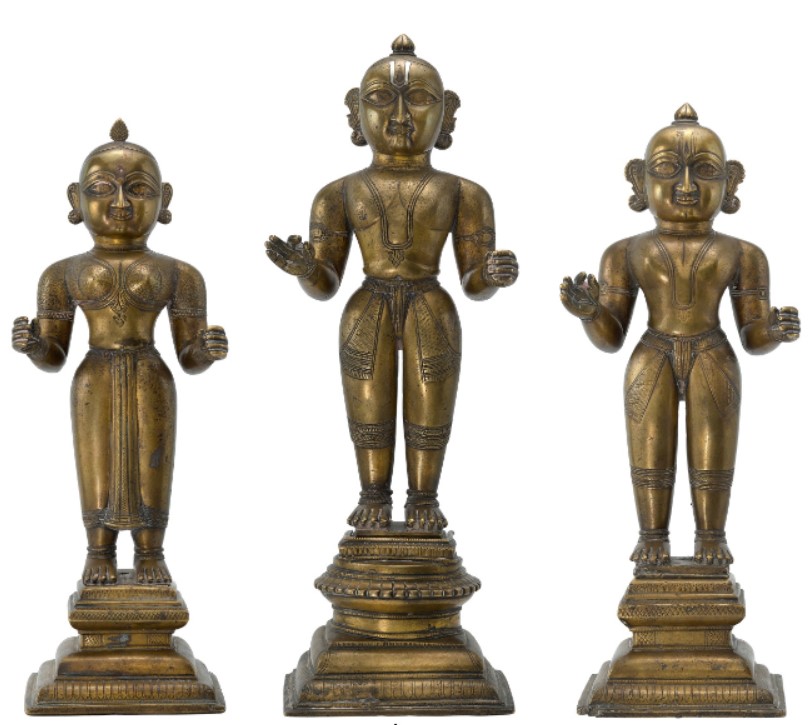
The photo on our right is from an auction by Saffron Art, and it is included here to show a complete set and Gujarat iconography.
As Rama and Lakshman share similar iconography, as seen in the Saffron art example, identification as Rama is based on the footprint on Rama’s chest. The story: Bhirgi, a Rishi, went to meet Vishnu, and Vishnu was sleeping on Lakshmi’s lap. Bhirgi kicked Vishnu on his chest to wake him up. As a mark of respect for Bhirgi, Vishnu continued to wear that footmark. Rama, as an avatar of Vishnu, sports that mark.
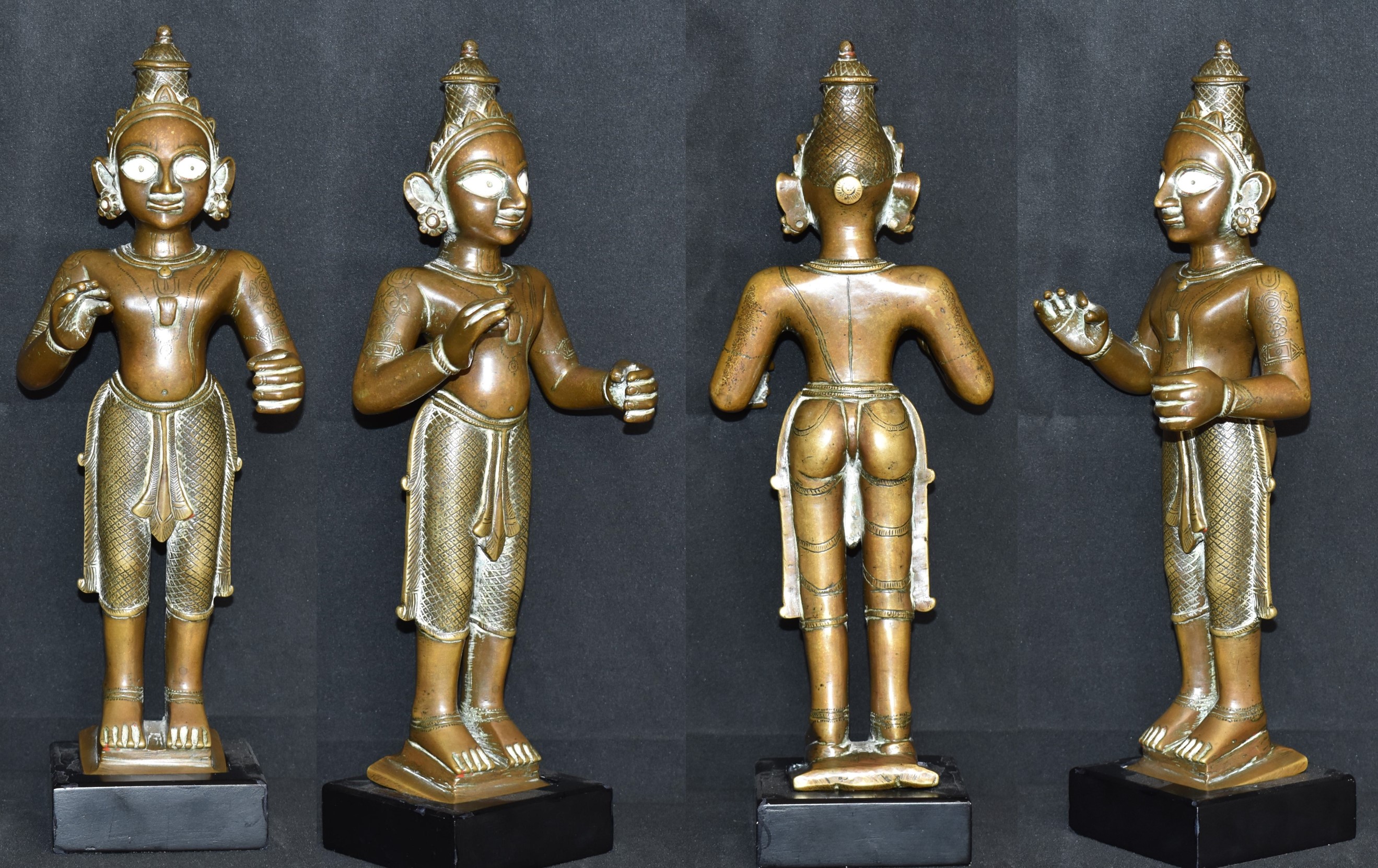
Another interesting aspect of this bronze is its eyes. The whites of the eyes, made of seashells, are removable. I understand the local practice is to remove the eyes when the deity is not in worship and put them back as a part of Alankar. The eyes are symbolic of the deity’s potency/power.
The simple elegance of the bronze is overshadowed by the clumsy attempt to show Rama’s sacred thread and other ritual marks.
The bronze is about 37 cm tall, and it may be dated to the first half of the eighteenth century.
 Bronzes of India - A personal collection