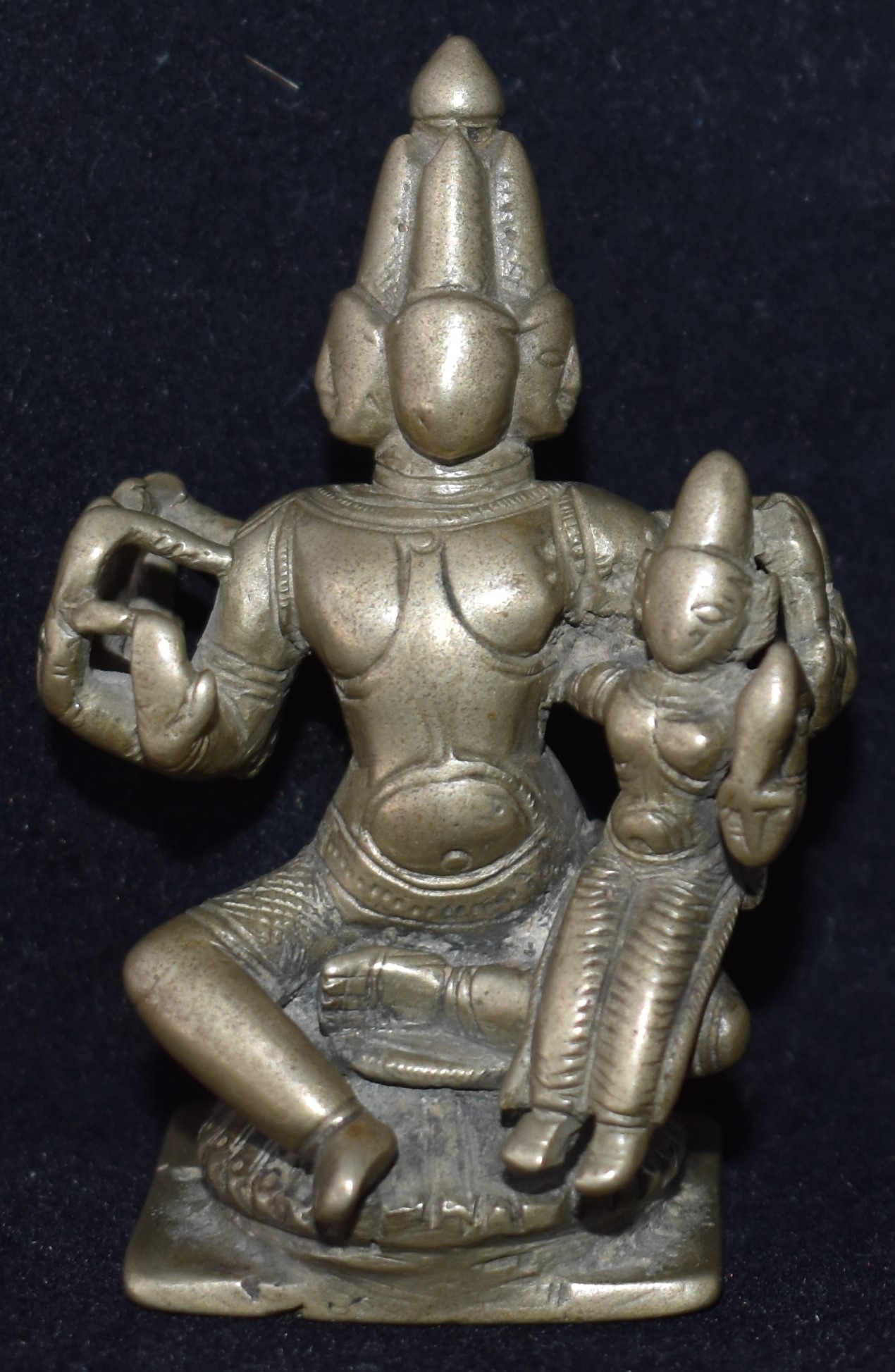
This is Siva with five faces and ten hands, with his consort sitting on his lap. He is sitting in Lalitasana. Sadasiva means eternal Siva. Some scriptures require the faces to show different aspects. In this case, there is no discernible difference. Even the attributes in his hands look the same.

The five faces are meant to represent different aspects, Tatpurusha (Supreme spirit), Aghora (Not terrific), Sadyojata (Newly born), Vamadeva (North facing) and Isana (Source of the universe). The Sakhti/consort is Manonmani or Bhogasakti.
In some sculptures, four of the five faces are at one level, facing each of the directions, and the fifth face is on the top. Here, all five faces are at the same level.
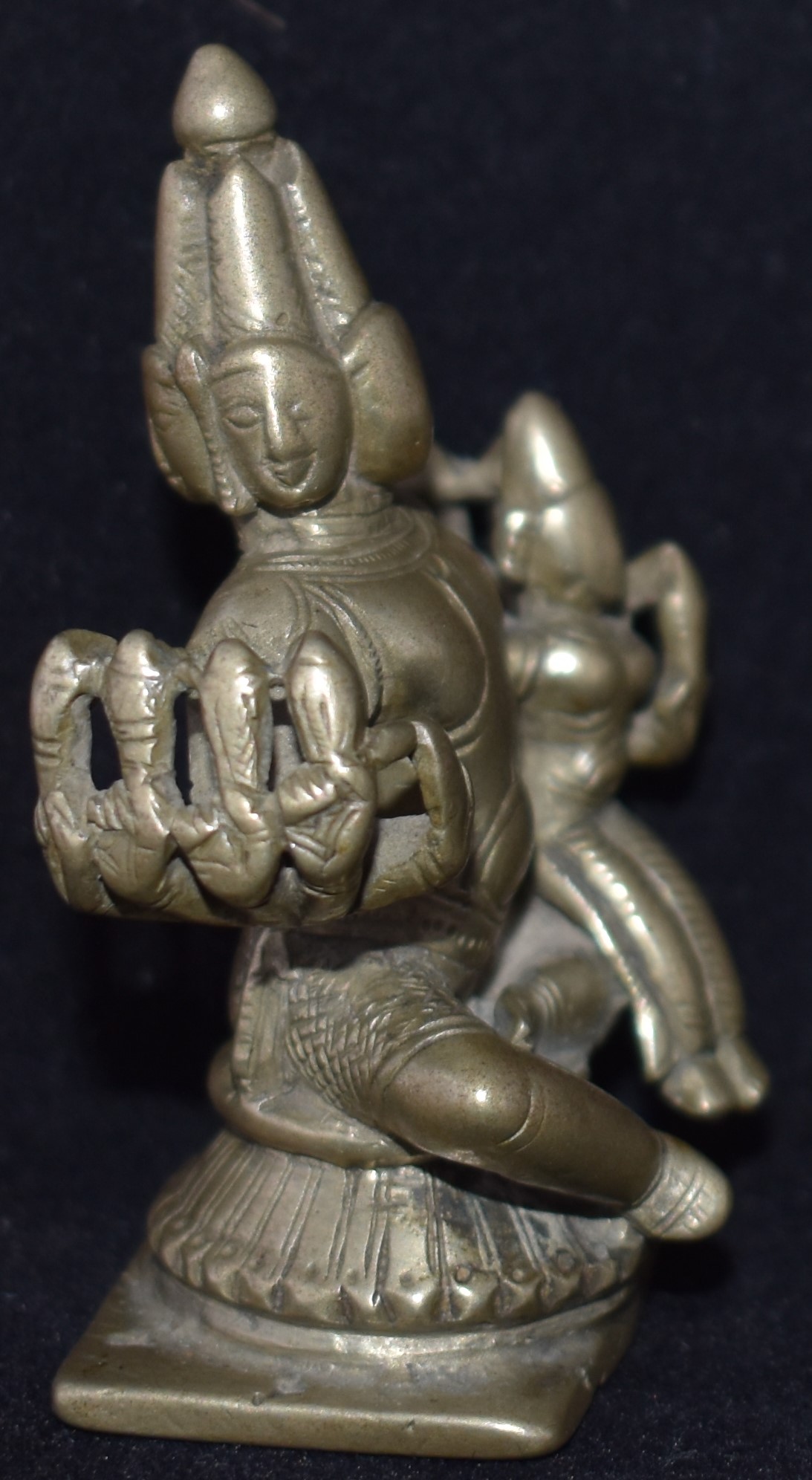
Sadasiva worship was common in Bengal and Maharashtra. Sena rulers, from the Bengal/Bihar region, at some stage claimed Sadasiva as their family deity. Some Sena rulers used Sadasiva in their copper plate grant seals.
This may be from Maharashtra. Edward Moor, Hindu Pantheon, Plate 16 , figures 1 and 2, and the corresponding description of the attributes in Sadasiva’s hands matches with that in the icon above. Edward Moor names his icon Panchamukha Parameshwara (Five-faced Parameshwara – another name for Siva). The use of brass in idol casting is common in Maharashtra.
This icon is 6 cms in height and may be from the 19th century or earlier.
 Bronzes of India - A personal collection