
A miniature Somaskanda, Siva, Parvati and their son Skanda, standing in between them. The deities are framed by the Prabhavali. The prabhavali is fixed to the base, and the rest of the Vigraha is single cast. The Vigraha is only 5.5 cm in height.
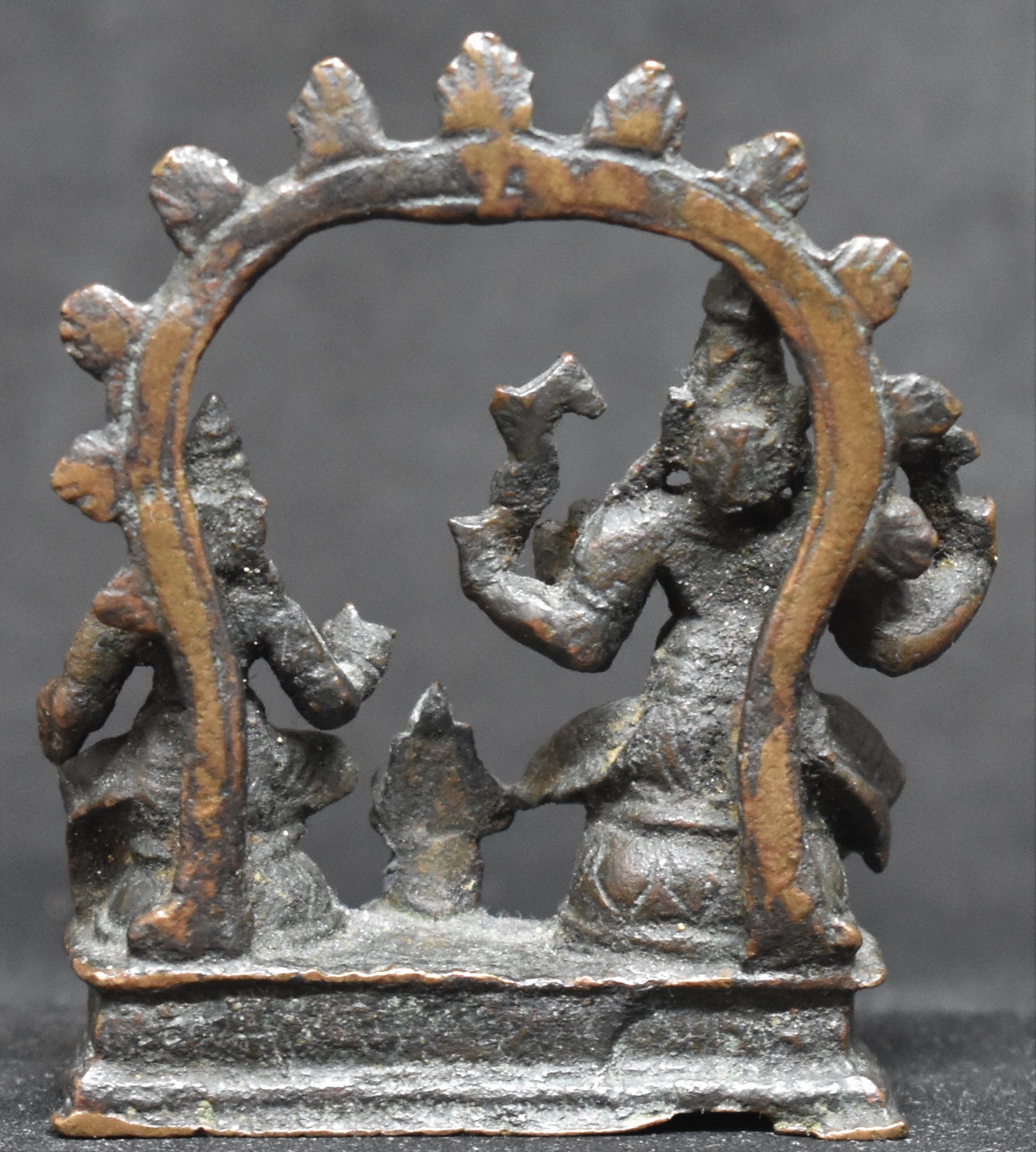
Siva is holding Ankusha and Mriga in his rear hands. The front hands are in Abhaya and beckoning mudra. Parvati’s right hand would have held a lily, now worn. Her left hand is in the Varada, boon-bestowing mudra. Skanda, just about 1.1 cm high, is holding lotuses in his hands, and his posture is more like dancing.
Somaskanda iconography could be traced to the Pallava period, about the 7th century. In the Pallava period temples, it is not uncommon to see relief sculptures of Somaskanda on the rear wall of the inner sanctum, just behind the main deity, the Linga. Somaskanda Utsav (processional) Vigrahas are common in today’s Tamil Nadu and in the nearby areas ruled by Pallava, Chola and Nolamba dynasties.
According to R Nagaswamy, a Saivite temple will have five processional Vigrahas: Ganesha, Subramanya, Somaskanda, Parvati (Thani Amman) and Chandesa. However, the ritual treaties permit the use of Somaskanda for all occasions, a measure of its significance. From R Nagaswamy’s book Timeless Delight: South Indian Bronzes in the Collection of the Sarabhai Foundation.
This Vigraha, at 6.5 cm height, is a real miniature. The details are amazing. See the rearview for the Srichakra.
Rare to see Somaskanda Vigrahas made for home worship. The patina is deep, and the Vigraha shows wear from decades of worship. This Vigraha may date to the eighteenth century or earlier.
 Bronzes of India - A personal collection