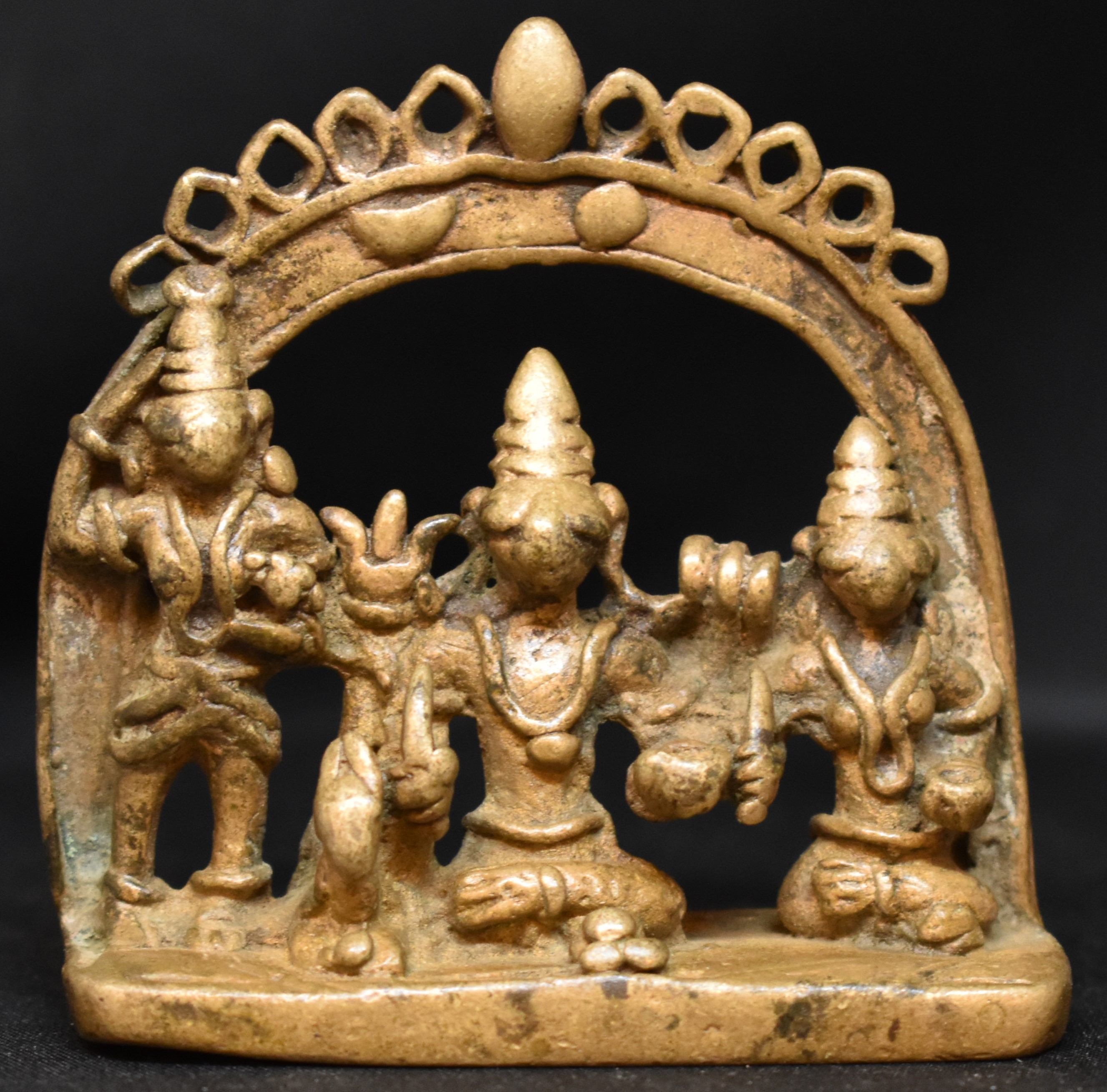
India’s sacred bronzes are represented in Tribal, Folk, and Nagara (meaning City) styles. The styles’ geographic footprint varies; the Tribal bronzes represent deities in a small and specific region, whereas the Nagara style is widespread.
Representation of the same deity in all three styles is uncommon, but does exist. This blog is about one such example, Bhairava and Bhairavi. This site has examples of folk and Nagara-style representations of Bhairava and Bhairavi. The example below is a tribal one.
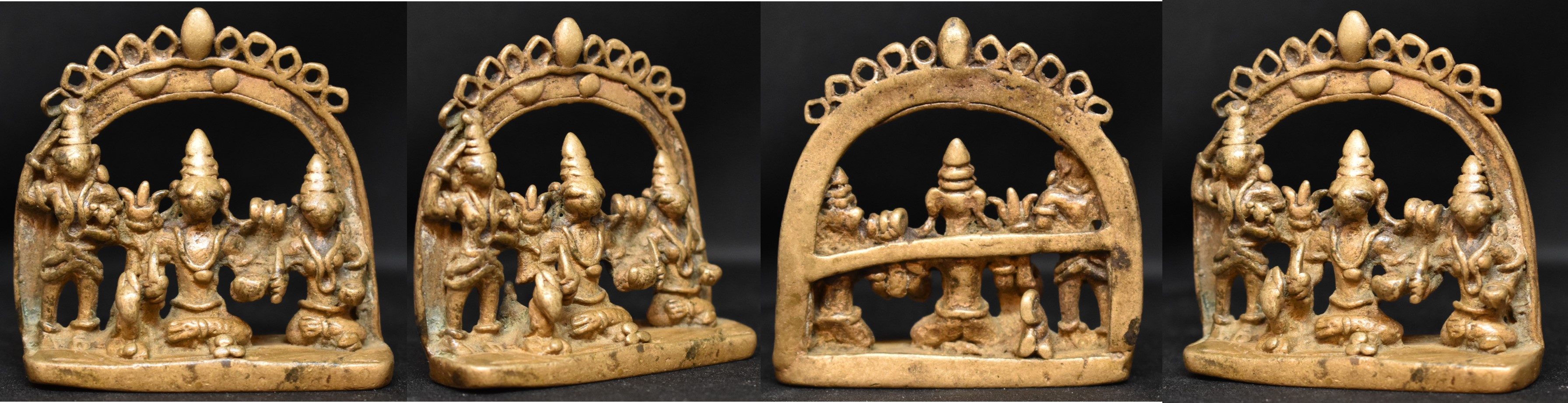
The identification of Bhairava, seated figure in the middle, is by his attributes: short-sword, Trishul, drum and Kapala in his hands, clockwise starting with his lower right hand. Bhairavi’s identification is by association and the attributes short sword and a Kapala in her hands. The dog, Bhairava’s right, reinforces the identification. The attendant, standing to Bhairava’s right, is not yet identified.
The Pancha-Pinda, the five spherical objects in a heap, helps us to narrow down the geographic attribution.
The classification of this bronze as Tribal is based on the anatomy, the proportions, the technique used to make them, the subject matter, and the relative ‘unsophistication’.
The photo below shows the three Bhairava and Bhairavai bronzes together. The differences stand out.
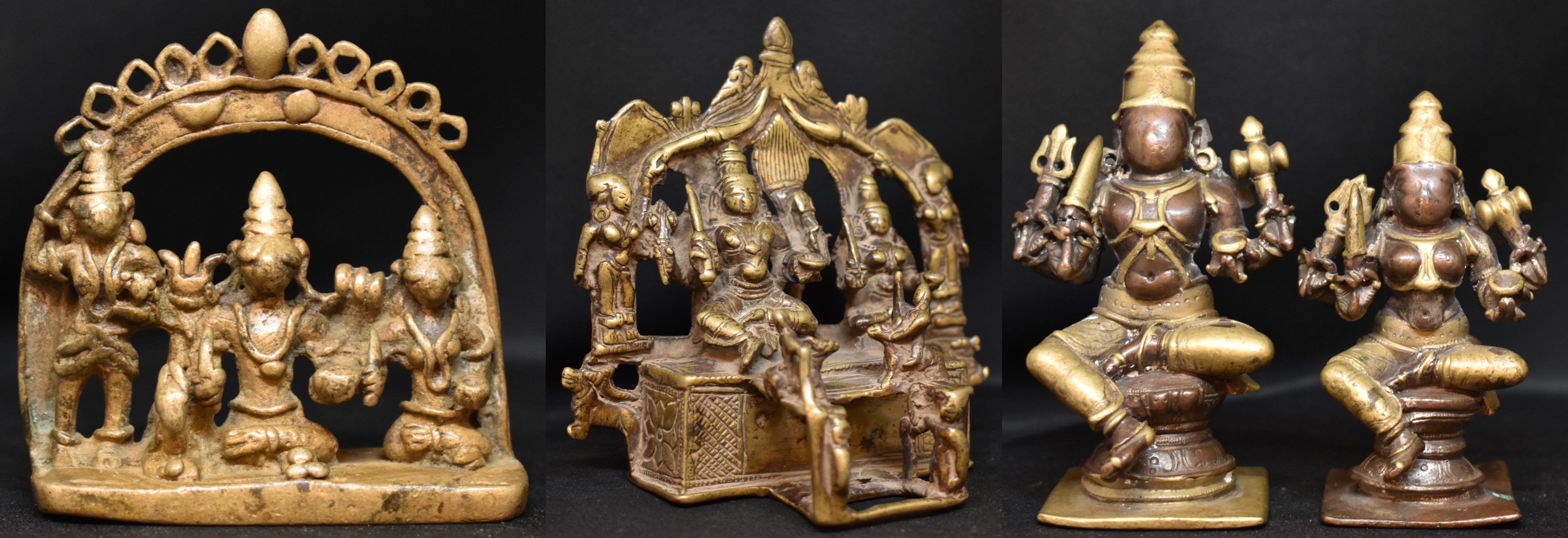
In general, the idea of the deity and the associated worship moves from the Tribal to the Nagara style. The influence on the iconography is a two-way street.
In classical tradition, when a Goddess accompanies her male consort, the Goddess is shown with only two arms. The Nagara style pair does not conform to that tradition. Strange indeed.
These three bronzes are from the North Karnataka – Maharashtra region, a geographically contiguous area. The Tribal bronze is relatively newer and may be dated to the early 20th century. Note the wear to the crowns.
The tribal bronze is about 6 cm in height. It packs a lot of features, demonstrating that talent and style are two different aspects.
PS: This is the first of the blogs on the three styles of India’s sacred bronzes. As I progress with my research, we will be able to see some patterns and get clearer definitions.
 Bronzes of India - A personal collection