When I wrote about blogs on the Vidyashankara temple in Sringeri, I did not expect to write the second one within two weeks of it. Then the situation warrants it.
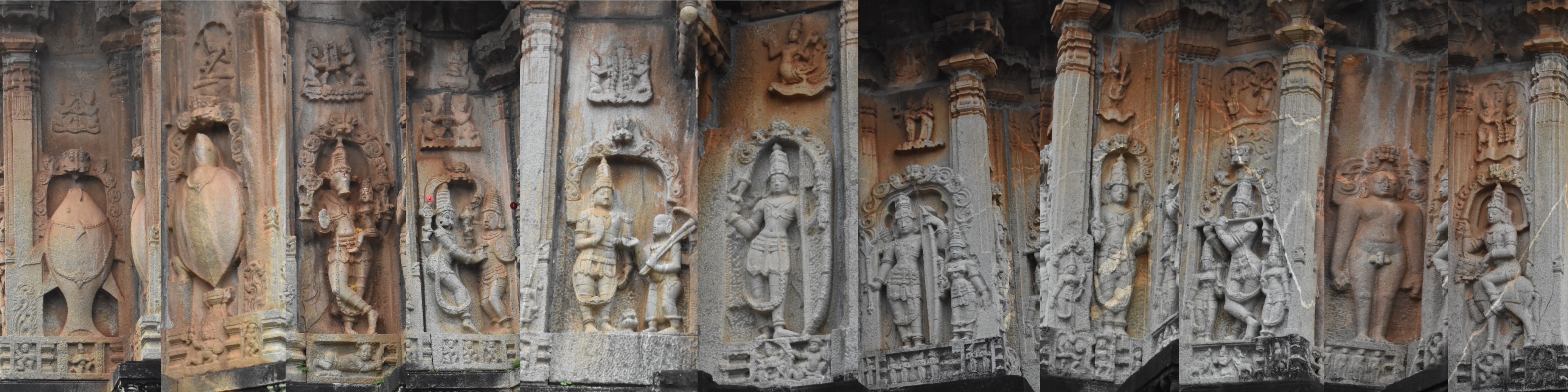
Context: The first blog was on Vishnu’s avatars on the western wall of the temple, eleven avatars compared to the standard ten avatars. See the picture above. The count aside, one depiction of Jina/Thirthankara in the tenth position, the second from our right, created a lot of interest and comments. It is a Vijayanagar period interpretation to include an avatar with Thirthankara iconography. Whether it is meant to be a Thirthankara or it is just an interpretation of ‘naked people’ is a topic for further research/debate/discussion.
That thought prompted me to check the Tripurantaka sculpture. The Tripurantaka story introduces Buddha’s iconography as an avatar of Vishnu.
The story: The three sons of Tarakasura, all Shiva devotees, did penance and obtained a boon from Brahma that they could only be conquered when their three flying castles of iron, silver, and gold were aligned. And only Siva can destroy them. Emboldened by the boon, they harassed everyone, including Devas. Siva was reluctant to confront them as they are his devotees.
Then Vishnu took Buddha’s form and got the three brothers to worship him. Then Siva destroyed the three castles and killed the brothers.
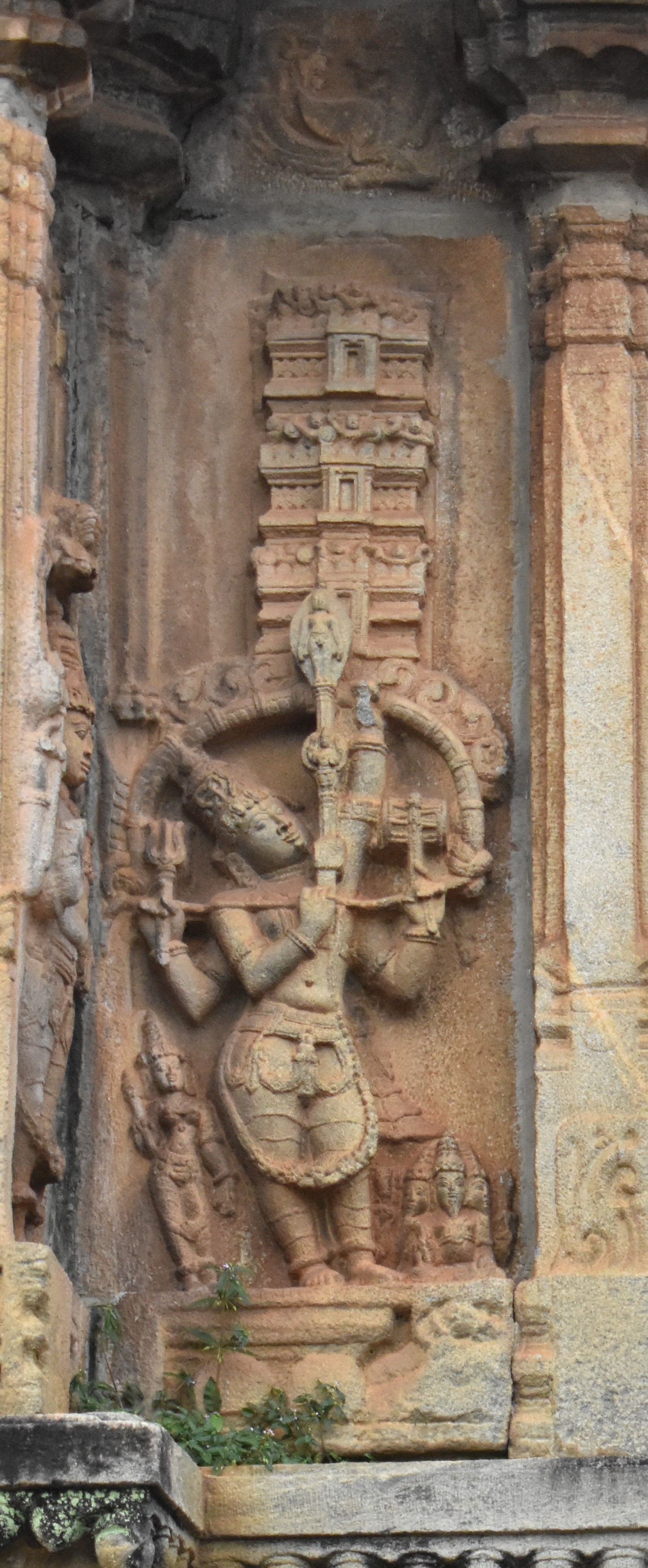
The photo on our right shows Shiva aiming at the three aligned castles. Note the naked Thirthankara and Vishnu on the arrow. As per some Puranas, Vishnu occupies the tip of the arrow.
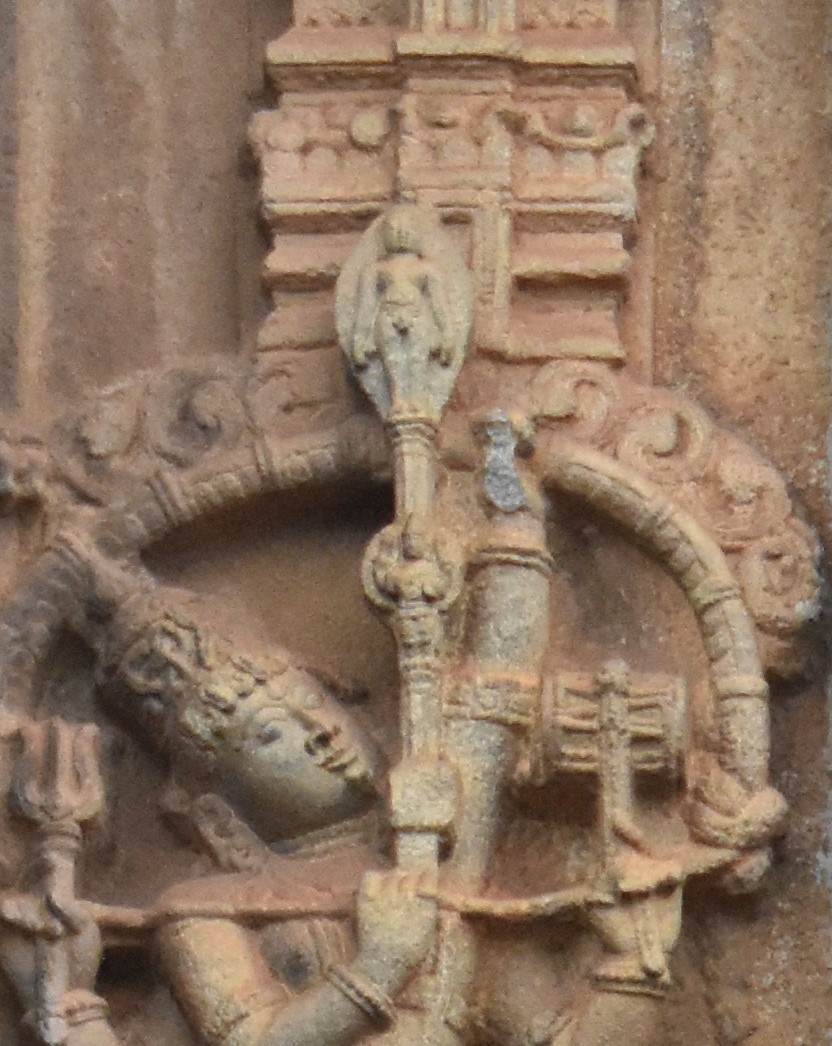
In the Vidyashankara temple, Buddha’s iconography is replaced by Jaina iconography. In fact, they have gone further by showing Vishnu and Thirthankaka. Why? I do not know yet. Will I ever know? I do not know.
In Darasuram and Thanjavur, Buddha’s iconography represents Vishnu’s maya.
Note: If you get to visit the Vidyashankara temple, do not miss Tripurantaka. It is a masterpiece.
 Bronzes of India - A personal collection