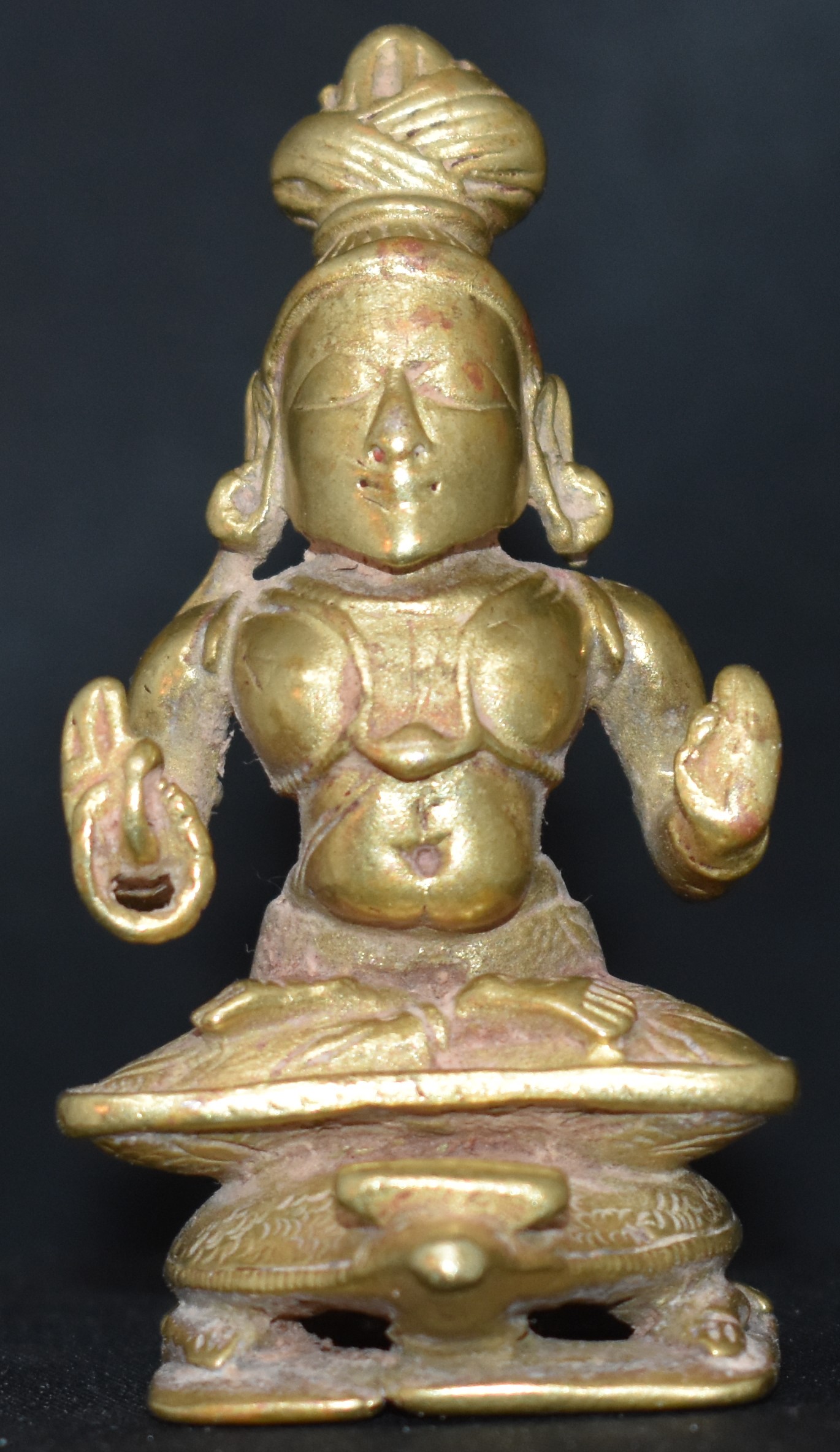
Veda Vyasa is one of the eminent of the ancient sages. He was responsible for the classification of Vedas (Hindu scriptures) into four groups, hence Veda Vyasa. He is also the author of Mahabharata, a Hindu epic and compiler of Hindu Puranas.
In this bronze, he is shown seated on a turtle in Padmasana wearing Yogapatta. The scriptural text, in the form of palm leaves, is resting on the turtle, an unusual arrangement.
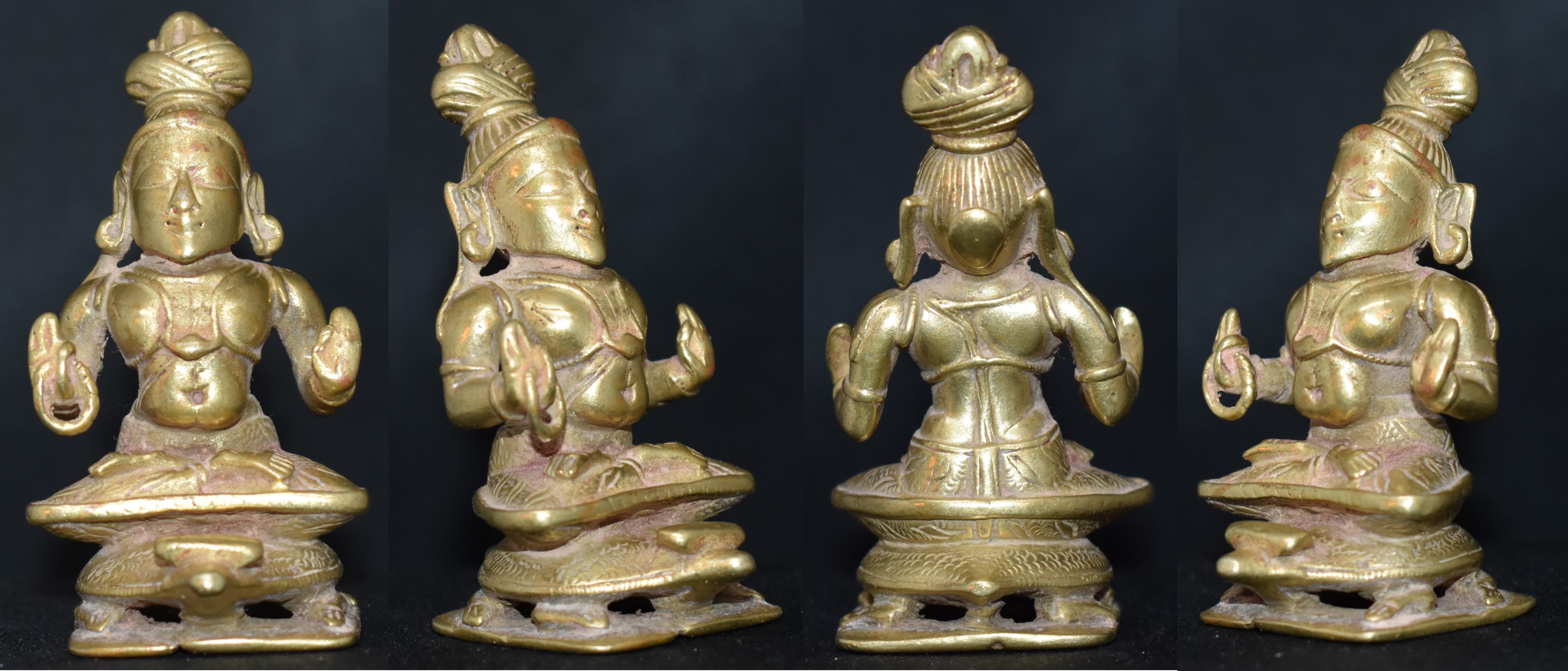
His right hand is in instructional pose (Vyakhyana mudra) and the left hand is in Abhaya mudra. Also note his hair arrangement and it is called Jata Bandha, a typical arrangement for Yogis.
Some consider Veda Vyasa to be an incarnation/avatar of Vishnu. He is worshiped as an independent deity. Veda Vyasa is one of the three presiding Hindu deities of knowledge and learning. The other two are Hayagriva and Saraswati.
This website has one other example of Ved Vyasa, shown below for comparison. The difference in the hair arrangement, sitting posture, placement of the manuscript and the Kamandala’ absence in the first image shows the regional variations and/or the freedom the ateliers enjoyed.
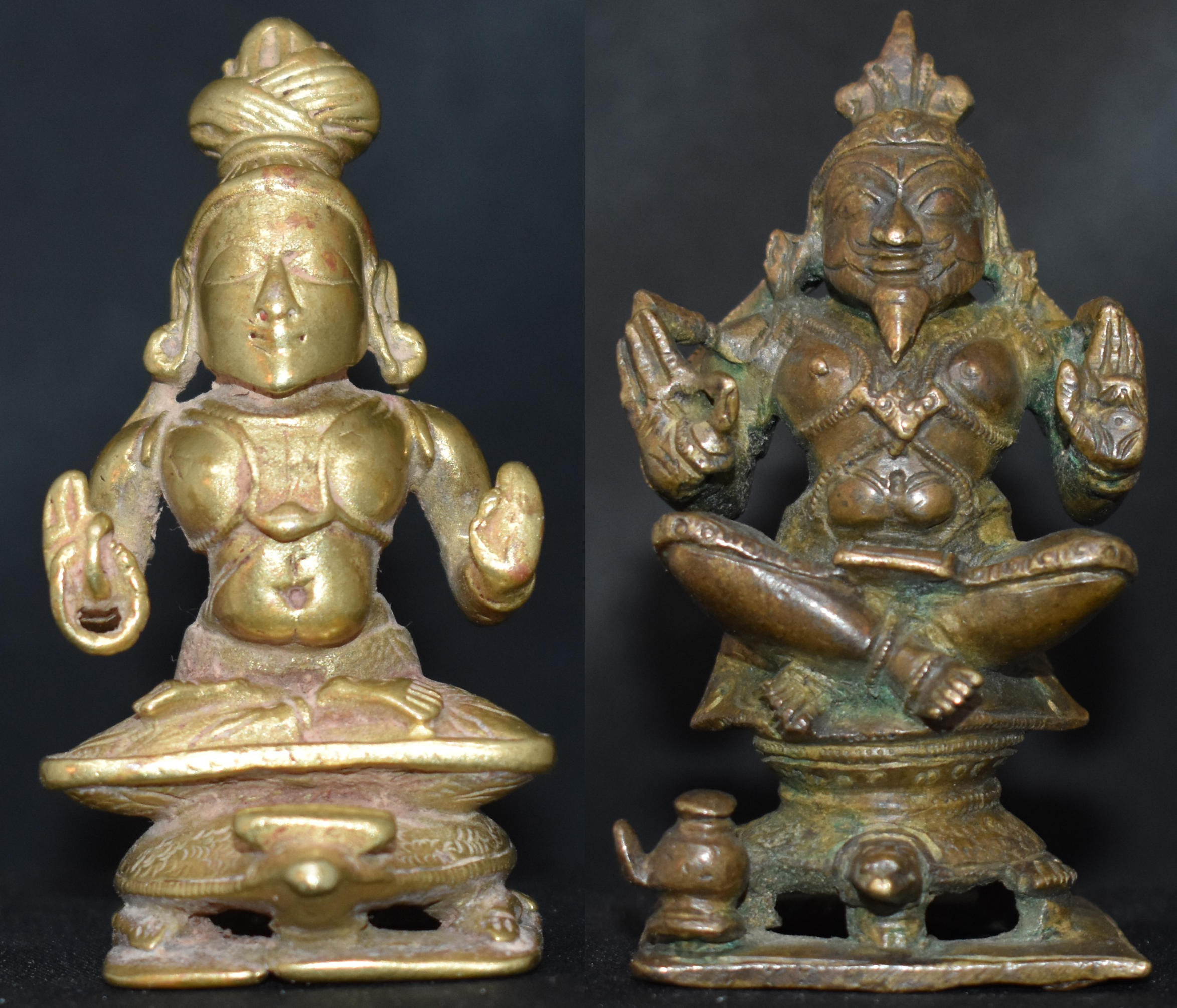
This icon is about 6 cm in height. The golden yellow color has remained untarnished. Locally the alloy is known as sonpital, meaning golden brass. The Vigraha, going by the material used, is from Sangili-Kolhapur region of Maharashtra.
 Bronzes of India - A personal collection