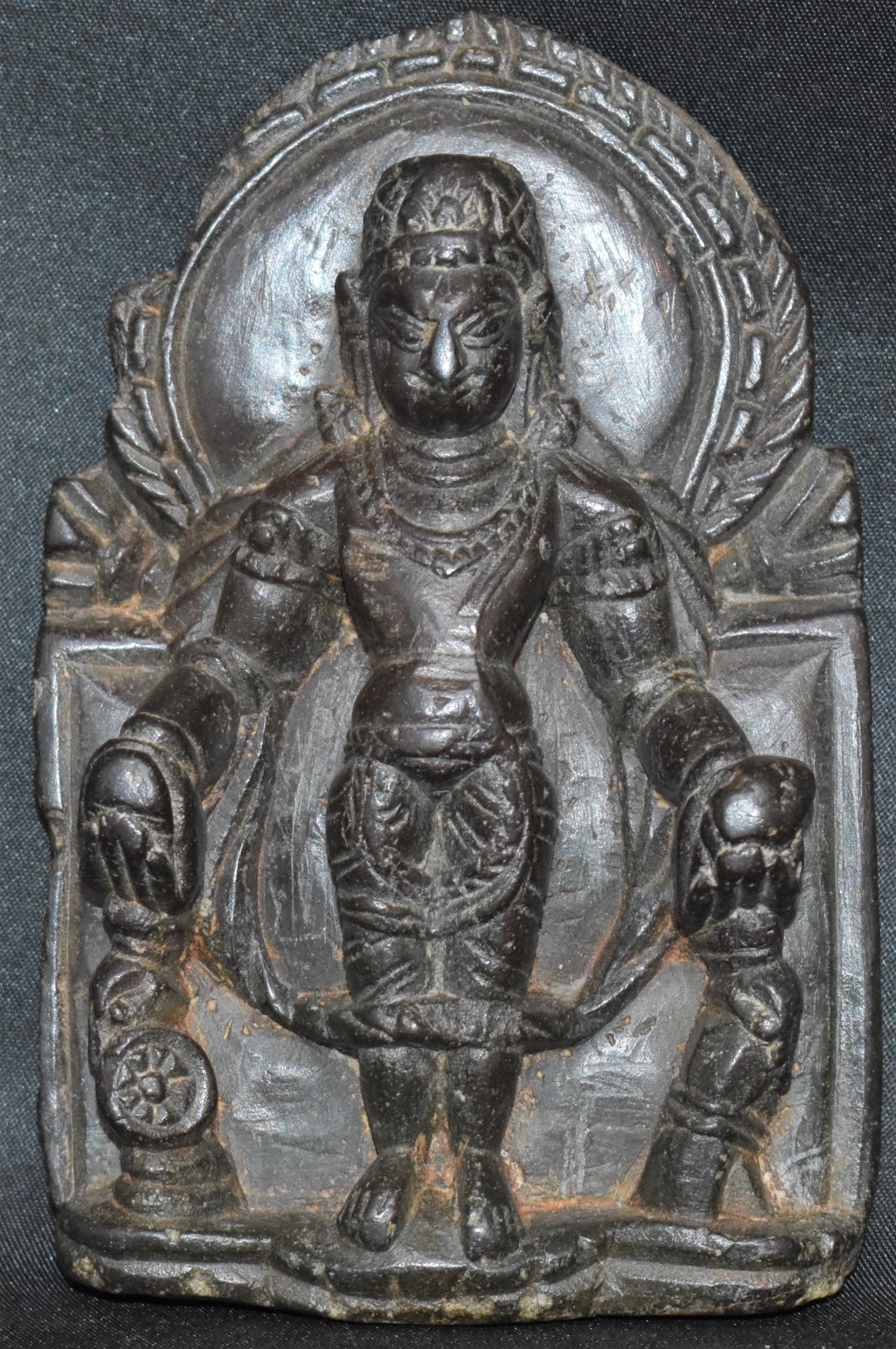
This is a four-armed Vishnu. This iconography dates back to the 5th century. And this form of Vishnu is mainly confined to the Gangetic plains. Here Vishnu is holding Chakra, Padma, Shankha and Gada. Starting from his lower right hand, clockwise.
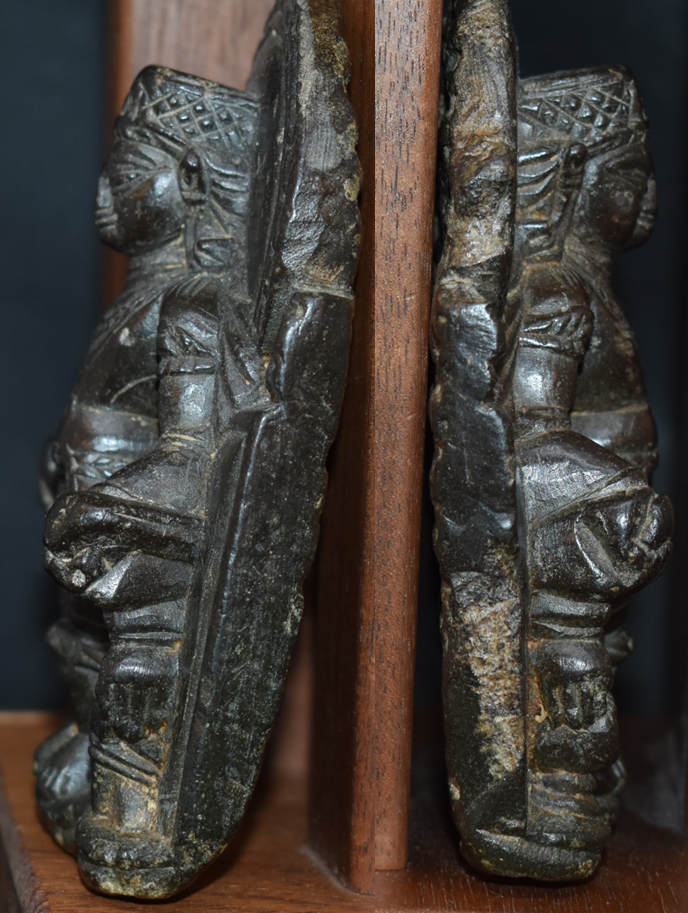
The frontal view shows only two arms. The mystery about the four arms gets resolved when you see the side view. The back of the lower hands and fingers are delineated. For some reason in this and in the variation of this iconography, the hands are not raised as we see in later periods and current-day Vishnu.
Another interesting fact is this iconography is not found in South India. This may be an indication of the time when Vaishnavism, as we have today, reached South India.
There are several variations of this iconography, Vishnu with a conical crown, personifiedAyudha purusha replacing Chakra and Gada, the interchange of Chakra and Gada’s position.
A similar Vigraha is in Dacca’s museum and that is dated to the 7th century.
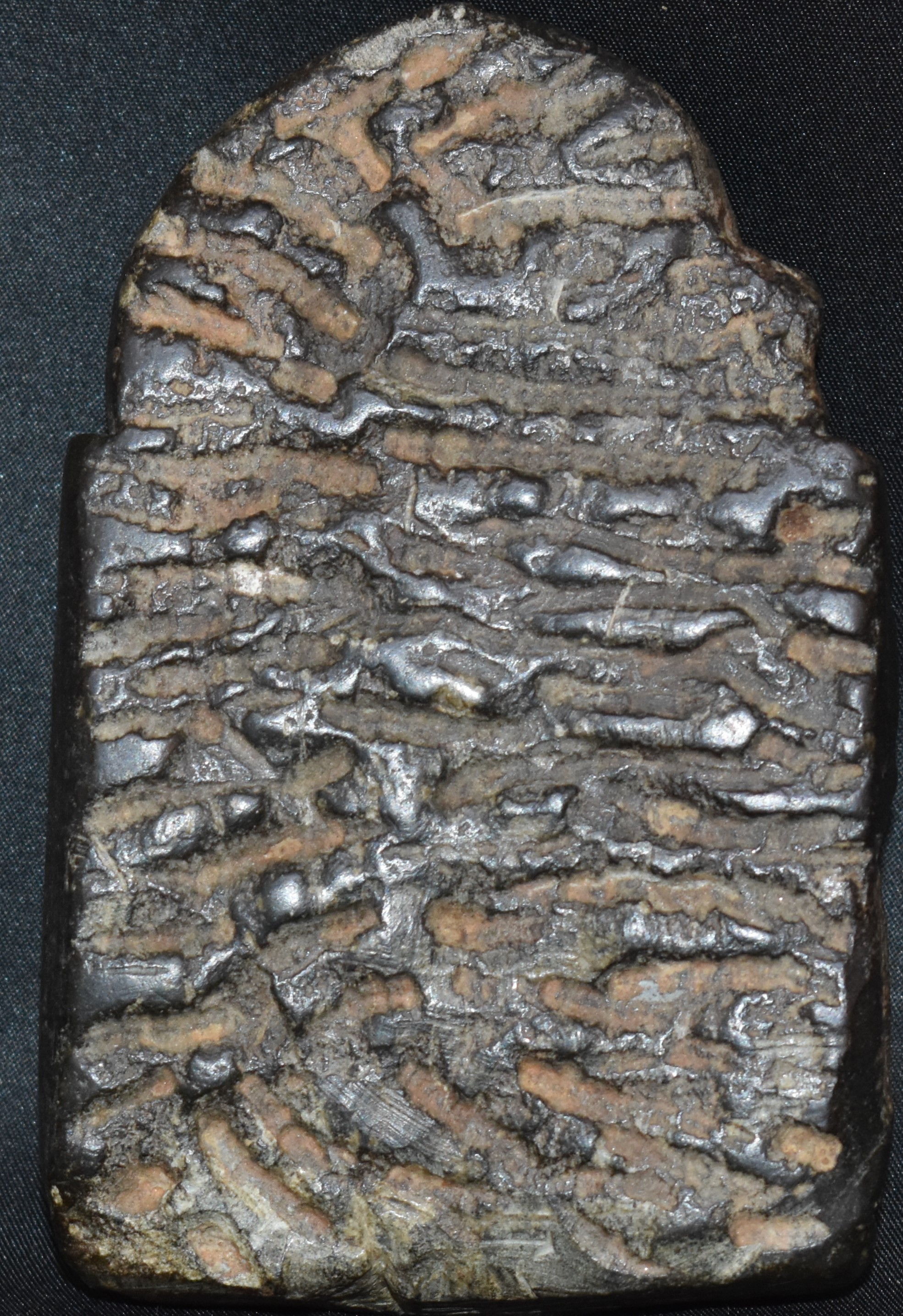
Stone sculptures are normally difficult to date. In this case, the back is softened due to handling and it suggests some age, This sculpture is about 11.5 cm in height and it is from the Bihar/Bengal region.
 Bronzes of India - A personal collection