Recently, I read an article on A Brief History of the Yogapaṭṭa by Seth Powell. It traces the origin, the use, positioning and claims of Yogapatta. A scholarly article and a compelling read.
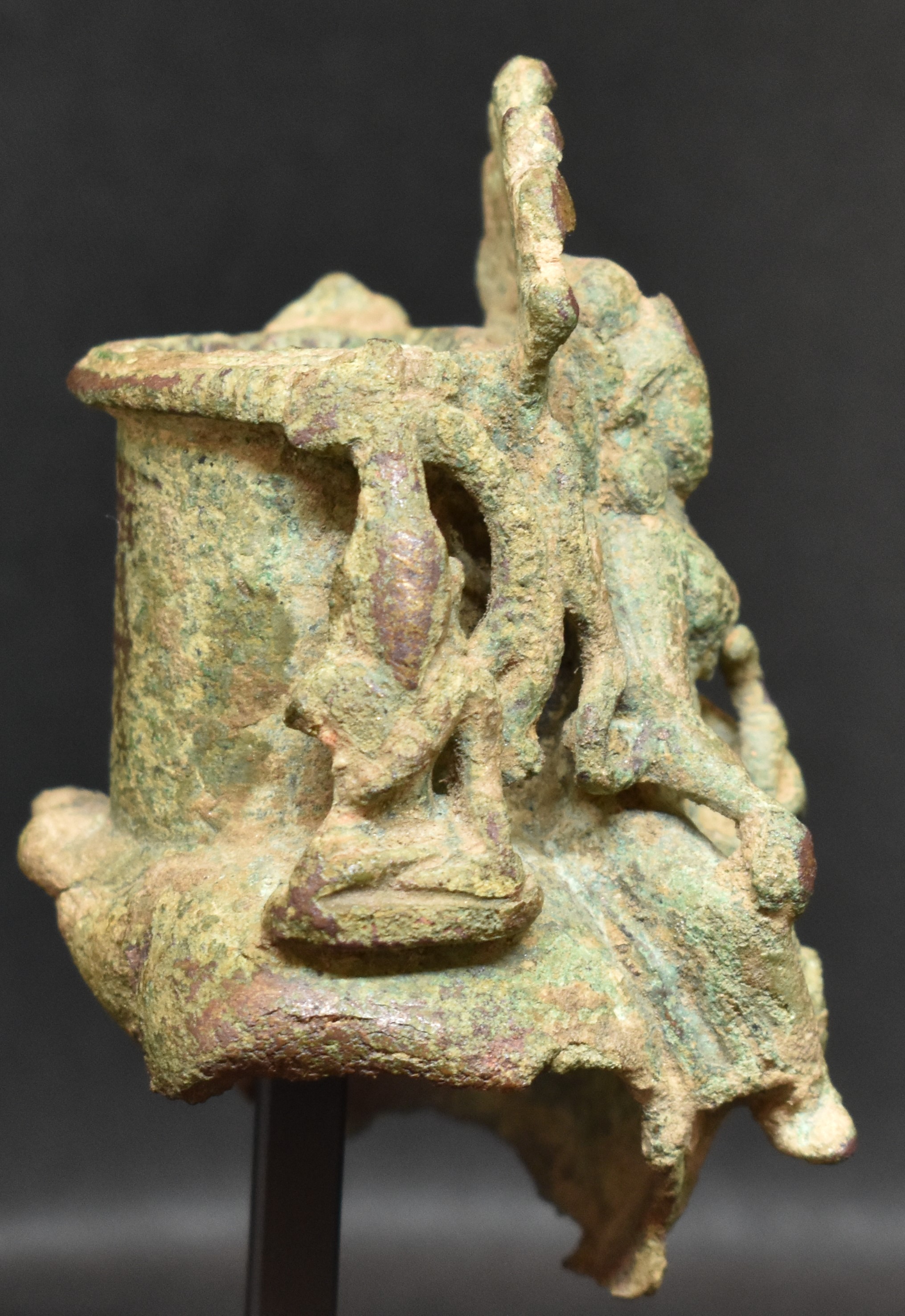
As good reading always does, it set me thinking. This time, about the representation of Yogapatta in my collection and what they tell me. Here you go.
One of the oldest bronzes with Yogapatta, in my collection, is a fragment of an ewer. In this, you can see an ascetic sitting in Padmasana wearing a Yogapatta around his knee. The Met Museum has an intact Manasa ewer. This fragment could be dated to the 10th century CE.
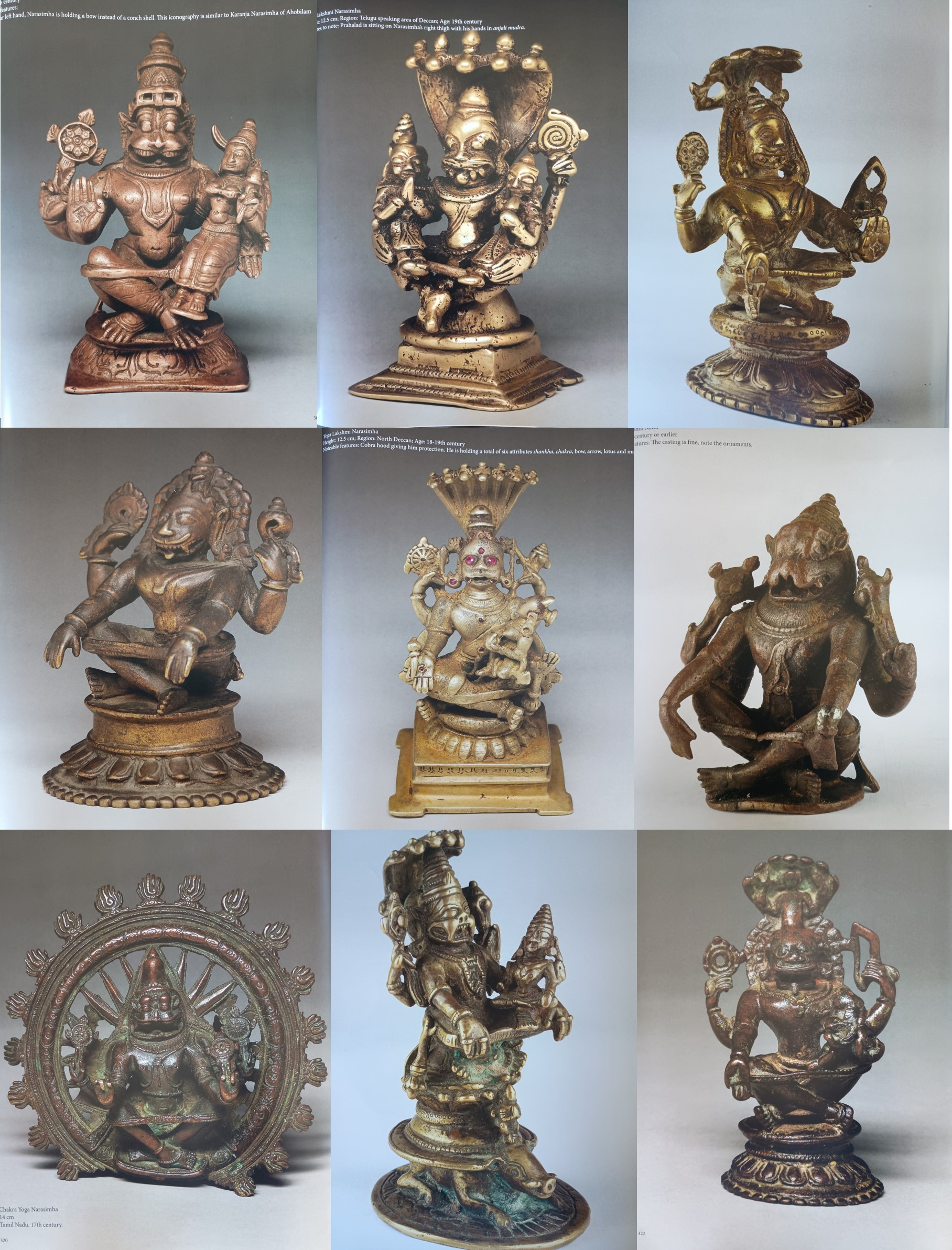
Bronzes of Narasimha, as Yoga Narasimha and Yoga Lakshminarasimha, are well represented in my collection. By far the largest by numbers. Nine of them were published in the book Narasimha the God of Yoga by Dhruva Gorrick.
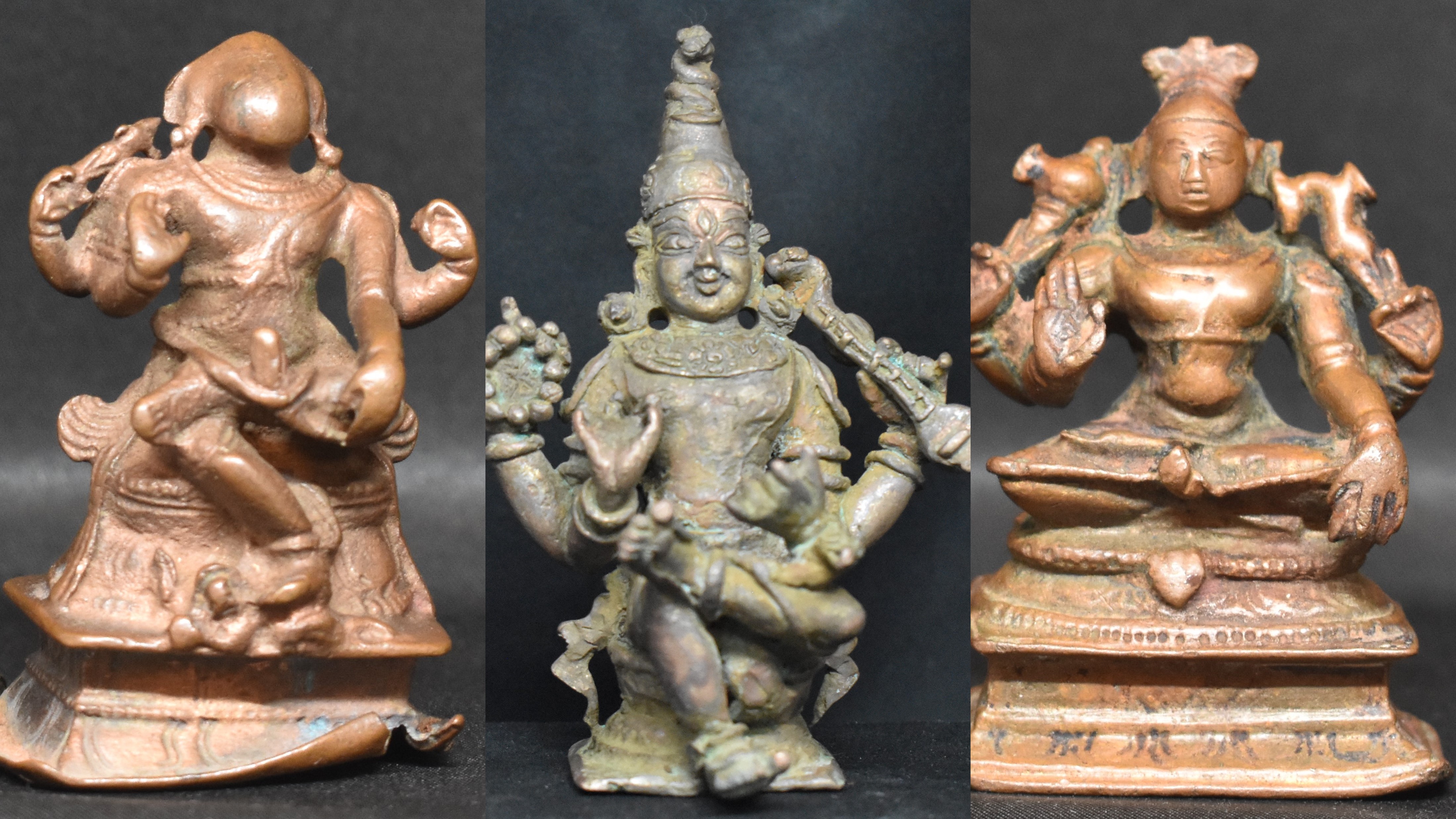
Next, of course, is Adi Yogi, Shiva. The examples include Shiva wearing a Cobra as Yogapatta, Shiva as Veenadhara and Shiva as an ascetic.
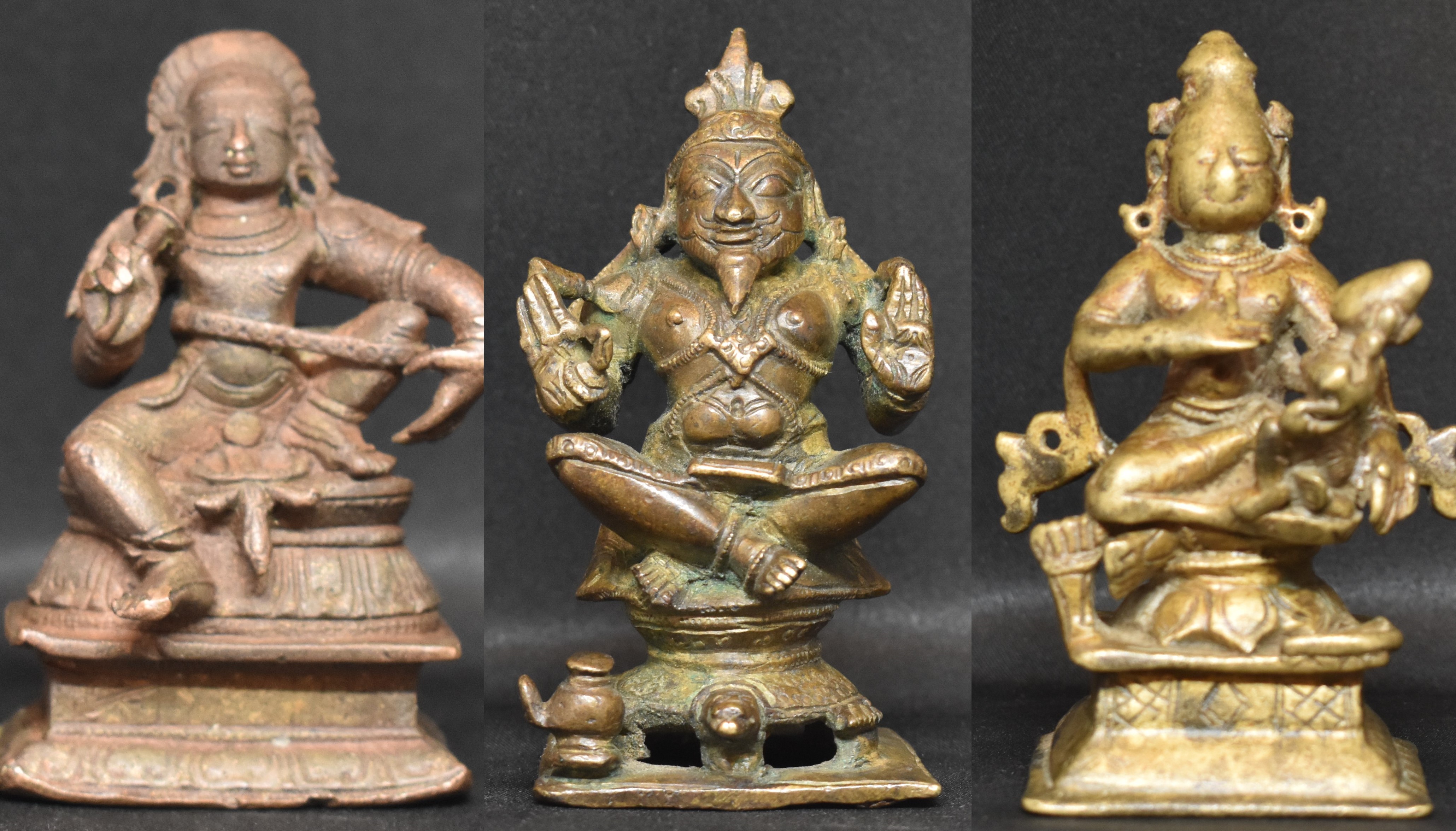
Other examples include Ayyannar, Ved Vyas and Yoga Sitarama
The observations below are based on the article, my collection and browsing.
Yogapatta’s origin seems to be associated with ascetics and those engaged in penance.
The use by ascetics predates that by the deities. In later depictions, especially those featuring deities, it has become a sign of wisdom and espousing knowledge.
Narasimha has the largest representation covering several linguistic regions of India. Utkutika asana seems to be his favourite.
Yogapatta is one of the visual clues to the practice of Yoga.
 Bronzes of India - A personal collection