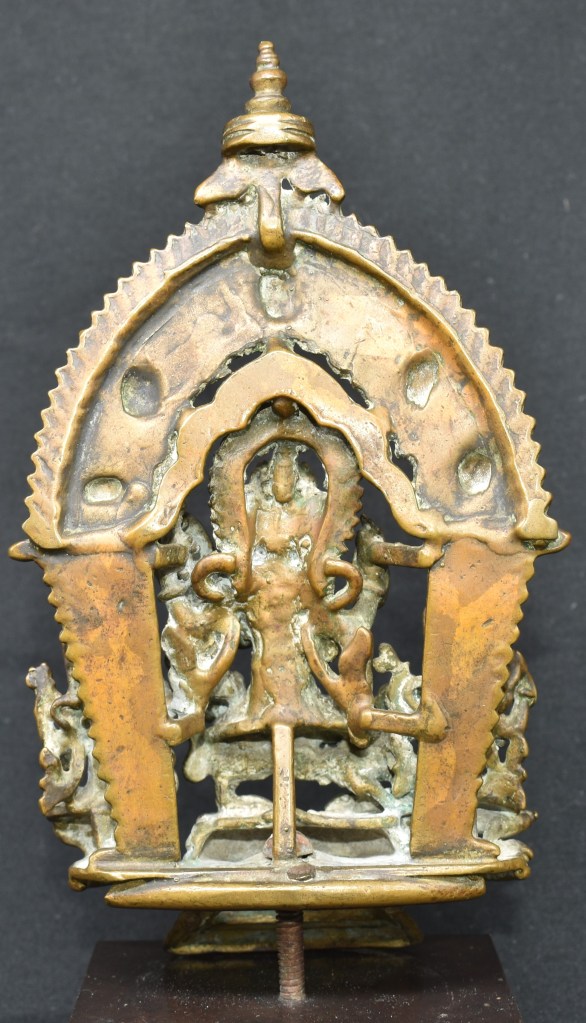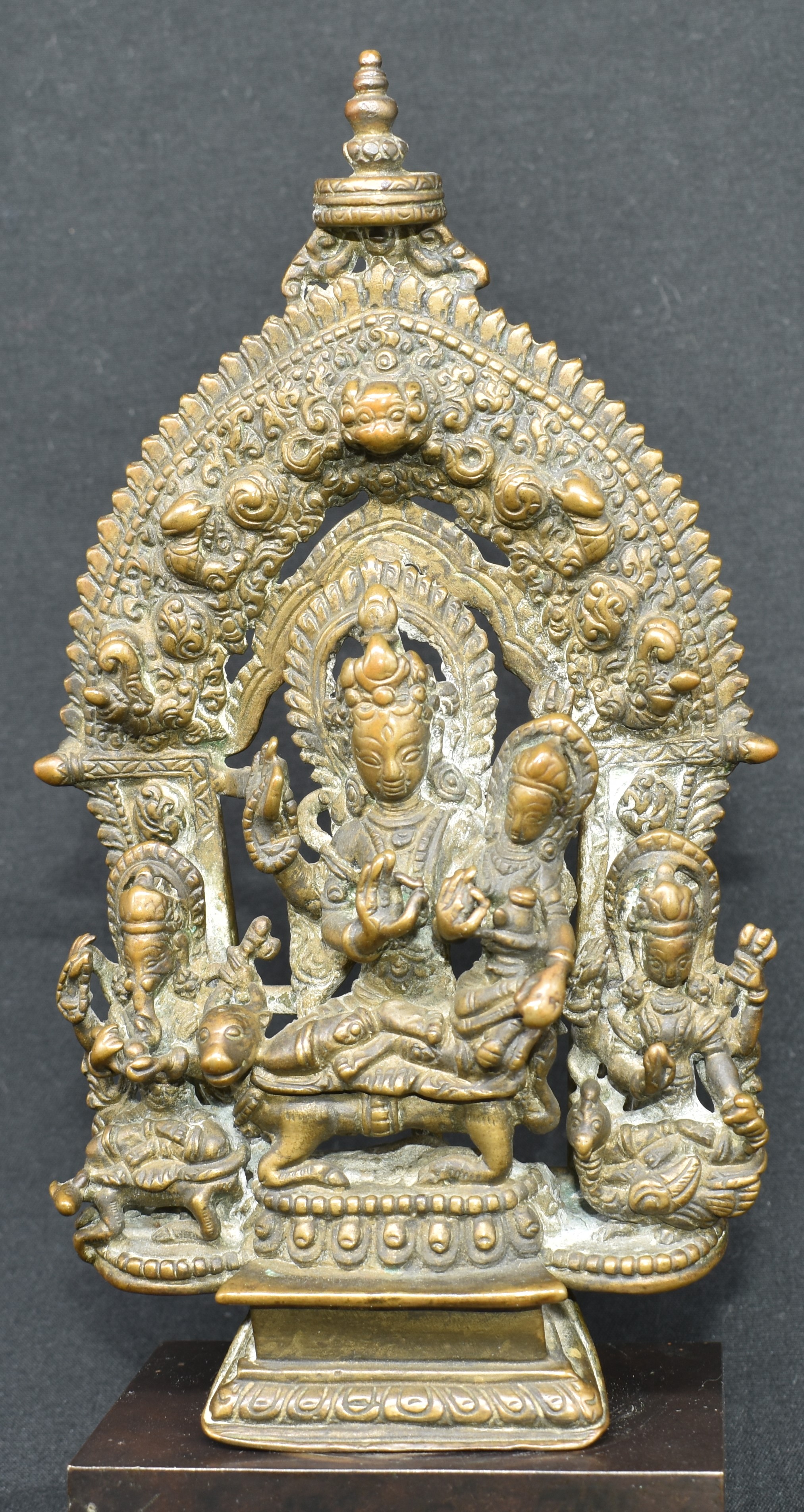
Regular readers of this blogsite will recognise, without any effort, that this is Siva and Parvati with their children Ganesha and Karthikeya.
Yes, this bronze is from Nepal. It was possibly a part of a standing lamp. For examples of such standing lamps, see Surya and Ganesha.
Let me focus on some of the unusual aspects.
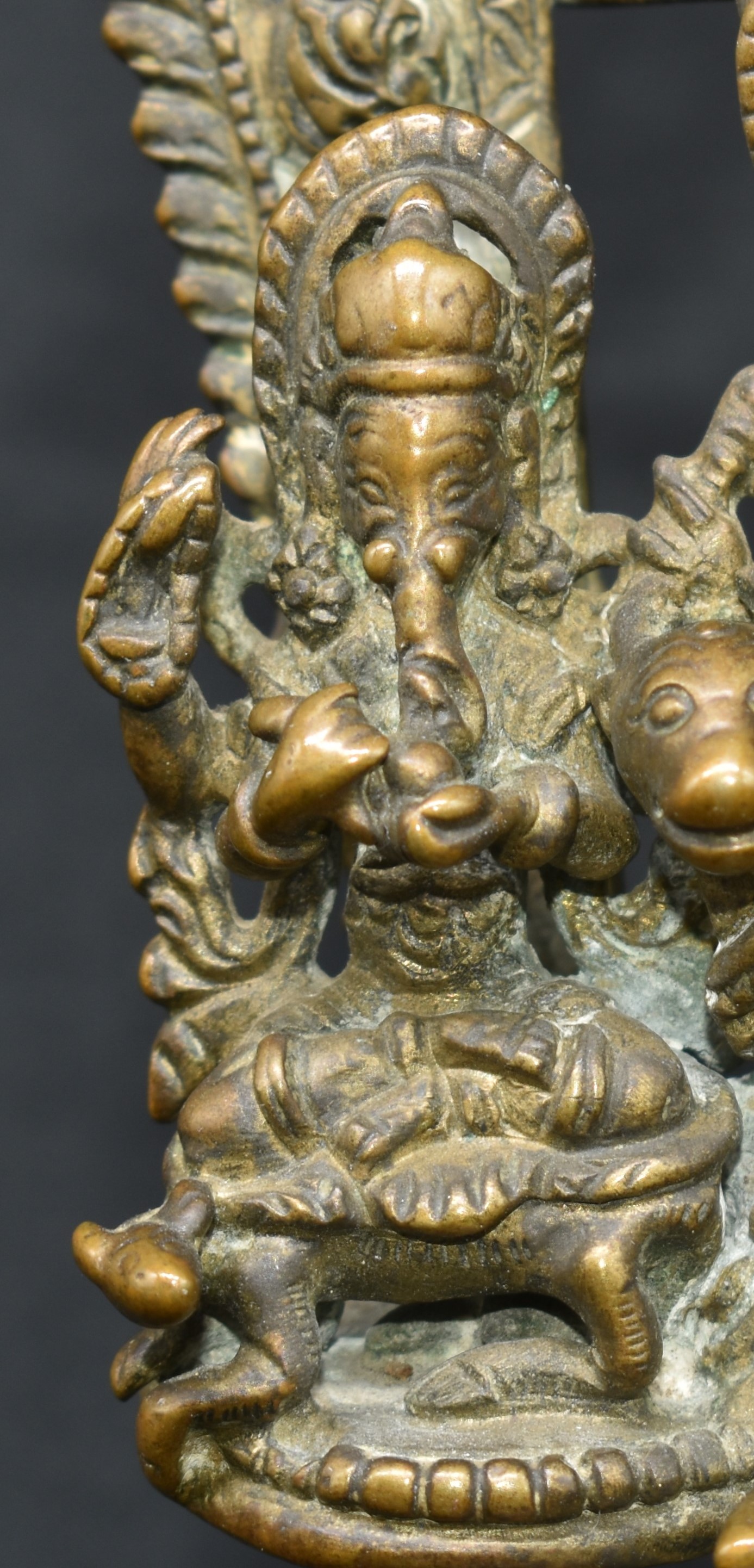
Starting with Ganesha, the leftmost figure. He is riding his vahana, a rat, and he holds a Rudraksha mala and an elephant goad in his upper hands. In fact, all three male figures, Ganesha, Shiva and Karthikeya, hold Rudraksha malas in their upper-right hands. I do not have any explanation, at least not yet. For another Ganesha with Rudraksha Mala, see this example. Ganesha’s lower hands look like he is inscribing or writing something.
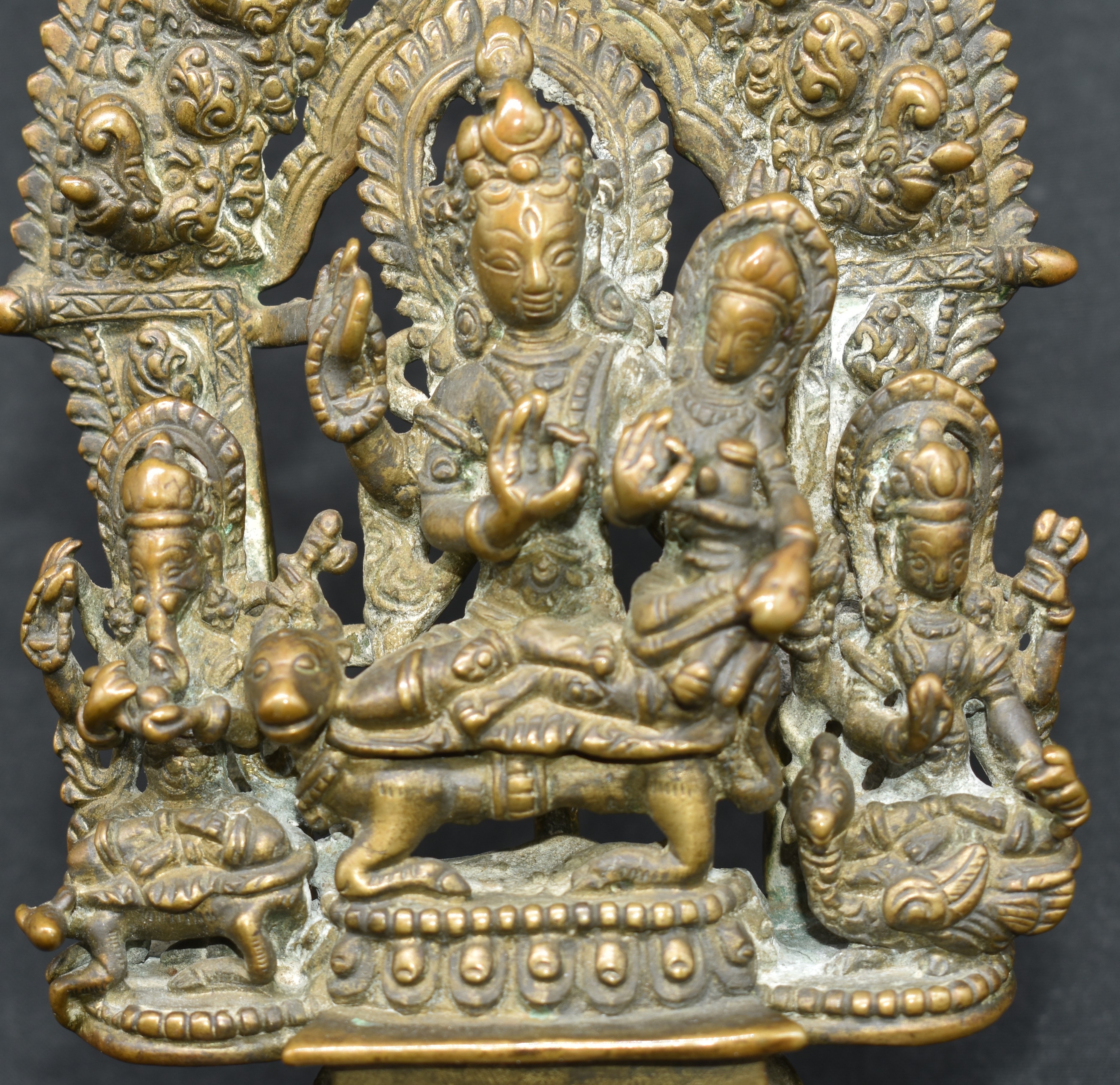
Shiva holds a Rudraksha mala, a trishul, and a water pot starting from the upper right hand. His lower left hand is in Vyakhyana mudra, a gesture of teaching. The water pot in his lower left hand shows up between Parvati’s hands. The water pot suggests that Shiva may be depicted as Kumbeshwar. Parvati’s right hand is in Vyakhyana mudra. Both Shiva and Parvati are sitting on Shiva’s vahana, a bull.
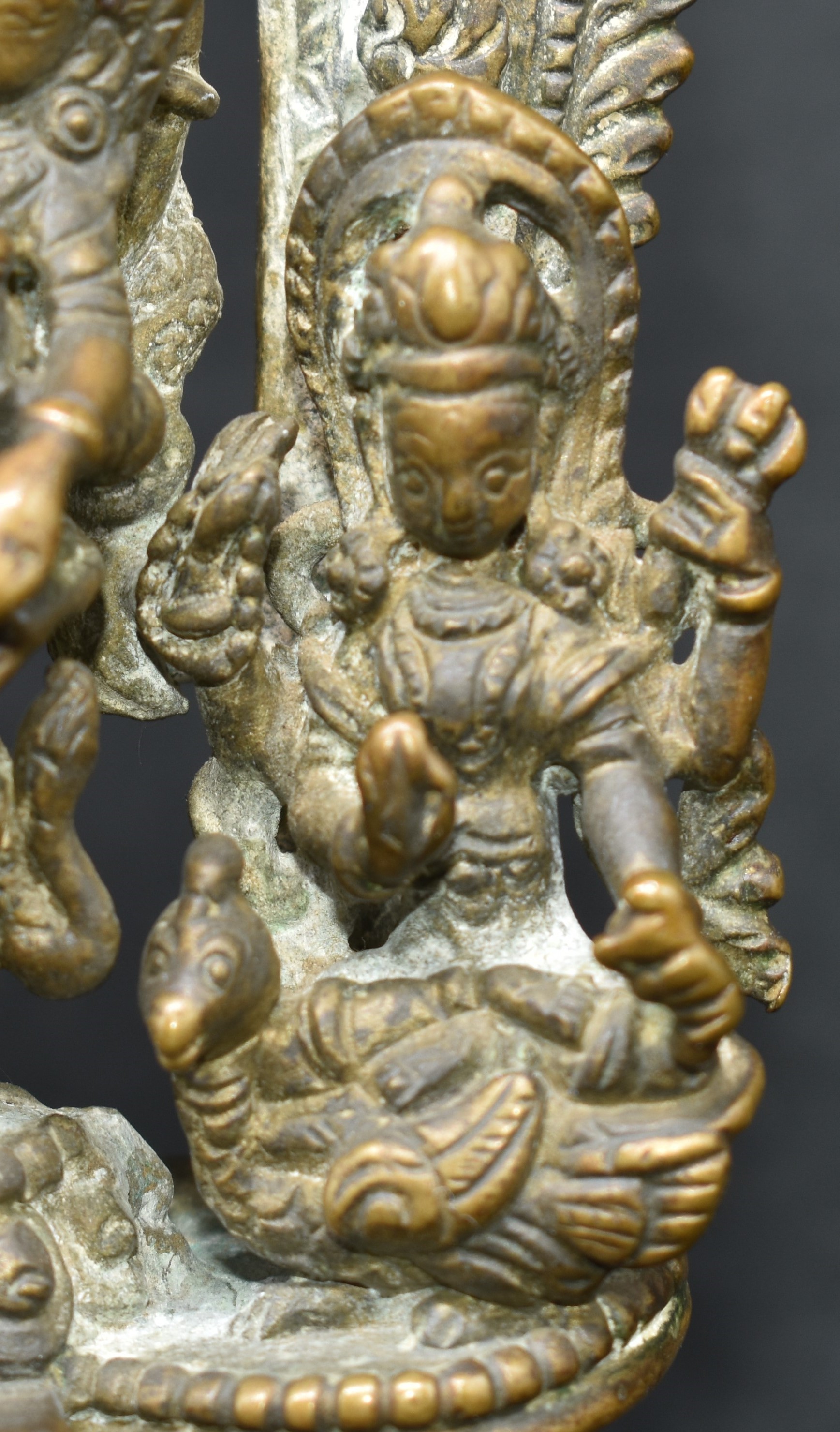
The rightmost figure, riding a peacock, is Karthikeya. He is holding a Rudraksha mala, a vajra and a rooster starting with his upper right hand. His lower right hand is in Vyakhyana mudra.
Unusual mudras and attributes. That is what makes this bronze unique and research worthy. The quality of casting and the details make this a desirable bronze.
This bronze, about 14 cm tall, is dated to the eighteenth century.
One more addition to my growing collection of bronzes depicting Shiva and family.