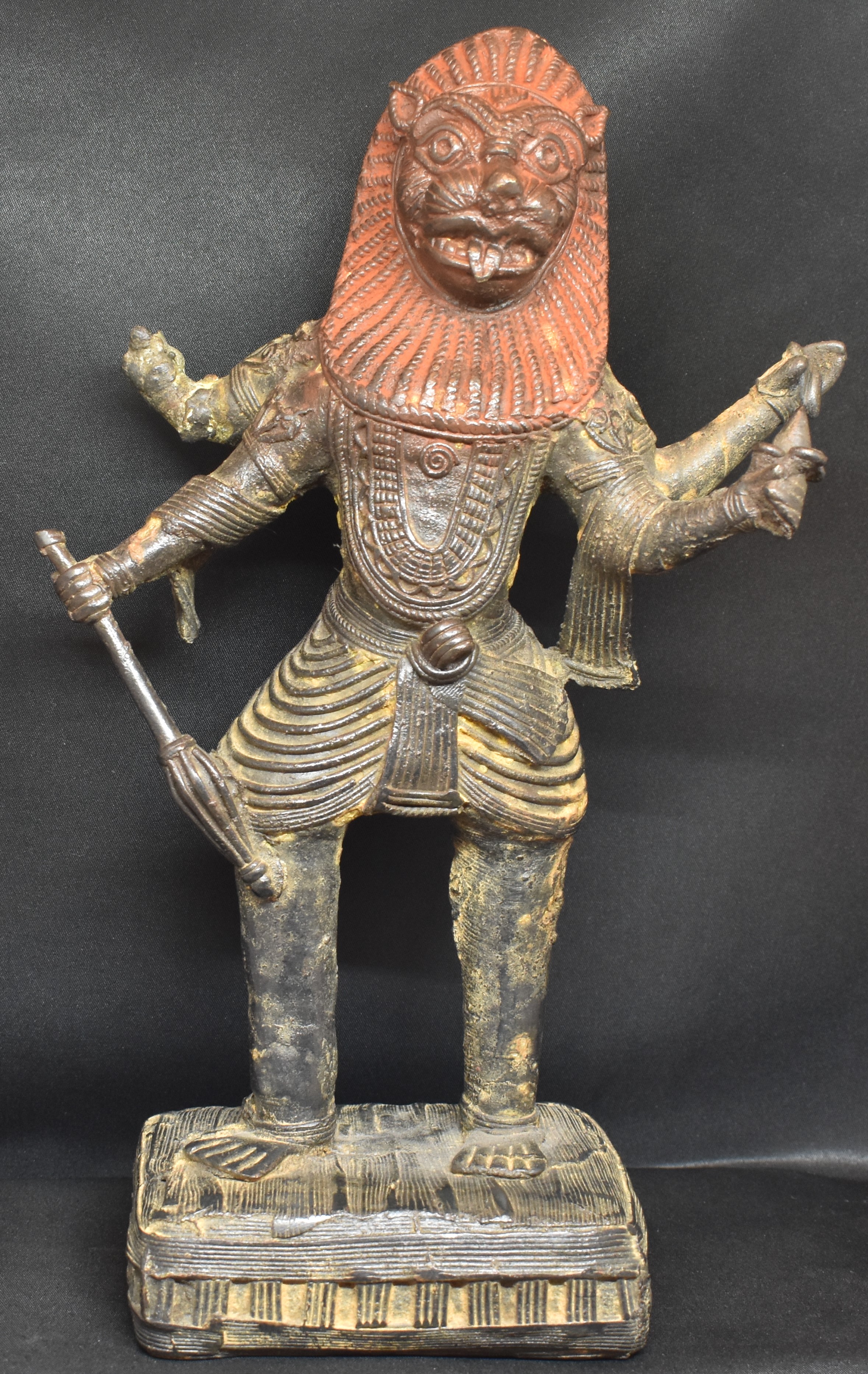
Yes, Narasimha is an Ugra (Angry/destructive) avtar of Vishnu. This bronze, despite the lion’s face, threatening gestures and substantial height (26 cm), brings a smile to one’s face. There is some amount of playfulness to it.
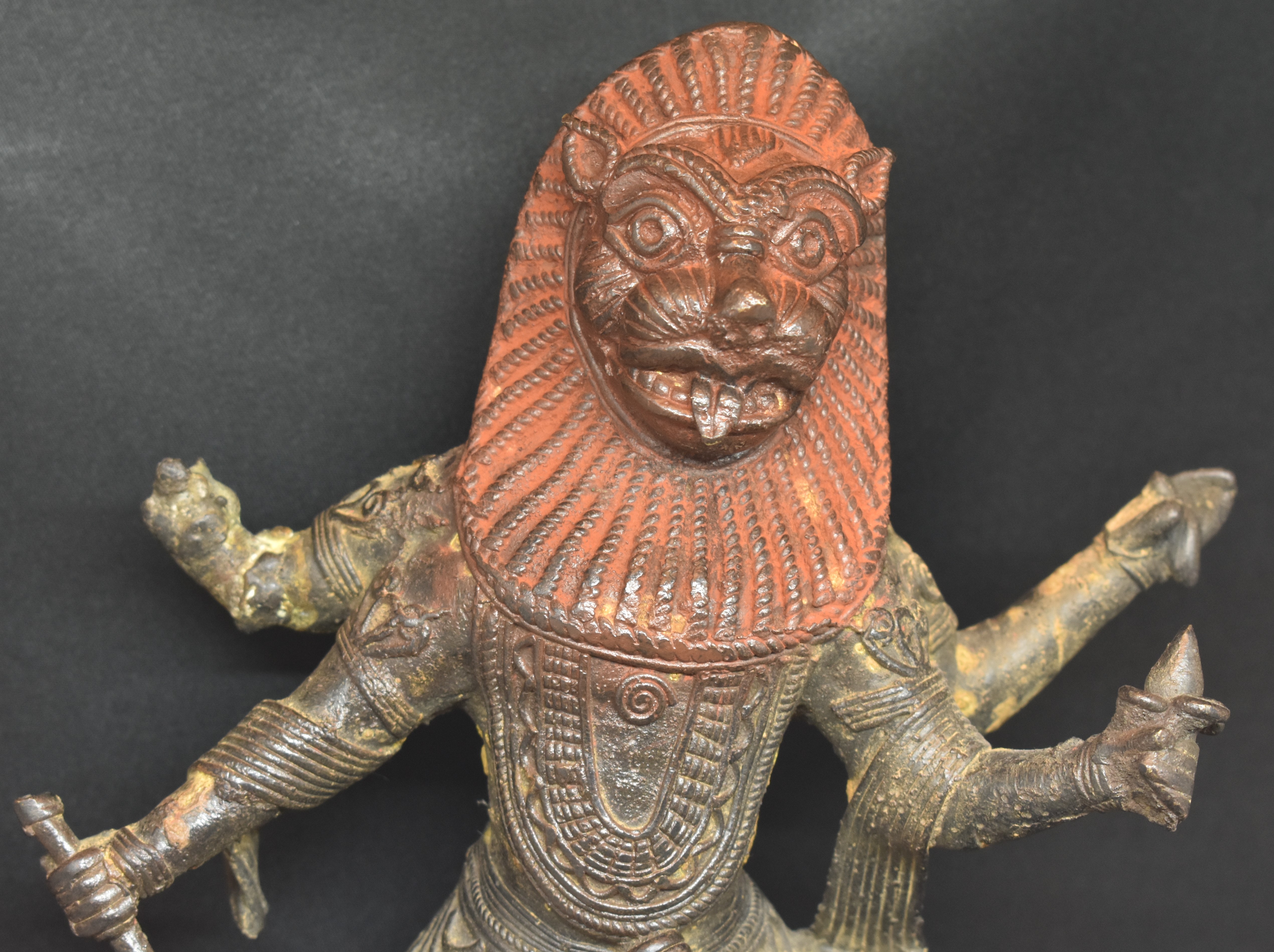
Here Narasimha stands with his right foot slightly ahead of the left foot, ready to move and conquer Hiranyakasipu. For the story, see this blog. Narasimha’s attributes are Gada, Chakra (missing), Shankah and Padma.
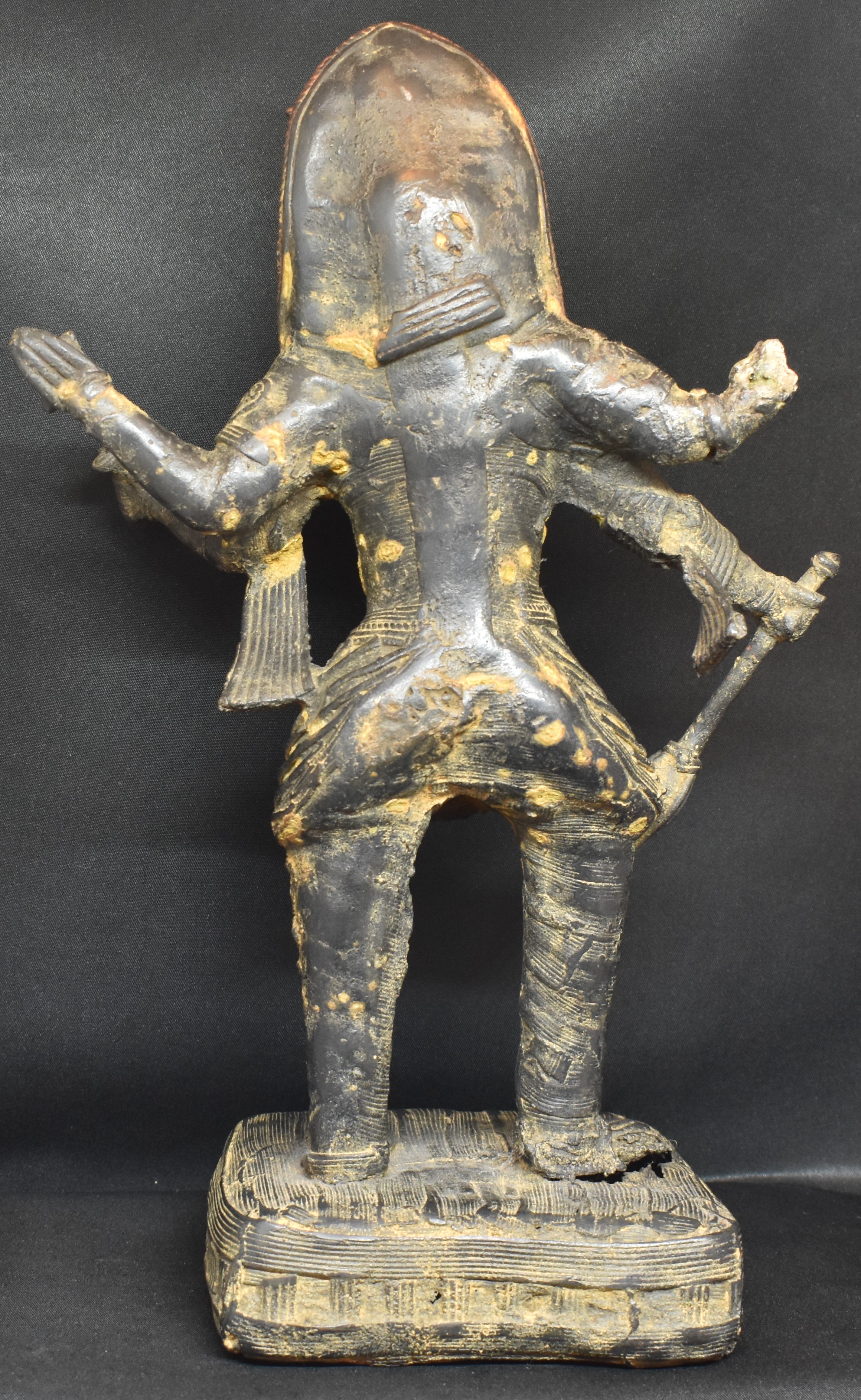
The bronze is hollow-cast and made using the lost-wax method. It is from the Bastar region. The metal lost-wax art from that region is called Dhokra art. Bronzes made using similar techniques, clay core, wax form, wax detailing and lost-wax casting are available from quite a few parts of India. Dhokra art has maintained its individuality and identity.
The elaborate mane and the colouring make this Vigraha desirable. The imperfections are inevitable, given the elaborate manual processes involved, and they are a part of the charm.
This Vigraha has age, and the patina suggests it may be 50-100 years old. And that is a lot of age for a tribal bronze.
For comparison with a modern-day reproduction, see the photo below.
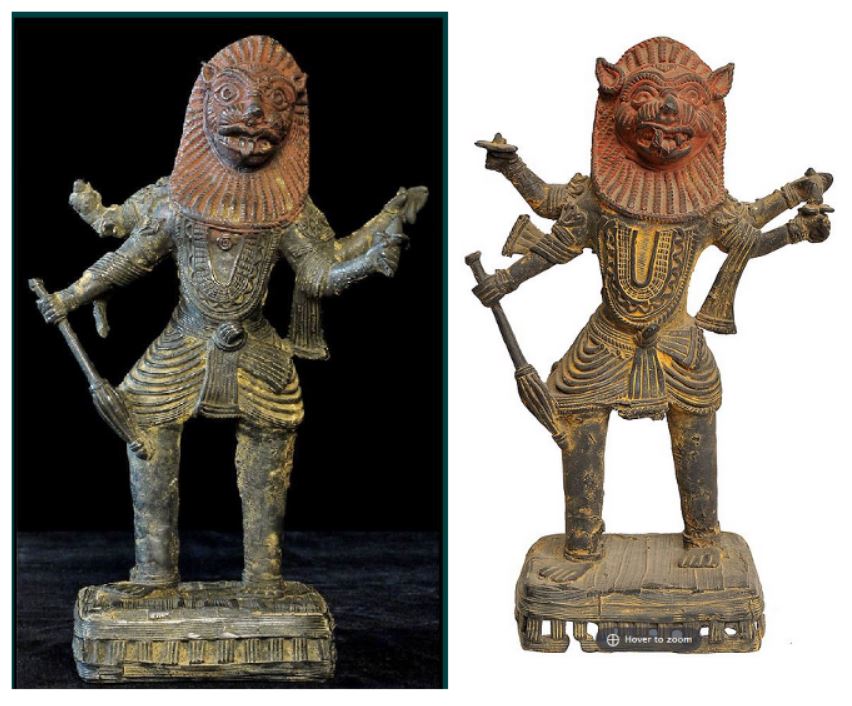
Though the iconography and the process involved are the same, the newer one, on our right, lacks the vitality and presence. Maybe age improves the vitality and presence.
Note: The above comparison photo is from my friend Tom.

